Ch. 4 Histology
Amerman - Human Anatomy & Physiology 2nd Edition
Amerman2nd EditionHuman Anatomy & PhysiologyISBN: 9780136873822Not the one you use?Change textbook
Chapter 4, Problem 3a

Describe the roles of the following components of the ECM:
Collagen fibers

Verified step by step guidance
1
Collagen fibers are a major structural component of the extracellular matrix (ECM) and provide tensile strength to tissues, helping them resist stretching forces.
These fibers are composed of collagen proteins, which are organized into a triple-helix structure, making them strong and durable.
Collagen fibers are particularly abundant in connective tissues such as tendons, ligaments, and the dermis of the skin, where they maintain structural integrity and support.
In addition to providing mechanical strength, collagen fibers also play a role in cell adhesion, migration, and tissue repair by interacting with other ECM components and cell surface receptors.
Collagen fibers are synthesized by fibroblasts and other specialized cells, and their production and organization are critical for maintaining normal tissue function and healing after injury.

Verified video answer for a similar problem:

This video solution was recommended by our tutors as helpful for the problem above.
Was this helpful?

Key Concepts

Here are the essential concepts you must grasp in order to answer the question correctly.

Extracellular Matrix (ECM)

The extracellular matrix (ECM) is a complex network of proteins and carbohydrates that provides structural and biochemical support to surrounding cells. It plays a crucial role in tissue and organ function, influencing cell behavior, migration, and differentiation. The ECM is composed of various components, including collagen, elastin, glycoproteins, and proteoglycans, each contributing to the overall integrity and functionality of tissues.
Recommended video:

Collagen Fibers

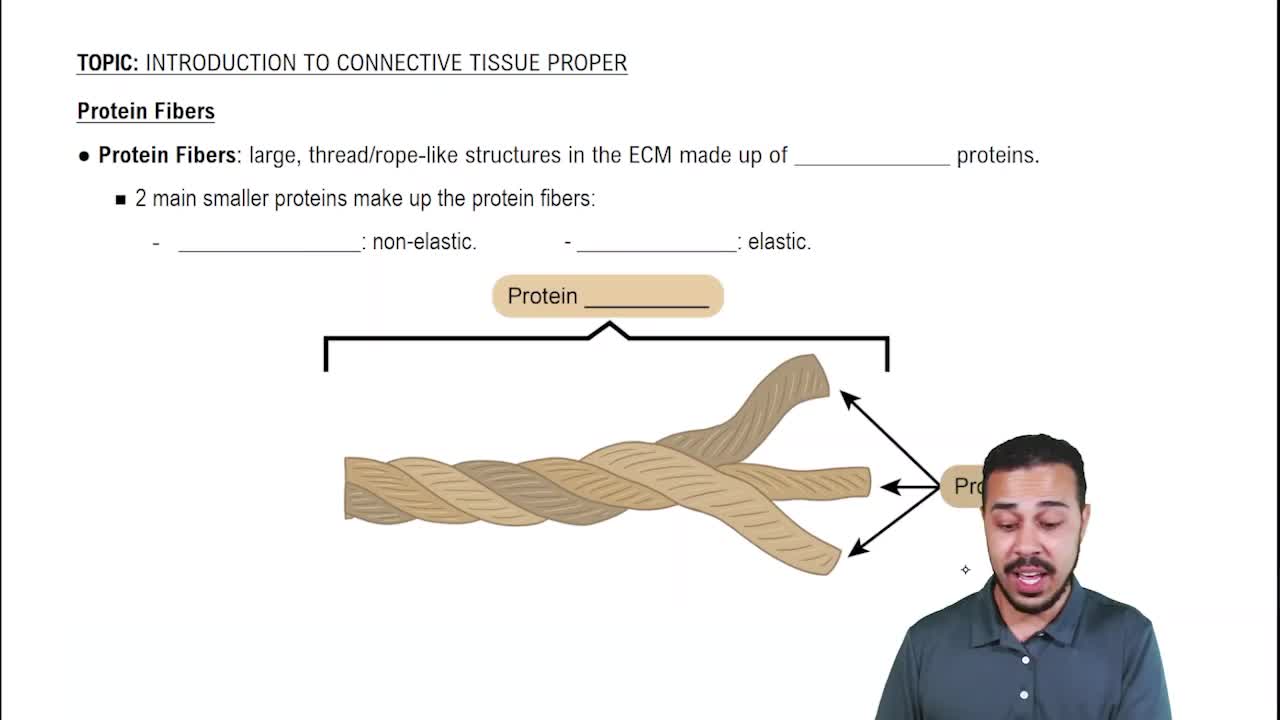
Collagen fibers are the primary structural proteins found in the ECM, providing tensile strength and support to tissues. They are composed of collagen molecules that assemble into fibrils, which then form larger fibers. Collagen is essential for maintaining the structural integrity of various tissues, including skin, bone, cartilage, and tendons, and plays a vital role in wound healing and tissue repair.
Recommended video:
Guided course
03:00
Protein Fibers

Tissue Function and Repair

The ECM, particularly through its collagen fibers, is integral to tissue function and repair. Collagen not only supports the physical structure of tissues but also interacts with cells to regulate their behavior during processes such as growth, healing, and inflammation. Understanding the role of collagen in the ECM is essential for comprehending how tissues respond to injury and maintain homeostasis.
Recommended video:
03:20
DNA Repair