Mark the following statements as true or false. If a statement is false, correct it to make a true statement. The epithelium of the oropharynx changes from stratified columnar epithelium to simple squamous epithelium to enable it to resist abrasion from food.
Verified step by step guidance
1
Step 1: Begin by identifying the type of epithelium present in the oropharynx. The oropharynx is part of the pharynx and is exposed to mechanical stress from food passing through. This requires a type of epithelium that can resist abrasion.
Step 2: Recall the types of epithelial tissue and their functions. Stratified columnar epithelium is specialized for secretion and protection, while simple squamous epithelium is designed for diffusion and filtration, not for resisting abrasion.
Step 3: Understand that the epithelium in the oropharynx is actually stratified squamous epithelium, not stratified columnar or simple squamous epithelium. Stratified squamous epithelium is well-suited to resist mechanical stress and abrasion.
Step 4: Evaluate the statement provided. The claim that the epithelium changes from stratified columnar to simple squamous is false because neither of these types of epithelium is present in the oropharynx. The correct epithelium is stratified squamous epithelium.
Step 5: Correct the false statement. The true statement should be: 'The epithelium of the oropharynx is stratified squamous epithelium, which enables it to resist abrasion from food.'
Verified video answer for a similar problem:
This video solution was recommended by our tutors as helpful for the problem above
Play a video:
0 Comments
Key Concepts
Here are the essential concepts you must grasp in order to answer the question correctly.
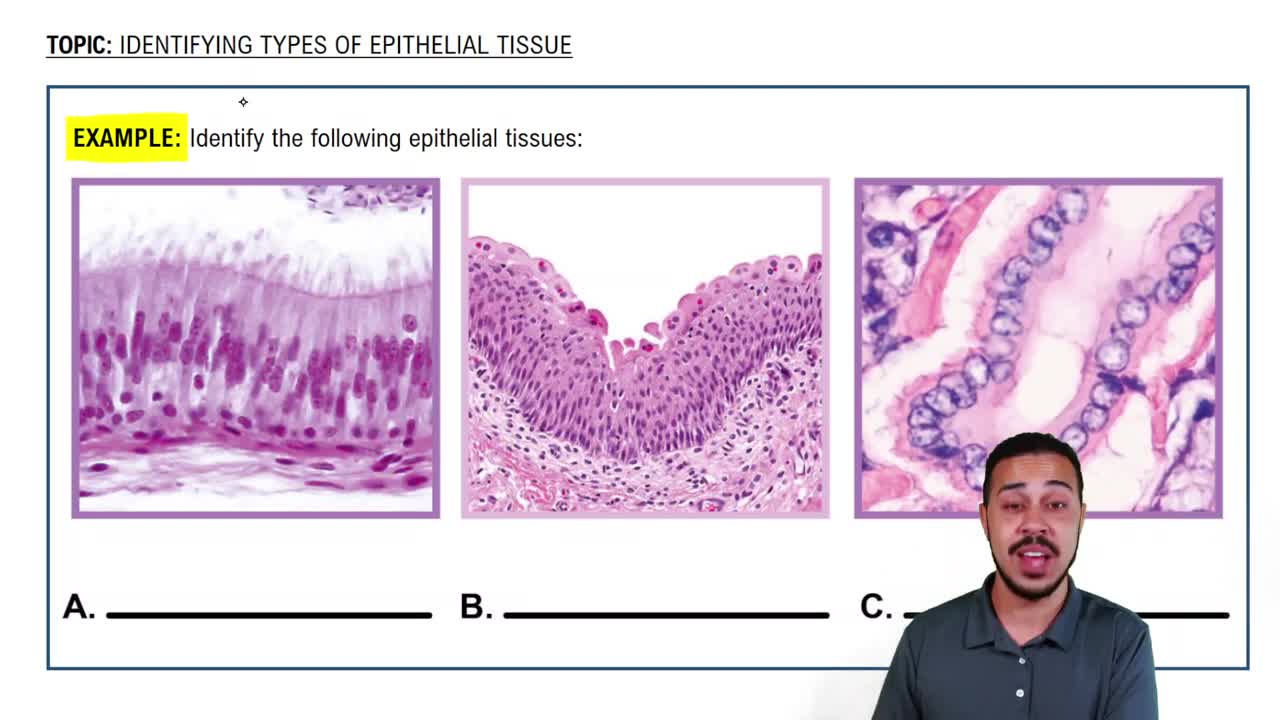
Epithelial Tissue Types
Epithelial tissues are classified based on cell shape and layering. Stratified epithelium consists of multiple layers, providing protection against abrasion, while simple epithelium has a single layer, facilitating absorption and secretion. Understanding these types is crucial for analyzing their functions in different body regions.
The oropharynx serves as a passage for both air and food, requiring a robust epithelial lining to withstand mechanical stress. The stratified squamous epithelium in this area is specifically adapted to resist abrasion from food particles, making it essential for protecting underlying tissues during swallowing.
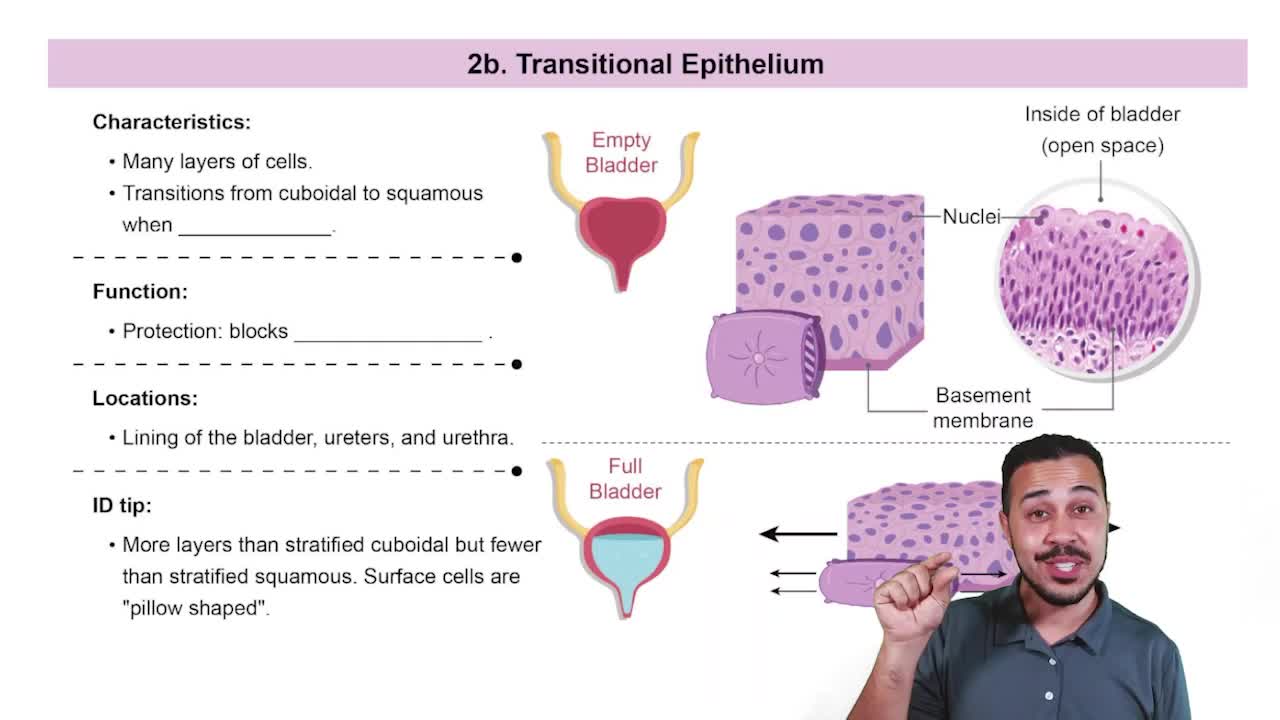
The transition from one type of epithelium to another can indicate a change in function or protective needs. In the oropharynx, the epithelium remains stratified squamous throughout, as it is necessary for protection against abrasion, rather than transitioning to simple squamous, which is more suited for areas requiring diffusion.