Identify the six types of epithelial tissue shown in the drawing below. c. ___
Verified step by step guidance
1
Step 1: Identify the first type of epithelial tissue (top left image). This tissue is a single layer of flat cells, which is characteristic of 'Simple Squamous Epithelium'.
Step 2: Identify the second type (top middle image). This tissue shows a single layer of cube-shaped cells, which corresponds to 'Simple Cuboidal Epithelium'.
Step 3: Identify the third type (top right image). This tissue has a single layer of tall, column-like cells, often with cilia on the surface, indicating 'Simple Columnar Epithelium'.
Step 4: Identify the fourth type (bottom left image). This tissue consists of multiple layers of cells with the top layer being flat, which is typical of 'Stratified Squamous Epithelium'.
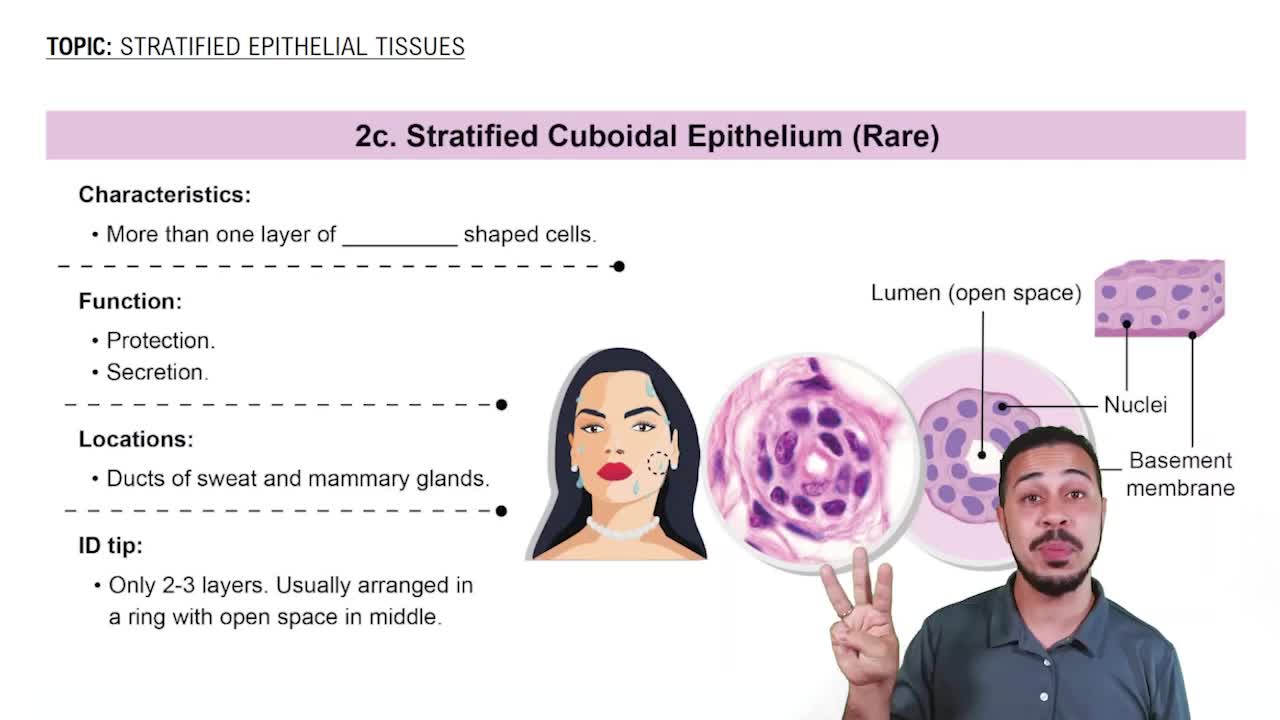
Step 5: Identify the fifth and sixth types (bottom middle and bottom right images). The fifth shows multiple layers of cube-shaped cells, which is 'Stratified Cuboidal Epithelium', and the sixth shows multiple layers of columnar cells, which is 'Stratified Columnar Epithelium'.
Verified video answer for a similar problem:
This video solution was recommended by our tutors as helpful for the problem above
Video duration:
5m
Play a video:
0 Comments
Key Concepts
Here are the essential concepts you must grasp in order to answer the question correctly.
Types of Epithelial Tissue
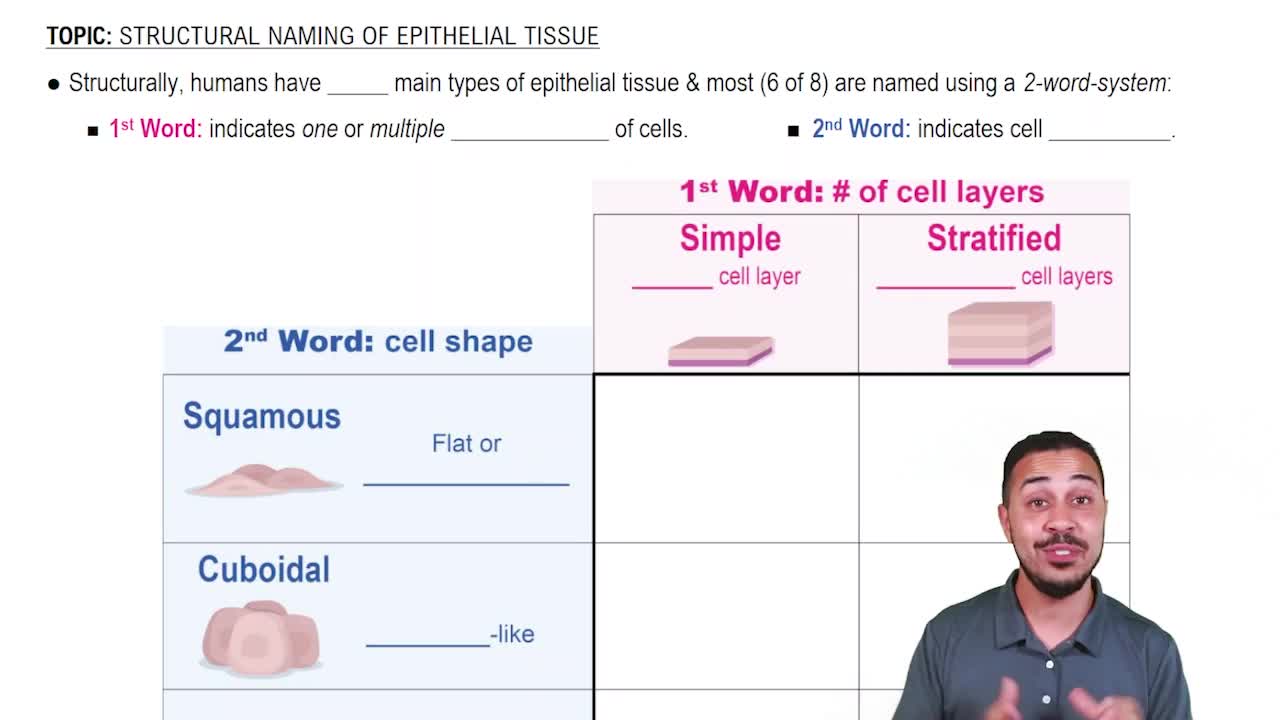
Epithelial tissues are classified based on the number of cell layers and the shape of the cells. The main types include simple (one layer) and stratified (multiple layers), with cell shapes being squamous (flat), cuboidal (cube-shaped), and columnar (tall and column-like). Understanding these types helps identify tissue function and location.
Simple epithelium consists of a single cell layer, facilitating processes like absorption and filtration. Stratified epithelium has multiple layers, providing protection against abrasion. Recognizing the layering is essential for distinguishing tissue types and their roles in the body.
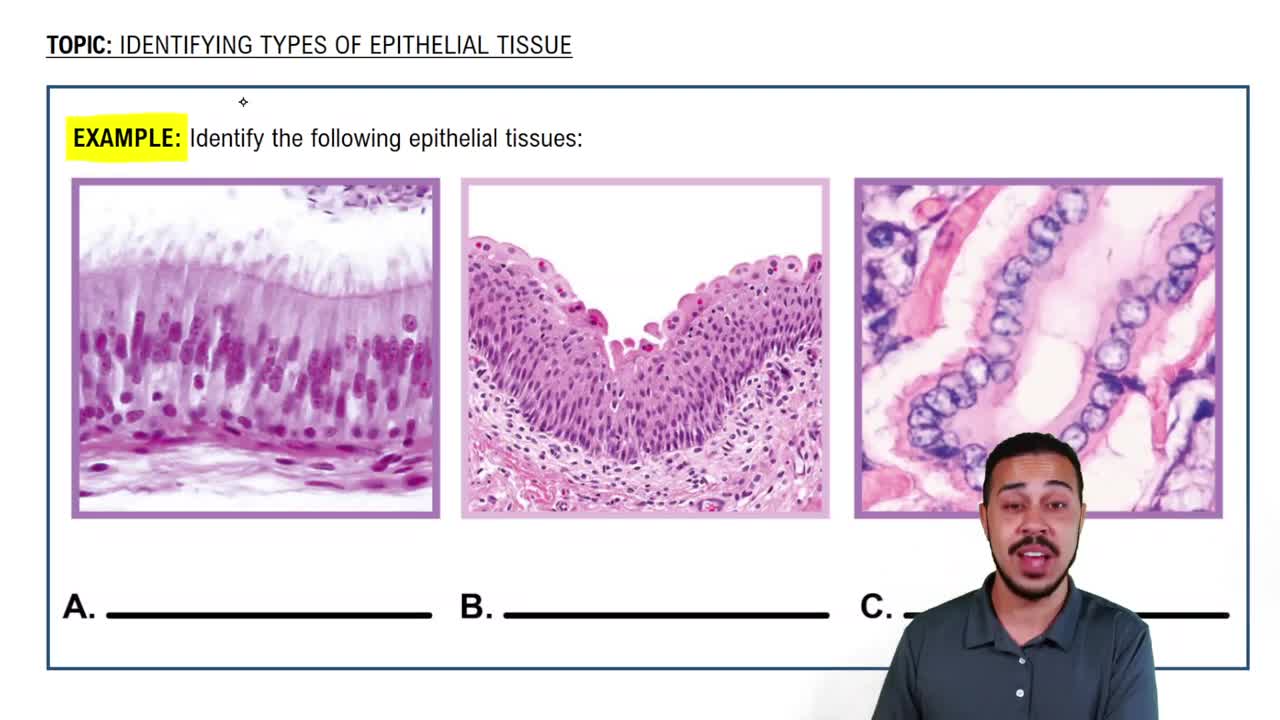
Some epithelial tissues have specialized features such as cilia or keratinization. For example, pseudostratified columnar epithelium often has cilia to move mucus, while keratinized stratified squamous epithelium provides a tough, protective surface. These adaptations are key to understanding tissue function.

 5:42 minutes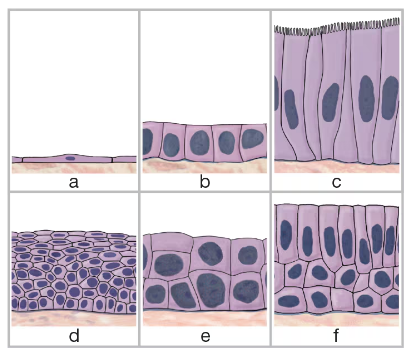
 Verified step by step guidance
 07:25
07:25