Which of the following is not a function of synovial fluid? (a) Shock absorption (b) Nutrient distribution (c) Maintenance of ionic balance (d) Lubrication of the articular surfaces (e) Waste disposal
Verified step by step guidance
1
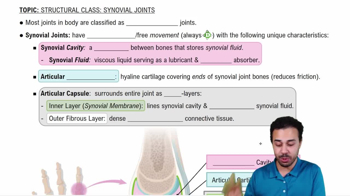
Step 1: Understand what synovial fluid is and where it is found. Synovial fluid is a viscous fluid found within the cavities of synovial joints, serving to reduce friction between the articular cartilage of synovial joints during movement.
Step 2: Review the known functions of synovial fluid. These include shock absorption, lubrication of articular surfaces to reduce friction, nutrient distribution to cartilage (which is avascular), and waste disposal by carrying away metabolic waste from chondrocytes.
Step 3: Analyze each option in the context of synovial fluid functions: (a) Shock absorption - synovial fluid helps cushion joints; (b) Nutrient distribution - it transports nutrients to cartilage; (c) Maintenance of ionic balance - consider whether synovial fluid regulates ionic concentrations actively; (d) Lubrication of articular surfaces - synovial fluid lubricates joints; (e) Waste disposal - it removes waste products from cartilage.
Step 4: Identify which function is not typically attributed to synovial fluid. Maintenance of ionic balance is generally regulated by cellular mechanisms and blood plasma, not directly by synovial fluid.
Step 5: Conclude that the correct answer is the function that synovial fluid does not perform, which is maintenance of ionic balance.
Verified video answer for a similar problem:
This video solution was recommended by our tutors as helpful for the problem above
Play a video:
0 Comments
Key Concepts
Here are the essential concepts you must grasp in order to answer the question correctly.
Functions of Synovial Fluid
Synovial fluid is a viscous liquid found in joint cavities that serves multiple roles, including lubricating articular surfaces to reduce friction, absorbing shocks during movement, distributing nutrients to cartilage, and removing metabolic waste. Understanding these functions helps identify which options correctly describe its roles.
Shock absorption refers to the ability of synovial fluid to cushion joints against impact forces during activities like walking or running. This property protects the cartilage and underlying bone from damage by dissipating mechanical stress.
Ionic balance involves maintaining stable concentrations of ions like sodium, potassium, and calcium in bodily fluids. While important in many physiological processes, synovial fluid primarily focuses on lubrication and nutrient transport rather than regulating ionic balance.