
Explain the differences between red bone marrow and yellow bone marrow.
Verified step by step guidance
1
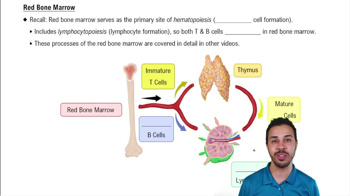
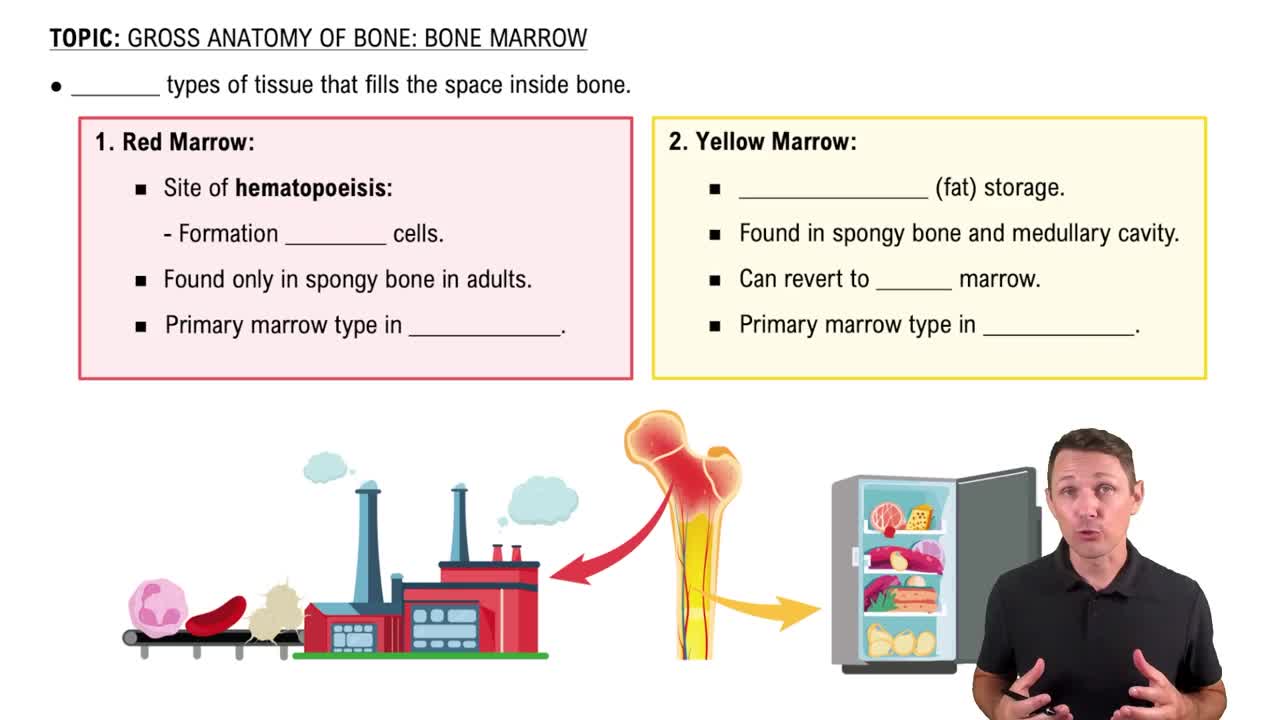
Red bone marrow is primarily involved in hematopoiesis, which is the process of producing blood cells, including red blood cells, white blood cells, and platelets. Yellow bone marrow, on the other hand, primarily stores fat and serves as an energy reserve.
Red bone marrow is found in higher quantities in children and is located in the spongy bone regions of flat bones (e.g., sternum, pelvis) and the ends of long bones. Yellow bone marrow is more abundant in adults and is found in the medullary cavity of long bones.
The red color of red bone marrow is due to the presence of hemoglobin in developing red blood cells, while the yellow color of yellow bone marrow is due to the high concentration of adipocytes (fat cells).
Red bone marrow plays a critical role in the immune system by producing white blood cells, which are essential for fighting infections. Yellow bone marrow, while less active in blood cell production, can convert back to red bone marrow under certain conditions, such as severe blood loss or anemia, to increase blood cell production.
The transition from red bone marrow to yellow bone marrow occurs with age, as the body's demand for active blood cell production decreases and the need for fat storage increases.
Verified video answer for a similar problem:
This video solution was recommended by our tutors as helpful for the problem above
Play a video:
Key Concepts
Here are the essential concepts you must grasp in order to answer the question correctly.
Red Bone Marrow
Red bone marrow is a type of tissue found in certain bones, primarily responsible for the production of blood cells, including red blood cells, white blood cells, and platelets. It contains hematopoietic stem cells, which are crucial for hematopoiesis, the process of blood cell formation. In adults, red marrow is mainly located in the flat bones, such as the pelvis, sternum, and ribs.
Yellow bone marrow is primarily composed of adipose (fat) tissue and serves as a storage site for fats. Unlike red marrow, yellow marrow does not produce blood cells under normal conditions; however, it can be converted back to red marrow in cases of severe blood loss or increased demand for blood cell production. Yellow marrow is predominantly found in the long bones of the body, such as the femur and humerus.
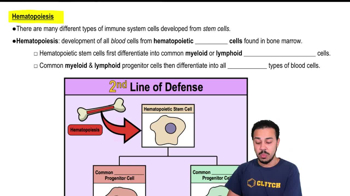
Hematopoiesis is the biological process through which blood cells are formed, occurring mainly in the red bone marrow. This process involves the differentiation of hematopoietic stem cells into various types of blood cells, including erythrocytes, leukocytes, and thrombocytes. Understanding hematopoiesis is essential for comprehending the functional significance of red bone marrow and its role in maintaining healthy blood cell levels.