Define fibrinolysis What is the importance of this process?
Verified step by step guidance
1
Step 1: Define fibrinolysis as the biological process that breaks down fibrin, the protein mesh that stabilizes blood clots, to prevent excessive clotting and maintain normal blood flow.
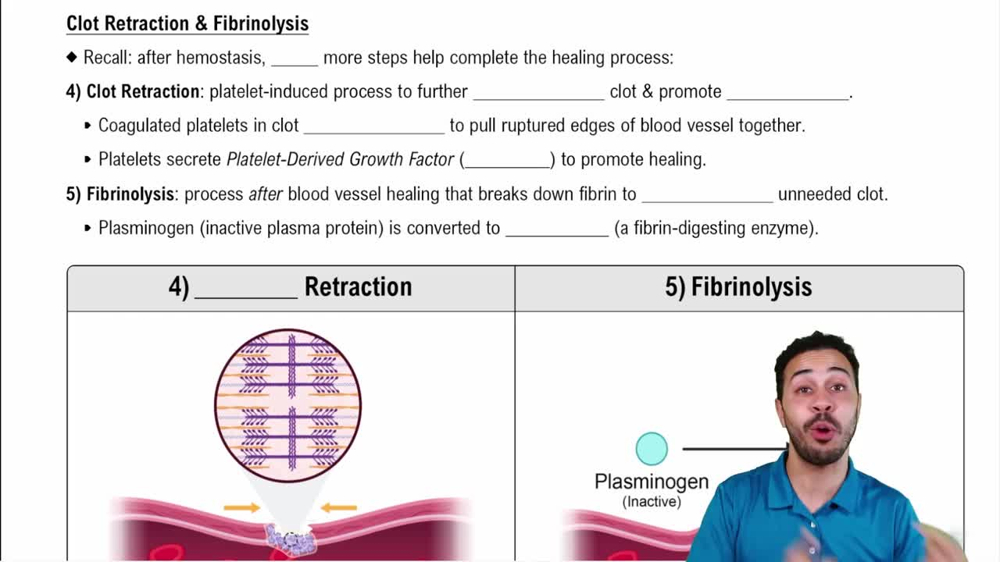
Step 2: Explain that fibrinolysis involves the activation of plasminogen into plasmin, an enzyme that digests fibrin strands, effectively dissolving the clot.
Step 3: Describe the importance of fibrinolysis in maintaining vascular health by removing clots once they have served their purpose, thus preventing blockages in blood vessels.
Step 4: Highlight that fibrinolysis helps to balance clot formation and breakdown, ensuring that wounds heal properly without leading to thrombosis or hemorrhage.
Step 5: Emphasize that dysregulation of fibrinolysis can lead to medical conditions such as excessive bleeding or pathological clot formation, underlining its critical role in hemostasis.
Verified video answer for a similar problem:
This video solution was recommended by our tutors as helpful for the problem above
Video duration:
3m
Play a video:
0 Comments
Key Concepts
Here are the essential concepts you must grasp in order to answer the question correctly.
Fibrinolysis
Fibrinolysis is the biological process that breaks down fibrin, the protein mesh that stabilizes blood clots. This process helps dissolve clots once they have served their purpose, preventing excessive clotting and maintaining normal blood flow.
Plasmin is the key enzyme responsible for fibrinolysis. It is activated from plasminogen and functions by degrading fibrin into soluble fragments, effectively dissolving the clot and restoring vessel patency.
Fibrinolysis is crucial for preventing pathological thrombosis, which can block blood vessels and cause conditions like stroke or heart attack. It balances clot formation and breakdown, ensuring blood vessels remain open and tissue perfusion is maintained.