What happens to the process of respiration when a person is sneezing or coughing?
Verified step by step guidance
1
Understand that respiration involves the movement of air into and out of the lungs, which is controlled by the respiratory system. Sneezing and coughing are reflex actions that temporarily disrupt normal respiration.
Recognize that sneezing is triggered by irritation in the nasal passages, while coughing is triggered by irritation in the respiratory tract, such as the trachea or bronchi. Both reflexes aim to expel irritants or foreign particles from the respiratory system.
During sneezing or coughing, the diaphragm and intercostal muscles contract forcefully, creating a rapid increase in pressure within the thoracic cavity. This pressure forces air out of the lungs at high speed, carrying irritants or particles with it.
Note that the glottis (the opening between the vocal cords) closes momentarily during these reflexes, trapping air in the lungs. When the glottis opens suddenly, the trapped air is expelled forcefully, producing the characteristic sound of a sneeze or cough.
Understand that normal respiration resumes immediately after sneezing or coughing, as the reflex action is brief and does not cause long-term disruption to the respiratory process.
Verified video answer for a similar problem:
This video solution was recommended by our tutors as helpful for the problem above
Play a video:
0 Comments
Key Concepts
Here are the essential concepts you must grasp in order to answer the question correctly.
Respiration
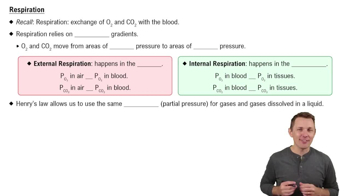
Respiration is the biochemical process by which cells convert glucose and oxygen into energy, producing carbon dioxide and water as byproducts. It involves two main stages: external respiration, which is the exchange of gases between the atmosphere and the lungs, and internal respiration, which occurs at the cellular level. Understanding respiration is crucial to grasp how sneezing and coughing can temporarily alter this process.
Sneezing and coughing are reflex actions that help clear the respiratory tract of irritants, pathogens, or mucus. During these actions, a significant amount of air is expelled forcefully, which can disrupt normal breathing patterns. This sudden expulsion of air can temporarily affect the rate and depth of respiration, as the body prioritizes clearing the airway over regular gas exchange.
Gas exchange refers to the process of oxygen entering the bloodstream and carbon dioxide being expelled from it, primarily occurring in the alveoli of the lungs. During sneezing or coughing, the rapid expulsion of air can lead to a brief interruption in this exchange, potentially reducing oxygen intake and carbon dioxide removal. Understanding this impact is essential for comprehending how respiratory functions adapt during these reflex actions.