Trace the normal pathway of an electrical impulse through the conducting system of the heart.
Verified step by step guidance
1
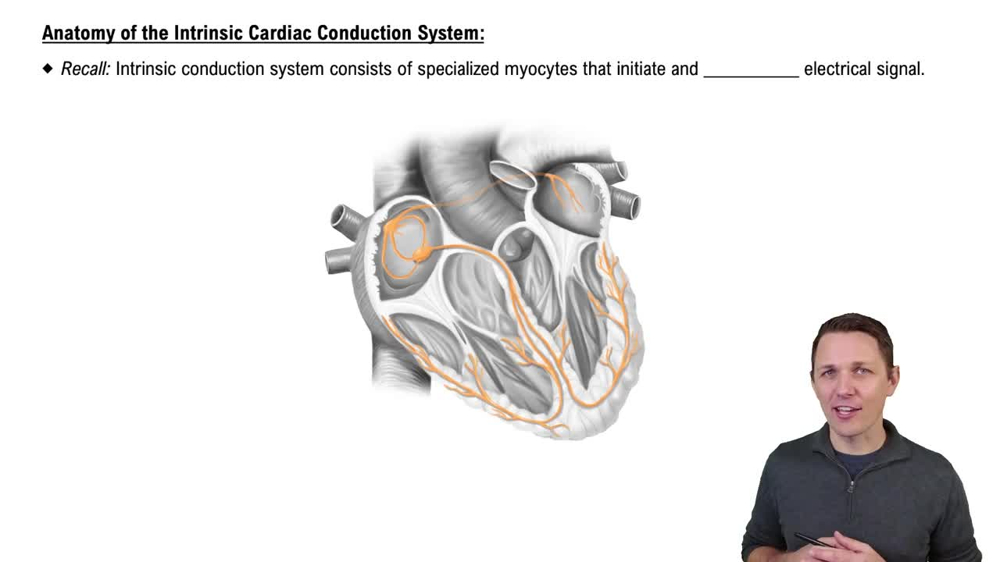
Start by identifying the sinoatrial (SA) node, located in the right atrium near the opening of the superior vena cava. This node acts as the natural pacemaker of the heart, initiating the electrical impulse.
Next, describe how the electrical impulse spreads from the SA node through the atrial muscle fibers, causing the atria to contract and push blood into the ventricles.
Then, explain that the impulse reaches the atrioventricular (AV) node, located at the junction between the atria and ventricles. The AV node delays the impulse slightly to allow the ventricles to fill with blood before contracting.
After the AV node, the impulse travels down the bundle of His, which is located in the interventricular septum. This bundle divides into the right and left bundle branches that conduct the impulse toward the apex of the heart.
Finally, the impulse spreads through the Purkinje fibers, which distribute the electrical signal throughout the ventricular myocardium, causing the ventricles to contract and pump blood to the lungs and the rest of the body.
Verified video answer for a similar problem:
This video solution was recommended by our tutors as helpful for the problem above
Play a video:
0 Comments
Key Concepts
Here are the essential concepts you must grasp in order to answer the question correctly.
Sinoatrial (SA) Node
The SA node, located in the right atrium, is the heart's natural pacemaker. It initiates electrical impulses that set the rhythm for the heart, causing the atria to contract and push blood into the ventricles.
The AV node receives impulses from the SA node and delays them slightly to allow ventricular filling. The impulse then travels through the Bundle of His, which conducts the signal from the atria to the ventricles.
Anatomy of the Intrinsic Cardiac Conduction System
Purkinje Fibers
Purkinje fibers spread the electrical impulse rapidly throughout the ventricles, causing them to contract in a coordinated manner. This ensures efficient pumping of blood from the heart to the lungs and the rest of the body.