Mark the following statements as true or false. If a statement is false, correct it to make a true statement. The main function of erythrocytes is to transport oxygen on the protein hemoglobin.
Verified step by step guidance
1
Step 1: Understand the role of erythrocytes (red blood cells) in the human body. Erythrocytes are specialized cells primarily responsible for transporting oxygen and carbon dioxide between the lungs and tissues.
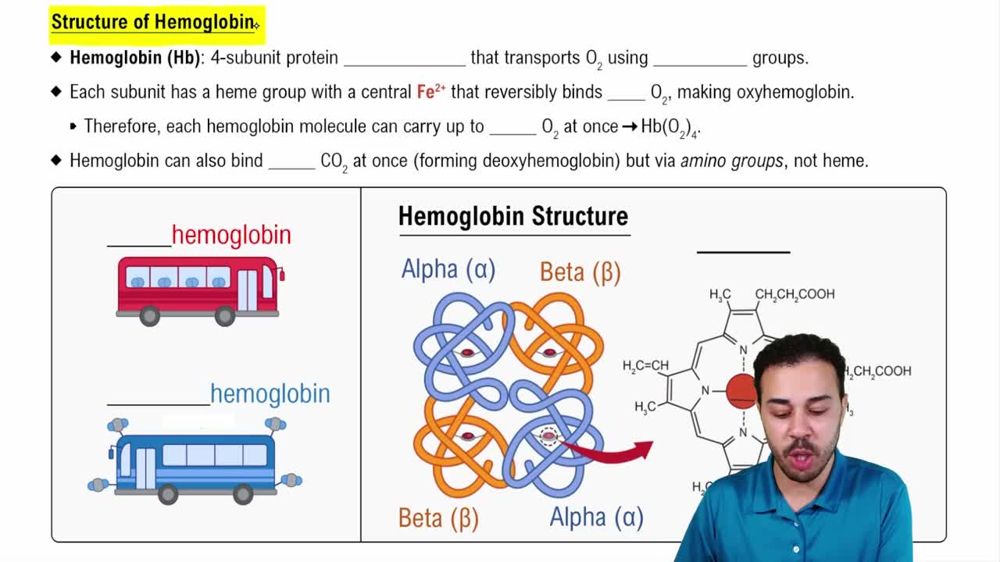
Step 2: Recall the function of hemoglobin, a protein found in erythrocytes. Hemoglobin binds oxygen in the lungs and releases it in tissues, while also facilitating the transport of carbon dioxide back to the lungs.
Step 3: Evaluate the statement: 'The main function of erythrocytes is to transport oxygen on the protein hemoglobin.' This statement is true because erythrocytes are indeed responsible for oxygen transport via hemoglobin.
Step 4: If the statement were false, you would need to correct it by accurately describing the primary function of erythrocytes and their relationship with hemoglobin. For example, you might say, 'Erythrocytes transport oxygen and carbon dioxide, with hemoglobin playing a key role in oxygen binding and release.'
Step 5: Confirm the accuracy of the statement and ensure that the explanation aligns with the physiological role of erythrocytes and hemoglobin in oxygen transport.
Verified video answer for a similar problem:
This video solution was recommended by our tutors as helpful for the problem above
Play a video:
0 Comments
Key Concepts
Here are the essential concepts you must grasp in order to answer the question correctly.
Erythrocytes
Erythrocytes, or red blood cells, are specialized cells in the blood responsible for transporting oxygen from the lungs to the body's tissues and returning carbon dioxide from the tissues back to the lungs. They contain hemoglobin, a protein that binds oxygen, allowing for efficient gas exchange.
Hemoglobin is an iron-containing protein found in erythrocytes that plays a crucial role in oxygen transport. It can bind to oxygen molecules in the lungs and release them in tissues where oxygen is needed, making it essential for cellular respiration and energy production.
Oxygen transport refers to the process by which oxygen is carried from the lungs to the body's cells and tissues. This process is vital for maintaining cellular metabolism and energy production, as oxygen is a key reactant in aerobic respiration, which generates ATP, the energy currency of cells.

 Verified step by step guidance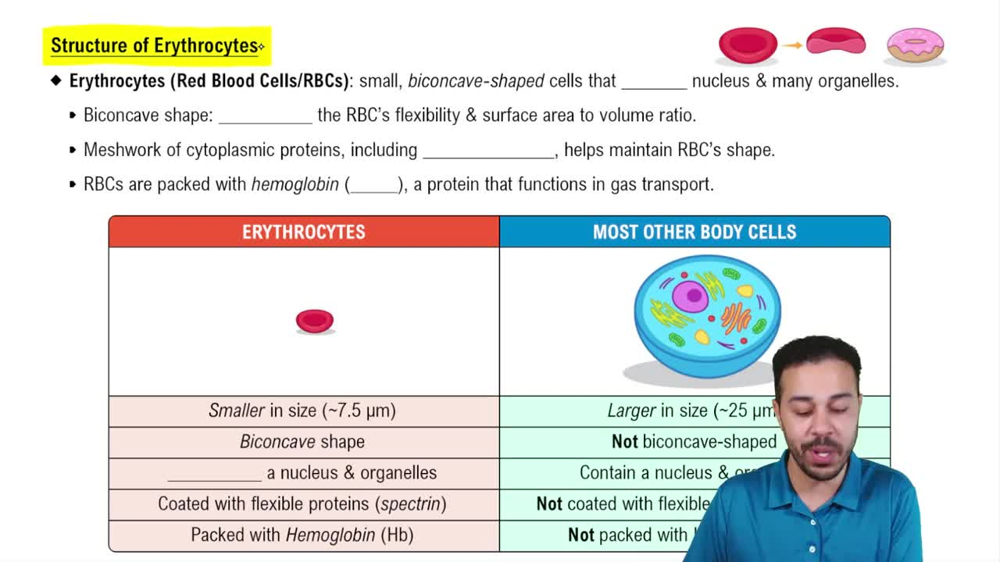
 6:31
6:31