Ch. 19 Blood
Amerman - Human Anatomy & Physiology 2nd Edition
Amerman2nd EditionHuman Anatomy & PhysiologyISBN: 9780136873822Not the one you use?Change textbook
Chapter 19, Problem L3.1

A blood sample from your patient shows that she has decreased numbers of neutrophils. Predict the effects of this condition. How would it differ if numbers of T lymphocytes were decreased instead?

Verified step by step guidance
1
Understand the role of neutrophils: Neutrophils are a type of white blood cell that play a critical role in the innate immune system. They are the first responders to bacterial infections and help by engulfing and destroying pathogens through phagocytosis. A decrease in neutrophils (neutropenia) can lead to increased susceptibility to bacterial infections and impaired wound healing.
Predict the effects of decreased neutrophils: With fewer neutrophils, the patient may experience recurrent bacterial infections, delayed recovery from infections, and an overall weakened ability to fight off pathogens. This condition may also increase the risk of sepsis if infections spread systemically.
Understand the role of T lymphocytes: T lymphocytes are part of the adaptive immune system and are involved in cell-mediated immunity. They help recognize and destroy infected or abnormal cells, such as those infected by viruses or cancerous cells. T lymphocytes also assist in regulating immune responses through helper T cells and cytotoxic T cells.
Predict the effects of decreased T lymphocytes: A reduction in T lymphocytes (T cell deficiency) would impair the body's ability to fight viral infections and intracellular pathogens. It could also lead to a weakened response to vaccines and an increased risk of opportunistic infections, such as those seen in immunocompromised individuals.
Compare the two conditions: Decreased neutrophils primarily affect the body's ability to combat bacterial infections and acute inflammation, while decreased T lymphocytes impair the adaptive immune response, particularly against viral infections and intracellular pathogens. Both conditions weaken the immune system but target different aspects of immunity.

Verified video answer for a similar problem:

This video solution was recommended by our tutors as helpful for the problem above.
Was this helpful?

Key Concepts

Here are the essential concepts you must grasp in order to answer the question correctly.

Neutrophils and Their Function

Neutrophils are a type of white blood cell essential for the immune response, particularly in fighting bacterial infections. They are the first responders to sites of infection or inflammation, where they engulf and destroy pathogens. A decrease in neutrophil count, known as neutropenia, can lead to increased susceptibility to infections, delayed wound healing, and a higher risk of severe complications.
Recommended video:
5:23
Neutrophils

T Lymphocytes and Their Role

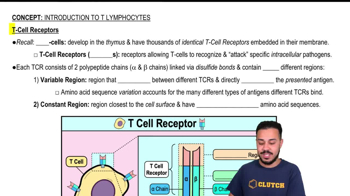
T lymphocytes, or T cells, are crucial components of the adaptive immune system, responsible for recognizing and responding to specific pathogens. They play a key role in cell-mediated immunity, helping to eliminate infected cells and coordinating the overall immune response. A decrease in T cell numbers can impair the body's ability to fight viral infections and may lead to increased risk of opportunistic infections and autoimmune disorders.
Recommended video:
5:18
T-Cell Receptors

Comparative Effects of Neutrophil and T Lymphocyte Depletion

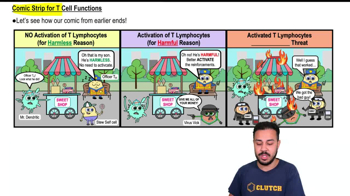
The effects of decreased neutrophils versus decreased T lymphocytes differ significantly due to their distinct roles in immunity. Neutropenia primarily increases the risk of bacterial infections, while a reduction in T cells compromises the body's ability to combat viral infections and regulate immune responses. Understanding these differences is crucial for predicting patient outcomes and tailoring appropriate treatments.
Recommended video:
2:58
Comic Strip for Effects of T Cell Functions
Related Practice
Textbook Question

Predict the effects of each of the following on systemic arterial blood pressure:

Blood loss from a bleeding ulcer

877
views

Textbook Question

Ms. Wu, whose blood type is O−, requires a blood transfusion. Her family members volunteer to donate blood. Their blood types are as follows: her son, type B−; her husband, type B+; her daughter, type O+. Which family members could safely donate blood to Ms. Wu? Who could not? Explain.

959
views
1
rank
Textbook Question

Mr. Jackson presents to the emergency room with a minor wound that has bled for several days. An examination of his medical history reveals that Mr. Jackson has hemophilia A, which is caused by a deficiency of factor VIII. Your co-worker suggests that you give Mr. Jackson some platelets to stop the bleeding. Will this help your patient? Why or why not?

611
views
Textbook Question

Elise is a 36-year-old woman who has volunteered to donate red bone marrow to a patient in need of a bone marrow transplant for aplastic anemia. The physician performing the bone marrow extraction is an intern, and it is her first time doing the procedure. She asks that you prepare a site on Elise's tibia for the procedure. Is this a good place for red bone marrow to be extracted, considering Elise's age? Why or why not? Can you suggest an alternative location? Explain.

467
views
Textbook Question

Mark the following statements as true or false. If a statement is false, correct it to make a true statement.

Erythrocytes are biconcave discs with prominent nuclei.

993
views
Textbook Question

Predict the effects of each of the following on systemic arterial blood pressure:

The practice of 'blood doping,' which increases the number of red blood cells in the blood

684
views