Ch. 14 The Autonomic Nervous System and Homeostasis
Amerman - Human Anatomy & Physiology 2nd Edition
Amerman2nd EditionHuman Anatomy & PhysiologyISBN: 9780136873822Not the one you use?Change textbook
Chapter 14, Problem L2.4

Common findings in heart failure are fluid retention by the kidneys and stimulation of the heart by the sympathetic nervous system. How would both of these findings help the body to compensate for the failing heart?

Verified step by step guidance
1
Understand the role of fluid retention by the kidneys: The kidneys respond to reduced blood flow caused by heart failure by retaining sodium and water. This increases blood volume, which can help maintain blood pressure and improve perfusion to vital organs.
Analyze the role of the sympathetic nervous system: In heart failure, the sympathetic nervous system is activated to compensate for reduced cardiac output. It increases heart rate (tachycardia) and contractility, which can temporarily improve the pumping ability of the heart.
Connect fluid retention to preload: Increased blood volume from fluid retention raises the preload (the amount of blood returning to the heart). According to the Frank-Starling mechanism, a higher preload can enhance the heart's ability to contract and pump blood more effectively.
Relate sympathetic stimulation to afterload and systemic circulation: Sympathetic activation causes vasoconstriction, which helps maintain blood pressure in the face of reduced cardiac output. This ensures that vital organs like the brain and kidneys continue to receive adequate blood flow.
Evaluate the limitations of these compensatory mechanisms: While fluid retention and sympathetic stimulation can temporarily support circulation, they may also worsen heart failure over time by increasing the workload on the heart and contributing to congestion in tissues and lungs.

Verified video answer for a similar problem:

This video solution was recommended by our tutors as helpful for the problem above.
Was this helpful?

Key Concepts

Here are the essential concepts you must grasp in order to answer the question correctly.

Fluid Retention

Fluid retention in heart failure occurs when the kidneys retain more sodium and water due to decreased blood flow and pressure. This compensatory mechanism aims to increase blood volume, which can help maintain cardiac output despite the heart's reduced ability to pump effectively. However, excessive fluid retention can lead to edema and increased workload on the heart.
Recommended video:
Guided course
3:33
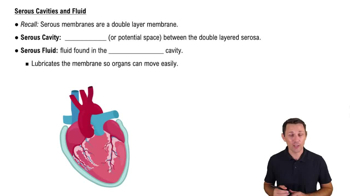
Serous Cavity and Fluid

Sympathetic Nervous System Activation

The sympathetic nervous system (SNS) is activated in heart failure to increase heart rate and contractility, thereby enhancing cardiac output. This response is part of the body's fight-or-flight mechanism, which helps to compensate for the heart's diminished function. While this can temporarily improve circulation, prolonged SNS activation can lead to further heart damage and worsening heart failure.
Recommended video:
1:20
Sympathetic Nervous System Example 1

Compensatory Mechanisms

Compensatory mechanisms in heart failure are physiological responses that aim to maintain adequate blood flow and oxygen delivery despite the heart's impaired function. These include fluid retention and SNS activation, which work together to stabilize blood pressure and improve perfusion to vital organs. However, these mechanisms can become maladaptive over time, contributing to the progression of heart failure.
Recommended video:
3:02
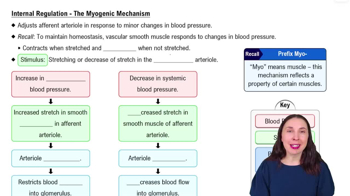
Internal Regulation - The Myogenic Mechanism