Which of the following are correctly matched? a. Short bone—wrist b. Long bone—leg c. Irregular bone—sternum d. Flat bone—cranium
Verified step by step guidance
1
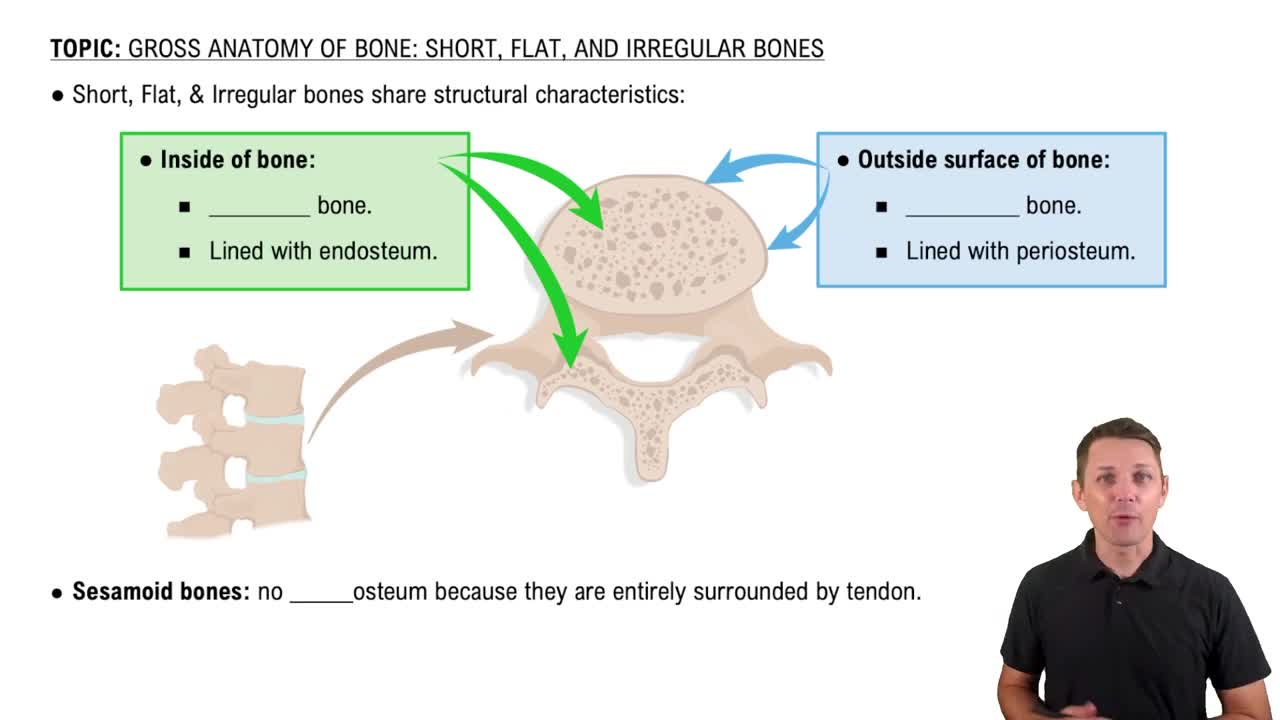
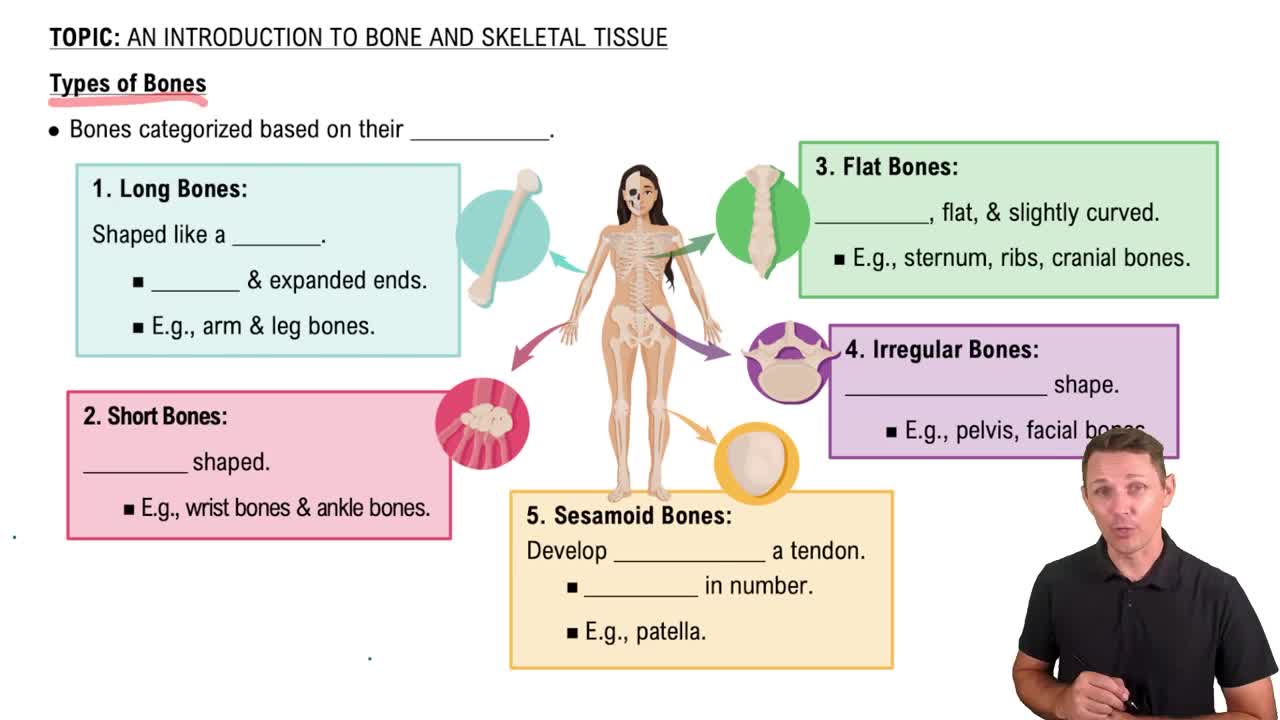
Understand the classification of bones based on their shapes: Short bones are cube-shaped and found in areas like the wrist and ankle; Long bones are longer than they are wide and found in limbs; Irregular bones have complex shapes and do not fit into other categories; Flat bones are thin, flattened, and often curved, such as those in the cranium.
Analyze option (a): Determine if the wrist contains short bones. Recall that the carpal bones in the wrist are classified as short bones due to their cube-like shape.
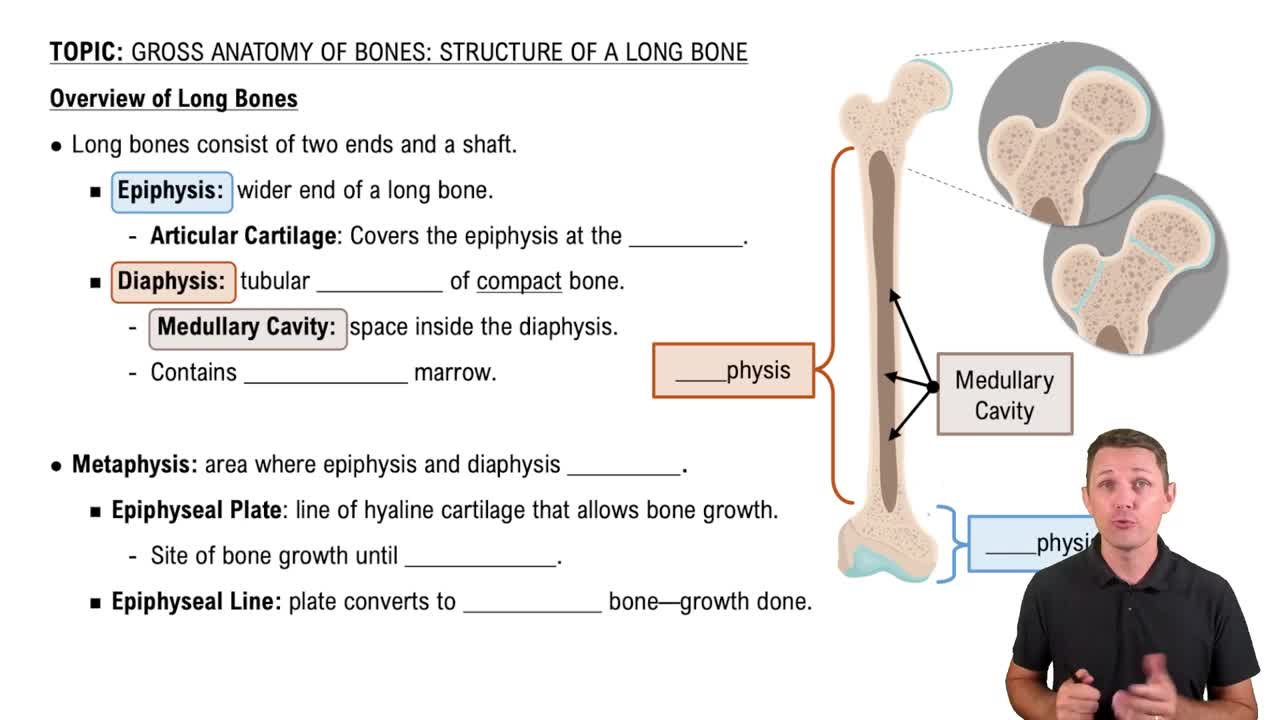
Analyze option (b): Determine if the leg contains long bones. Recall that bones like the femur, tibia, and fibula in the leg are classified as long bones because they are longer than they are wide.
Analyze option (c): Determine if the sternum is an irregular bone. Recall that the sternum is a flat bone, not an irregular bone, as it is thin and flattened.
Analyze option (d): Determine if the cranium contains flat bones. Recall that the bones of the cranium, such as the parietal and frontal bones, are classified as flat bones due to their thin and curved structure.
Verified video answer for a similar problem:
This video solution was recommended by our tutors as helpful for the problem above.
Video duration:
3m
Play a video:
0 Comments
Was this helpful?
Key Concepts
Here are the essential concepts you must grasp in order to answer the question correctly.
Types of Bones
Bones are classified into four main types based on their shapes: long bones (e.g., femur), short bones (e.g., carpals), flat bones (e.g., skull), and irregular bones (e.g., vertebrae). Each type serves specific functions in the body, such as support, movement, and protection.
Short bones are roughly cube-shaped and provide stability and support with little movement. They are primarily found in the wrists (carpals) and ankles (tarsals), allowing for a range of motion while maintaining strength.
Long bones are characterized by a greater length than width and are crucial for movement and support. They are primarily found in the limbs, such as the femur in the leg, and contain marrow for blood cell production.


 Verified step by step guidance
 4:14
4:14