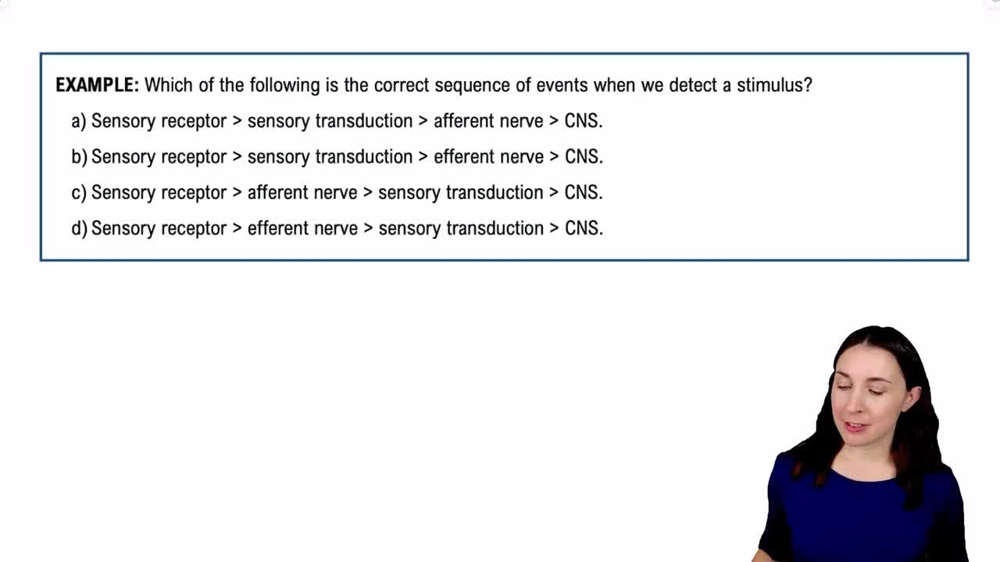
Which of the following statements about the general functions of the nervous system is false? a. The three primary functions of the nervous system include sensory, integrative, and motor functions. b. The integrative functions of the nervous system are its processing functions. c. Sensory stimuli are transmitted on sensory efferent fibers to a sensory receptor. d. Motor functions are carried out by fibers that carry signals to an effector.
Verified step by step guidance
1
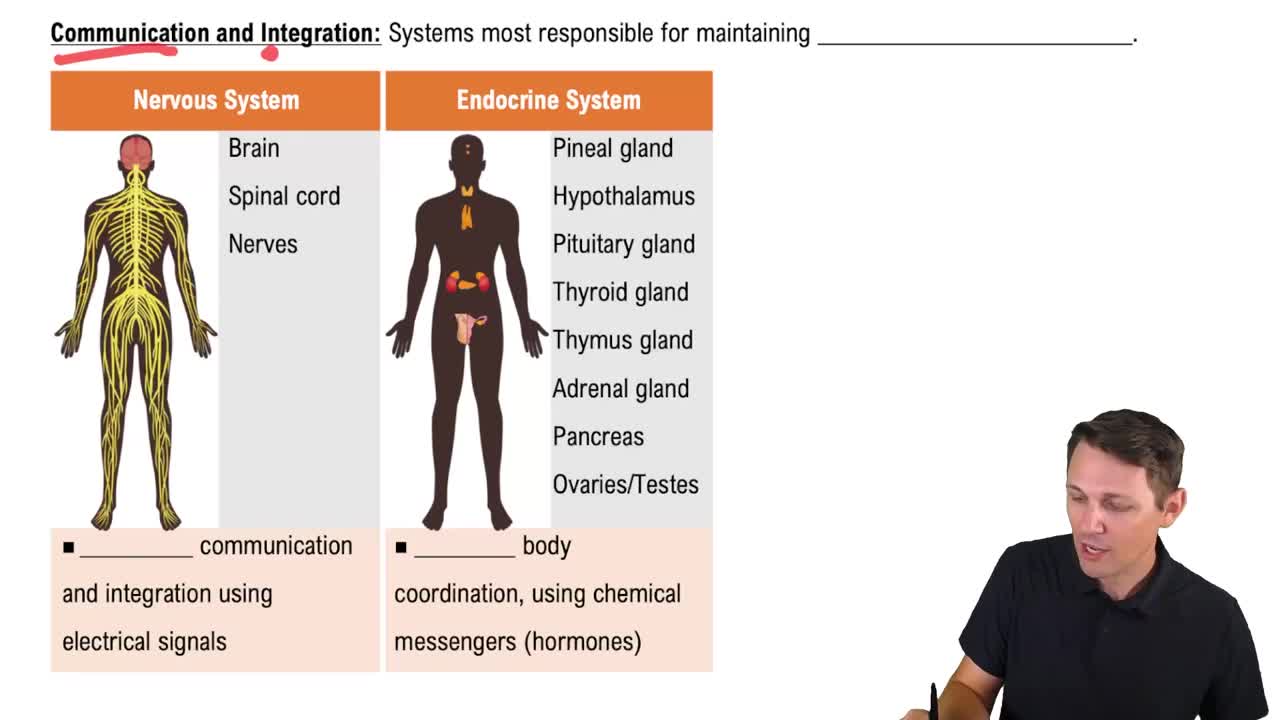
Step 1: Begin by understanding the three primary functions of the nervous system: sensory, integrative, and motor functions. Sensory functions involve detecting stimuli from the environment or within the body, integrative functions involve processing and interpreting sensory input, and motor functions involve responding to stimuli by activating effectors such as muscles or glands.
Step 2: Analyze each statement in the problem to determine its accuracy. For example, statement (a) correctly identifies the three primary functions of the nervous system: sensory, integrative, and motor functions.
Step 3: Evaluate statement (b). The integrative functions of the nervous system indeed involve processing sensory input, making decisions, and coordinating responses. This statement is accurate.
Step 4: Examine statement (c). Sensory stimuli are transmitted on sensory afferent fibers (not efferent fibers) to the central nervous system, not to a sensory receptor. This makes statement (c) false.
Step 5: Review statement (d). Motor functions are carried out by motor (efferent) fibers that transmit signals from the central nervous system to effectors such as muscles or glands. This statement is correct. Therefore, the false statement is (c).
Verified video answer for a similar problem:
This video solution was recommended by our tutors as helpful for the problem above
Play a video:
0 Comments
Key Concepts
Here are the essential concepts you must grasp in order to answer the question correctly.
Functions of the Nervous System
The nervous system has three primary functions: sensory, integrative, and motor. Sensory functions involve receiving stimuli from the environment, integrative functions process this information to make decisions, and motor functions execute responses by sending signals to muscles or glands.
Sensory fibers, also known as afferent fibers, carry signals from sensory receptors to the central nervous system. In contrast, efferent fibers transmit signals from the central nervous system to effectors, such as muscles or glands, facilitating a response to stimuli.
Integrative functions of the nervous system refer to the processing and interpretation of sensory information. This involves analyzing incoming data, making decisions, and coordinating appropriate responses, which are crucial for effective interaction with the environment.