Elise is a 36-year-old woman who has volunteered to donate red bone marrow to a patient in need of a bone marrow transplant for aplastic anemia. The physician performing the bone marrow extraction is an intern, and it is her first time doing the procedure. She asks that you prepare a site on Elise's tibia for the procedure. Is this a good place for red bone marrow to be extracted, considering Elise's age? Why or why not? Can you suggest an alternative location? Explain.
Verified step by step guidance
1
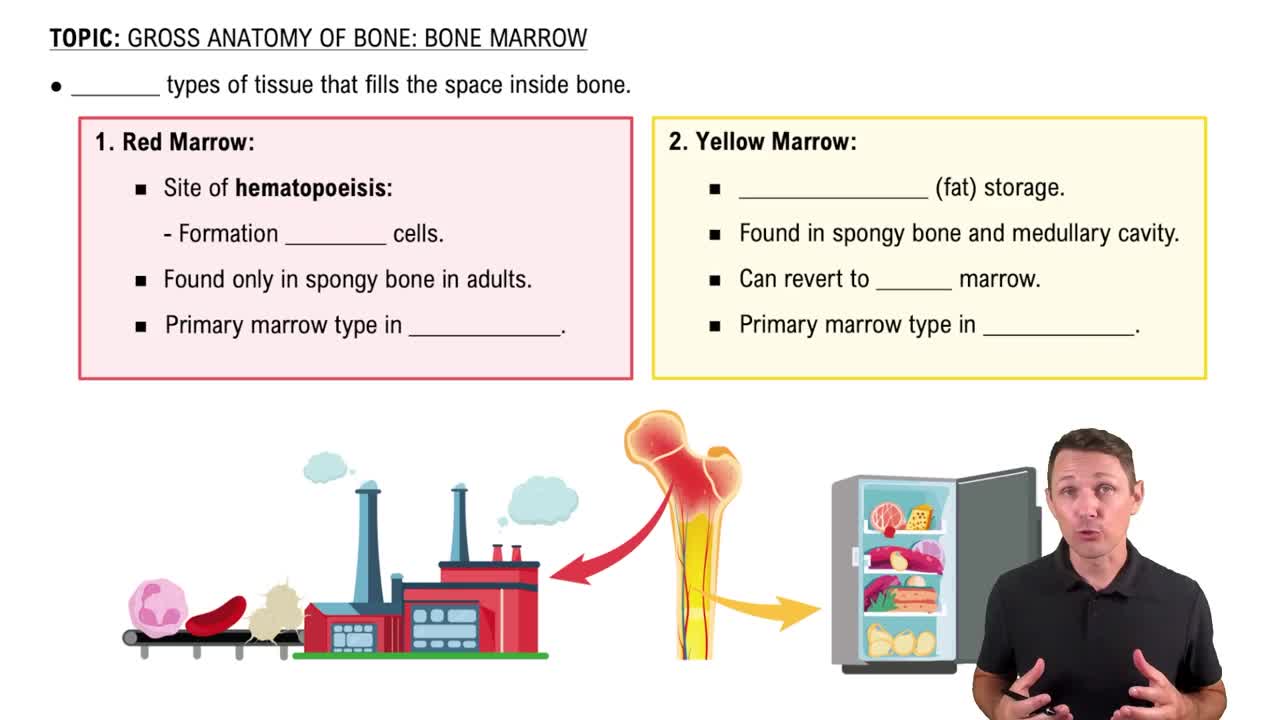
Step 1: Understand the role of red bone marrow in the body. Red bone marrow is responsible for hematopoiesis, the process of producing blood cells, including red blood cells, white blood cells, and platelets. It is found in specific bones, particularly in adults.
Step 2: Consider the anatomy of the tibia. The tibia is a long bone located in the lower leg. In adults, the red bone marrow in long bones like the tibia is replaced by yellow bone marrow, which primarily stores fat and does not participate in hematopoiesis. Therefore, the tibia is not a suitable site for red bone marrow extraction in Elise's case.
Step 3: Identify bones that retain red bone marrow in adults. In adults, red bone marrow is typically found in flat bones and the ends of long bones. Examples include the sternum, pelvis (iliac crest), vertebrae, and proximal ends of the femur and humerus.
Step 4: Suggest an alternative site for extraction. The iliac crest of the pelvis is a common and preferred site for red bone marrow extraction in adults. It is easily accessible, contains a significant amount of red bone marrow, and is less invasive compared to other sites.
Step 5: Explain the reasoning behind the alternative site. The iliac crest is a flat bone that retains red bone marrow throughout adulthood, making it an ideal location for bone marrow extraction. Additionally, the procedure at this site is well-documented and widely practiced, ensuring safety and effectiveness for both the donor and the recipient.
Verified video answer for a similar problem:
This video solution was recommended by our tutors as helpful for the problem above
Play a video:
0 Comments
Key Concepts
Here are the essential concepts you must grasp in order to answer the question correctly.
Bone Marrow Locations
Bone marrow is primarily found in the central cavities of certain bones, with the most common sites for extraction being the iliac crest (hip bone) and the sternum. While the tibia does contain some marrow, it is not the preferred site for extraction due to its smaller volume and the potential for complications. Understanding the anatomy of bone marrow locations is crucial for safe and effective procedures.
Aplastic anemia is a condition where the bone marrow fails to produce sufficient blood cells, leading to fatigue, increased risk of infections, and bleeding issues. This condition often necessitates a bone marrow transplant to restore healthy blood cell production. Knowledge of aplastic anemia helps in understanding the urgency and importance of finding a suitable donor and extraction site.
The experience level of the physician performing the procedure is critical for patient safety. An intern performing a bone marrow extraction for the first time may lack the necessary skills to handle complications that could arise. It is essential to consider the intern's training and possibly involve a more experienced physician to ensure the procedure is conducted safely and effectively.