Each of the following statements is false. Correct each to make a true statement. The cutaneous membrane is composed of simple squamous epithelium, loose connective tissue, and dense irregular connective tissue.
Verified step by step guidance
1
Identify the components of the cutaneous membrane. The cutaneous membrane, also known as the skin, is composed of two main layers: the epidermis and the dermis.
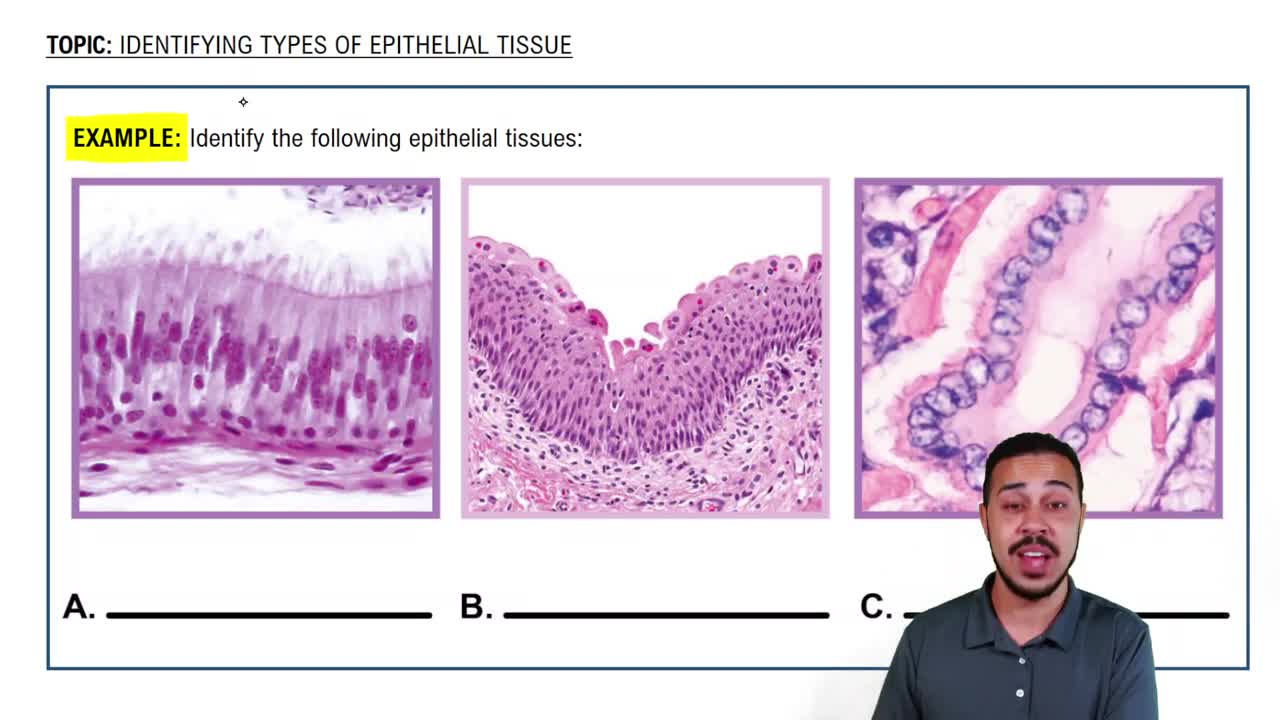
Correct the description of the epidermis. The epidermis is made up of keratinized stratified squamous epithelium, not simple squamous epithelium. This type of epithelium provides a protective barrier against environmental damage.
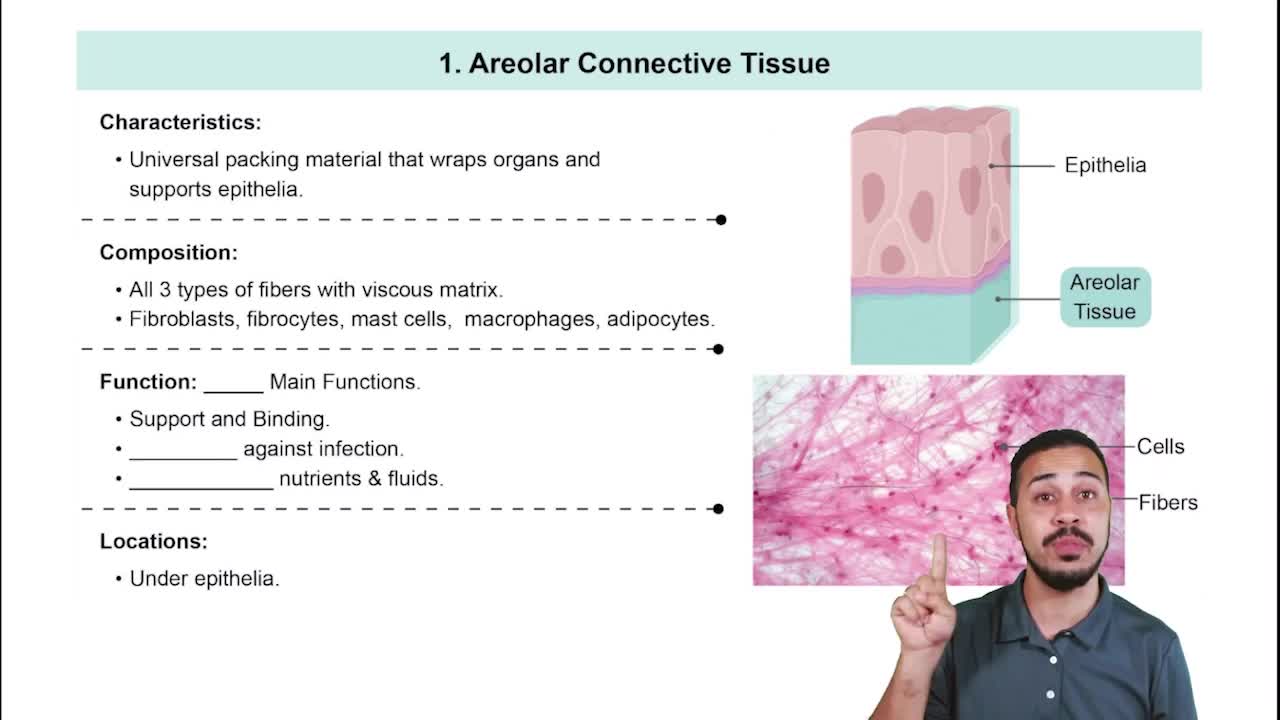
Correct the description of the dermis. The dermis is composed of two layers: the papillary layer, which consists of loose connective tissue (areolar tissue), and the reticular layer, which consists of dense irregular connective tissue.
Explain the relationship between the layers. The epidermis is the outermost layer, while the dermis lies beneath it, providing structural support and housing blood vessels, nerves, and other structures.
Summarize the corrected statement. The cutaneous membrane is composed of keratinized stratified squamous epithelium in the epidermis, loose connective tissue in the papillary layer of the dermis, and dense irregular connective tissue in the reticular layer of the dermis.
Verified video answer for a similar problem:
This video solution was recommended by our tutors as helpful for the problem above
Play a video:
0 Comments
Key Concepts
Here are the essential concepts you must grasp in order to answer the question correctly.
Cutaneous Membrane
The cutaneous membrane, commonly known as the skin, is the largest organ of the body and consists of two primary layers: the epidermis and the dermis. The epidermis is made up of stratified squamous epithelium, which provides a protective barrier, while the dermis contains dense irregular connective tissue that supports and nourishes the epidermis.
Epithelial tissues are classified based on the number of cell layers and the shape of the cells. Simple squamous epithelium consists of a single layer of flat cells, which is not found in the cutaneous membrane. Instead, the skin's outer layer is composed of stratified squamous epithelium, which is better suited for protection against abrasion and environmental damage.
Connective tissues provide structural support and are categorized into various types, including loose and dense connective tissues. In the context of the cutaneous membrane, the dermis contains dense irregular connective tissue, which provides strength and elasticity, while the loose connective tissue is typically found in the hypodermis, beneath the dermis, rather than within the cutaneous membrane itself.