Fill in the blanks for each of the following statements: a. The process by which urine is eliminated is called _____, and it is mediated by reflexes involving the _____ nervous system. b. The mucosa of the organs of the urinary tract is lined with _____ epithelium. c. The three layers of smooth muscle in the urinary bladder are known as the _____ muscle. d. The female urethra provides a passageway for _____, whereas the male urethra provides a passageway for _____ and _____.
Verified step by step guidance
1
Step 1: For part (a), identify the process by which urine is eliminated from the body. This process involves the contraction of the bladder and relaxation of the sphincters, which is controlled by reflexes involving the autonomic nervous system. Specifically, determine which branch of the autonomic nervous system (sympathetic or parasympathetic) is responsible for this reflex.
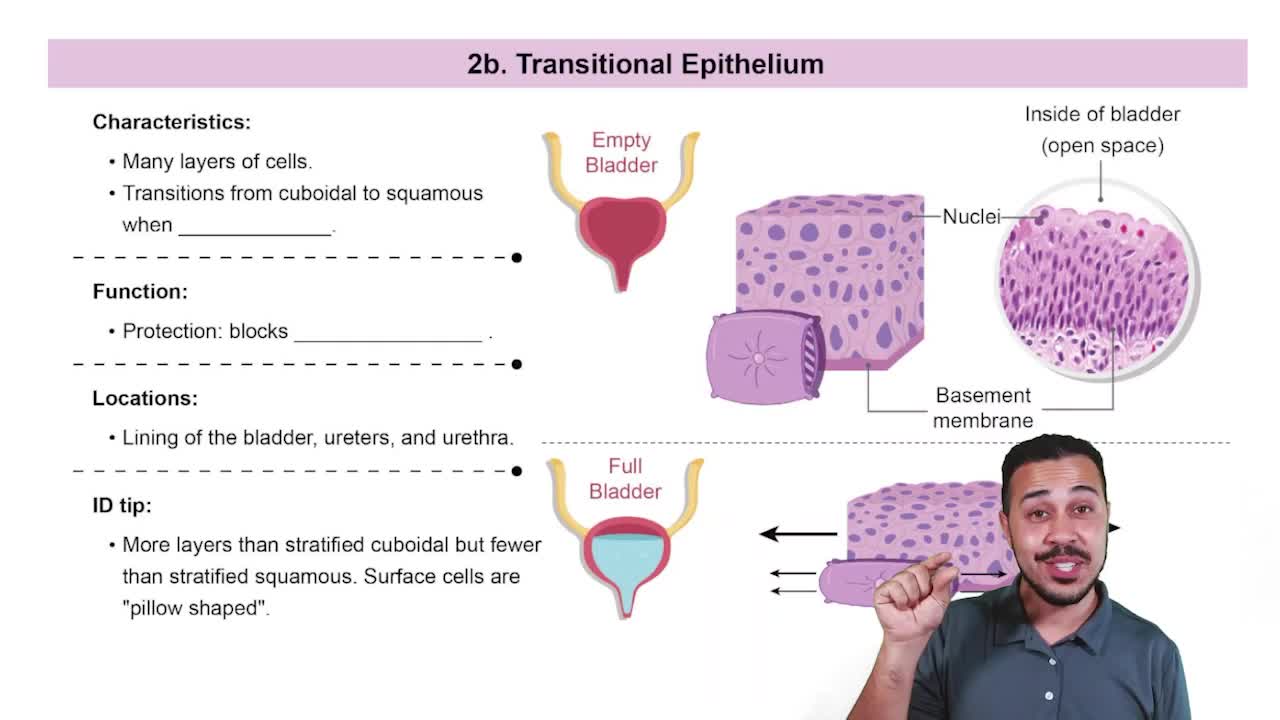
Step 2: For part (b), recall the type of epithelium that lines the mucosa of the urinary tract. This epithelium is specialized to stretch and return to its original shape, accommodating the fluctuating volume of urine.
Step 3: For part (c), identify the name of the three layers of smooth muscle in the urinary bladder. These layers work together to contract and expel urine during urination.
Step 4: For part (d), consider the function of the female urethra, which serves as a passageway for a specific substance. Then, identify the dual functions of the male urethra, which serves as a passageway for two different substances.
Step 5: Review the anatomy and physiology of the urinary system to ensure that the blanks are filled with the correct terms based on their respective functions and structures.
Verified video answer for a similar problem:
This video solution was recommended by our tutors as helpful for the problem above
Play a video:
0 Comments
Key Concepts
Here are the essential concepts you must grasp in order to answer the question correctly.
Micturition
Micturition is the physiological process of urine elimination from the bladder, commonly referred to as urination. This process is primarily controlled by the autonomic nervous system, which mediates reflexes that coordinate the contraction of the bladder muscles and the relaxation of the urethral sphincters, allowing for the expulsion of urine.
Transitional Epithelium
Transitional epithelium is a specialized type of stratified epithelium found lining the urinary tract, including the bladder, ureters, and part of the urethra. This epithelium is unique because it can stretch and change shape, accommodating the fluctuating volume of urine in the bladder while providing a barrier to prevent urine from leaking into surrounding tissues.
The detrusor muscle is a layer of smooth muscle found in the wall of the urinary bladder. It consists of three layers that work together to contract and relax during the micturition process, facilitating the storage and expulsion of urine. Proper functioning of the detrusor muscle is essential for normal bladder control and urinary function.