Explain how emphysema and congestive heart failure can lead to acid-base imbalance.
Verified step by step guidance
1
Step 1: Understand the normal acid-base balance in the body, which is primarily maintained by the respiratory system regulating carbon dioxide (CO2) levels and the kidneys managing bicarbonate (HCO3-) levels.
Step 2: Analyze how emphysema affects this balance. Emphysema damages the alveoli in the lungs, reducing the surface area for gas exchange, which leads to decreased elimination of CO2. This causes CO2 to accumulate in the blood, increasing acidity and resulting in respiratory acidosis.
Step 3: Examine congestive heart failure (CHF) and its impact. CHF leads to poor cardiac output and reduced tissue perfusion, which can cause hypoxia and anaerobic metabolism, producing lactic acid and contributing to metabolic acidosis. Additionally, fluid retention can affect kidney function, impairing acid-base regulation.
Step 4: Consider compensatory mechanisms. In emphysema, the kidneys may retain bicarbonate to buffer the increased CO2, partially correcting the acidosis. In CHF, respiratory compensation may occur by increasing ventilation to reduce CO2 levels, but this can be limited by pulmonary congestion.
Step 5: Summarize that both emphysema and CHF disrupt normal acid-base homeostasis through different mechanisms—emphysema primarily causes respiratory acidosis due to CO2 retention, while CHF can cause metabolic acidosis due to poor perfusion and lactic acid buildup, with the body attempting to compensate through renal and respiratory adjustments.
Verified video answer for a similar problem:
This video solution was recommended by our tutors as helpful for the problem above
Video duration:
2m
Play a video:
0 Comments
Key Concepts
Here are the essential concepts you must grasp in order to answer the question correctly.
Respiratory Acidosis in Emphysema
Emphysema damages alveoli, reducing gas exchange and causing CO2 retention. This leads to increased blood CO2 levels, lowering pH and resulting in respiratory acidosis. The body may compensate by renal bicarbonate retention to buffer the acidity.
Congestive heart failure reduces tissue perfusion, causing anaerobic metabolism and lactic acid buildup. This accumulation of acids lowers blood pH, leading to metabolic acidosis. The kidneys attempt to compensate by increasing acid excretion and bicarbonate reabsorption.
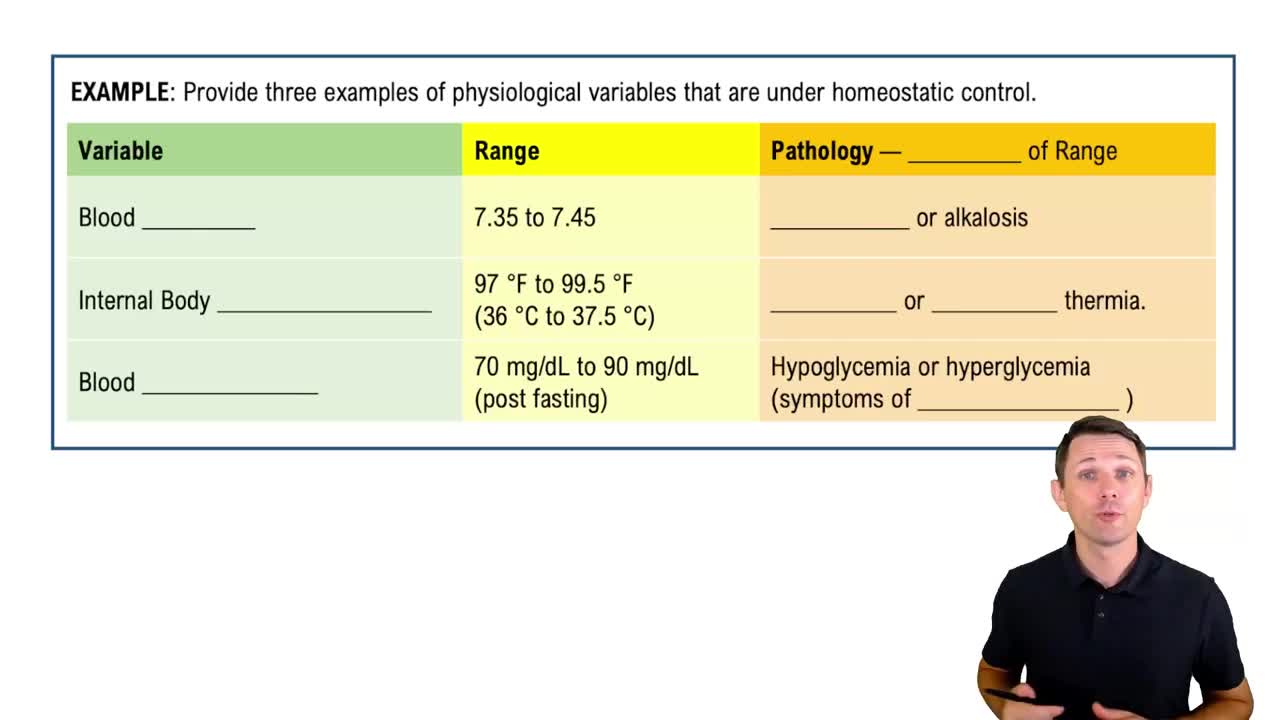
The body maintains pH balance through respiratory and renal compensation. In respiratory acidosis, kidneys retain bicarbonate; in metabolic acidosis, respiration increases to expel CO2. Understanding these mechanisms is key to interpreting acid-base imbalances in diseases like emphysema and heart failure.