Sometimes inhibitors can be harmful to a cell; often they are beneficial. Explain.
Verified step by step guidance
1
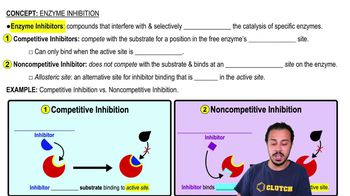
Understand the role of inhibitors: Inhibitors are molecules that bind to enzymes and decrease their activity. They can be competitive, non-competitive, or uncompetitive, each affecting enzyme activity differently.
Identify harmful effects: Inhibitors can be harmful when they disrupt essential metabolic pathways. For example, if an inhibitor blocks an enzyme critical for ATP production, it can lead to energy deficits in the cell.
Recognize beneficial effects: Inhibitors can be beneficial by regulating metabolic pathways. For instance, feedback inhibition is a natural mechanism where the end product of a pathway inhibits an enzyme involved earlier in the pathway, preventing overproduction of the product.
Consider pharmaceutical applications: Many drugs are designed as enzyme inhibitors to treat diseases. For example, ACE inhibitors are used to lower blood pressure by inhibiting the angiotensin-converting enzyme.
Evaluate context dependency: The impact of an inhibitor depends on the context, such as the type of cell, the specific enzyme targeted, and the physiological conditions. This determines whether the inhibitor's effect is ultimately harmful or beneficial.
Verified video answer for a similar problem:
This video solution was recommended by our tutors as helpful for the problem above
Video duration:
1m
Play a video:
0 Comments
Key Concepts
Here are the essential concepts you must grasp in order to answer the question correctly.
Enzyme Inhibition
Enzyme inhibition refers to the process where a molecule, known as an inhibitor, decreases or halts the activity of an enzyme. This can occur through various mechanisms, such as competitive or non-competitive inhibition, affecting the enzyme's ability to catalyze reactions. While inhibitors can disrupt normal cellular functions, they can also regulate metabolic pathways, ensuring balance within the cell.
Cellular regulation involves the mechanisms that control cellular processes, including metabolism, growth, and response to environmental changes. Inhibitors play a crucial role in this regulation by modulating enzyme activity, which can prevent overproduction of certain metabolites or protect cells from harmful substances. This balance is essential for maintaining homeostasis within the cell.
The distinction between toxicity and therapeutic effects of inhibitors is vital in understanding their dual roles. While some inhibitors can be toxic and lead to cell damage or death, others are used therapeutically, such as in drug design, to target specific pathways in diseases like cancer. The context in which an inhibitor is used determines whether its effects are harmful or beneficial.

 1:33 minutes
 Verified step by step guidance
 05:03
05:03