

Mr. Wu is a patient with kidney disease who presents to your clinic for monitoring. You notice on his chart that his GFR was estimated through inulin administration to be about 35 ml/min. What does this tell you about the health of his kidneys? Mr. Wu is taking a medication that is normally excreted from the body in the urine. You order blood work and find that the concentration of this medication in his plasma is much higher than normal. How does his decreased GFR explain the elevated level of medication in his plasma?
Verified step by step guidance
1
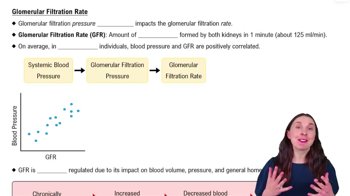
Understand the concept of GFR (glomerular filtration rate): GFR is a measure of how well the kidneys are filtering blood. A normal GFR is typically around 90-120 ml/min. A GFR of 35 ml/min indicates significantly reduced kidney function, which is consistent with chronic kidney disease (CKD).
Recognize the role of the kidneys in drug excretion: The kidneys filter waste products and medications from the blood, excreting them into the urine. A reduced GFR means the kidneys are less efficient at filtering substances, including medications, from the bloodstream.
Relate GFR to plasma drug concentration: When GFR is decreased, the filtration of the medication into the urine is reduced. This leads to slower clearance of the drug from the bloodstream, causing its concentration in the plasma to rise.
Consider the implications of elevated plasma drug levels: High plasma drug levels can increase the risk of toxicity. This is particularly important for medications with a narrow therapeutic index, where small changes in concentration can lead to adverse effects.
Conclude the relationship: Mr. Wu's decreased GFR explains the elevated plasma medication levels because his kidneys are not filtering the drug efficiently. This highlights the need to adjust the medication dosage or frequency to account for his reduced kidney function and prevent potential toxicity.
Verified video answer for a similar problem:
This video solution was recommended by our tutors as helpful for the problem above
Play a video:
0 Comments
Key Concepts
Here are the essential concepts you must grasp in order to answer the question correctly.
Glomerular Filtration Rate (GFR)
GFR is a measure of how well the kidneys filter blood, specifically the volume of fluid filtered from the renal glomeruli into the Bowman's capsule per minute. A normal GFR is typically around 90-120 ml/min, and a GFR of 35 ml/min indicates significantly reduced kidney function, suggesting chronic kidney disease or acute kidney injury. This reduction in GFR can lead to the accumulation of waste products and medications in the bloodstream.
Many medications are eliminated from the body through renal excretion, which involves filtration, secretion, and reabsorption processes in the kidneys. When GFR is decreased, the kidneys are less effective at filtering these medications from the blood, leading to higher plasma concentrations. This can result in potential toxicity or adverse effects, as the body is unable to clear the drug efficiently.
Pharmacokinetics refers to how the body absorbs, distributes, metabolizes, and excretes drugs. In patients with kidney disease, altered pharmacokinetics can lead to changes in drug clearance and necessitate dosage adjustments. Understanding these changes is crucial for safe medication management, as impaired renal function can significantly affect the therapeutic levels of drugs, increasing the risk of side effects and toxicity.