Based on Figure 7.18, which of these experimental treatments would increase the rate of sucrose transport into a plant cell?a. decreasing extracellular sucrose concentrationb. decreasing extracellular pHc. decreasing cytoplasmic pHd. adding a substance that makes the membrane more permeable to hydrogen ions
Verified step by step guidance
1
Identify the mechanism of sucrose transport into plant cells, which is typically through a sucrose-H+ symporter.
Understand that the sucrose-H+ symporter relies on a proton gradient, where H+ ions move down their concentration gradient into the cell, driving the transport of sucrose against its concentration gradient.
Consider how each option affects the proton gradient or the symporter's function: (a) decreasing extracellular sucrose concentration would reduce the driving force for sucrose entry, (b) decreasing extracellular pH increases the H+ concentration outside the cell, enhancing the proton gradient, (c) decreasing cytoplasmic pH would increase H+ concentration inside the cell, reducing the proton gradient, (d) adding a substance that makes the membrane more permeable to hydrogen ions could dissipate the proton gradient.
Evaluate which option would enhance the proton gradient and thus increase the rate of sucrose transport.
Conclude that the option which increases the proton gradient across the membrane would likely increase the rate of sucrose transport into the plant cell.
Verified video answer for a similar problem:
This video solution was recommended by our tutors as helpful for the problem above
Video duration:
1m
Play a video:
0 Comments
Key Concepts
Here are the essential concepts you must grasp in order to answer the question correctly.
Sucrose Transport Mechanism
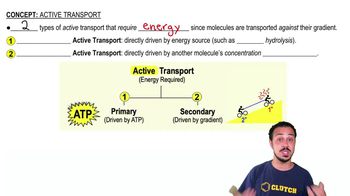
Sucrose transport in plant cells primarily occurs through active transport and facilitated diffusion. Active transport requires energy to move sucrose against its concentration gradient, often coupled with proton gradients established by proton pumps. Understanding this mechanism is crucial for analyzing how different treatments can influence sucrose uptake.
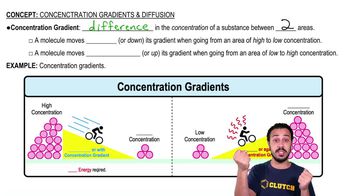
The concentration gradient refers to the difference in the concentration of a substance across a space. In the context of sucrose transport, a higher extracellular sucrose concentration compared to the cytoplasm would drive sucrose into the cell. Treatments that alter this gradient can significantly impact the rate of sucrose transport.
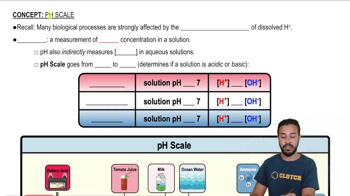
pH levels can affect the charge and solubility of molecules, influencing their transport across cell membranes. A decrease in extracellular pH can enhance the proton motive force, potentially increasing sucrose transport. Additionally, altering membrane permeability to ions can facilitate or hinder the transport processes, making it essential to consider these factors in experimental treatments.

 1:15 minutes
 Verified step by step guidance
 02:37
02:37