In which cell would you find the most lysosomes?a,. pancreatic cell that secretes digestive enzymesb. ovarian cell that produces estrogen (a steroid hormone)c. muscle cell in the thigh of a long-distance runnerd. white blood cell that engulfs bacteria
Verified step by step guidance
1
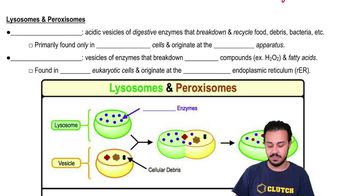
Understand the function of lysosomes: Lysosomes are organelles that contain digestive enzymes and are involved in breaking down waste materials and cellular debris.
Consider the role of each cell type: Analyze the primary function of each cell type listed in the options.
Option a: Pancreatic cells secrete digestive enzymes, which are proteins, but they do not primarily rely on lysosomes for their function.
Option b: Ovarian cells produce steroid hormones, which involves the smooth endoplasmic reticulum more than lysosomes.
Option d: White blood cells, particularly phagocytes, engulf and digest bacteria, requiring a high number of lysosomes to break down the engulfed material.
Verified video answer for a similar problem:
This video solution was recommended by our tutors as helpful for the problem above
Video duration:
1m
Play a video:
0 Comments
Key Concepts
Here are the essential concepts you must grasp in order to answer the question correctly.
Lysosomes
Lysosomes are membrane-bound organelles that contain digestive enzymes responsible for breaking down waste materials and cellular debris. They play a crucial role in cellular metabolism and the recycling of cellular components. Cells that are highly active in digestion or waste processing typically have a higher number of lysosomes.
Different cell types have specialized functions that dictate their organelle composition. For instance, pancreatic cells are involved in producing digestive enzymes, which requires a significant number of lysosomes for processing and recycling these enzymes. Understanding the specific roles of various cell types helps in predicting their lysosomal content.
White blood cells, particularly phagocytes, are integral to the immune response, as they engulf and digest pathogens. This process necessitates a high concentration of lysosomes to break down the engulfed material. Therefore, white blood cells are often rich in lysosomes to support their function in defending the body against infections.

 1:57 minutes
 Verified step by step guidance
 05:38
05:38