Textbook Question
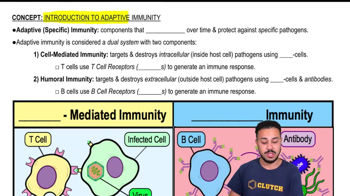
Differentiate between humoral and cellular adaptive immunity.
1618
views

 Marieb, Hoehn 7th EditionCh. 21 The Immune System: Innate and Adaptive Body DefensesProblem 24
 Verified step by step guidance
 5:47
5:47
 3:53 3:53
Differentiate between humoral and cellular adaptive immunity.
Capillary permeability increases and plasma proteins leak into the interstitial fluid as part of the inflammatory process. Why is this desirable?
Define hypersensitivity. List three types of hypersensitivity reactions. For each, note whether antibodies or T cells are involved and provide examples.
Caroline, a pregnant 29-year-old, has been HIV-positive for at least 10 years, dating back to when she was homeless and injecting heroin. While she currently has no symptoms of AIDS, she is taking several medications and is worried about the possibility that her baby might be infected. How do you think the HIV virus might be transferred from a mother to her offspring? Which of Caroline’s cells are infected by the virus, and why is the viral attack on these cells so devastating? Why is Caroline taking medication even though she has no symptoms?
Name several cytokines and describe their role in the immune response.