As we grow, our long bones increase in diameter, but the thickness of the compact bone of the shaft remains relatively constant. Explain this phenomenon.
Verified step by step guidance
1
Understand that long bones grow in diameter through a process called appositional growth, which involves the addition of new bone tissue on the outer surface of the bone (periosteum).
Recognize that while new bone is added to the outer surface, bone is simultaneously removed from the inner surface (endosteum) of the shaft, a process known as bone resorption.
Explain that this balanced activity of bone deposition on the outside and bone resorption on the inside allows the bone to increase in diameter without significantly increasing the thickness of the compact bone layer.
Consider that this remodeling maintains the strength and lightness of the bone by preventing it from becoming too thick and heavy, which would be inefficient for movement.
Summarize that the relatively constant thickness of the compact bone despite increased diameter is due to the coordinated remodeling processes that add bone externally and remove bone internally.
Verified video answer for a similar problem:
This video solution was recommended by our tutors as helpful for the problem above
Video duration:
2m
Play a video:
0 Comments
Key Concepts
Here are the essential concepts you must grasp in order to answer the question correctly.
Bone Growth and Remodeling
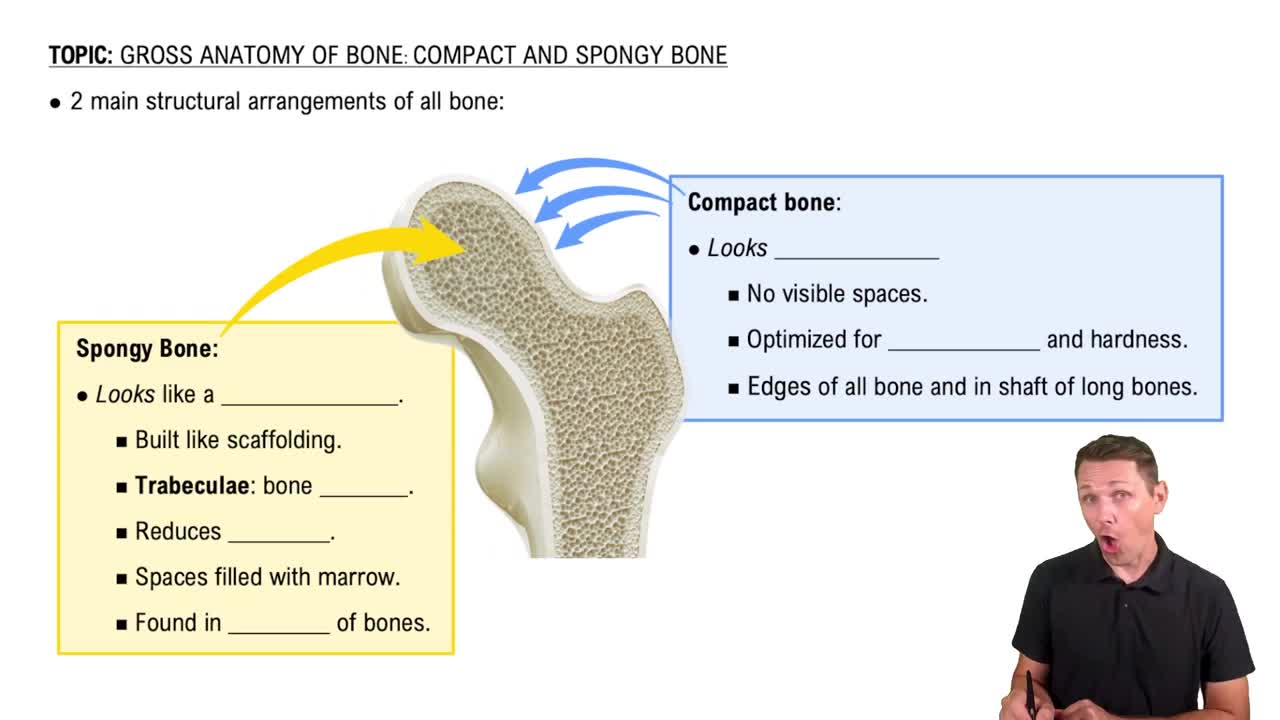
Bone growth involves both lengthening and widening processes. While long bones grow in length through endochondral ossification at the growth plates, their diameter increases via appositional growth, where new bone is added to the outer surface and old bone is resorbed from the inner surface.
Compact bone forms the dense outer layer of bones, providing strength and protection. Its thickness remains relatively constant to maintain mechanical stability while allowing the bone to adapt in size without becoming excessively heavy or brittle.
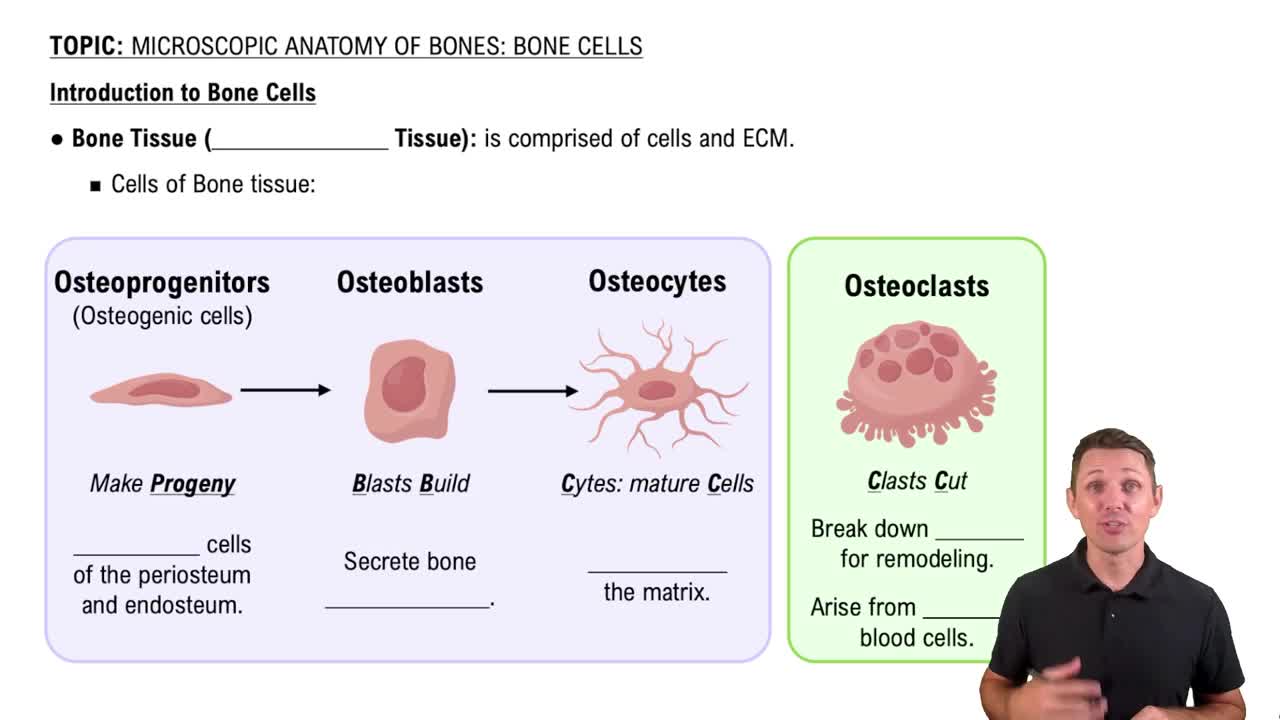
Bone remodeling is a continuous process where osteoclasts resorb bone and osteoblasts form new bone. In growing long bones, remodeling balances bone deposition on the periosteal surface with resorption on the endosteal surface, maintaining compact bone thickness despite increases in overall bone diameter.