Describe the specific roles of helper, cytotoxic, and regulatory T cells in cell-mediated immunity. Which is thought to be disabled in AIDS?
Verified step by step guidance
1
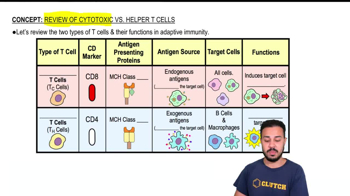
Helper T cells (CD4+ T cells) play a central role in cell-mediated immunity by activating other immune cells. They release cytokines to stimulate the activity of cytotoxic T cells and B cells, enhancing the immune response.
Cytotoxic T cells (CD8+ T cells) are responsible for directly attacking and destroying infected cells, cancer cells, or foreign cells. They recognize antigens presented by infected cells and induce apoptosis (programmed cell death) in these target cells.
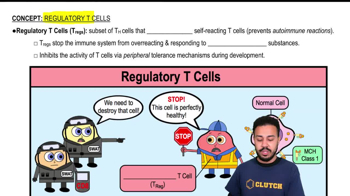
Regulatory T cells (Tregs) help maintain immune system balance by suppressing excessive immune responses. They prevent autoimmune reactions by ensuring the immune system does not attack the body's own tissues.
In AIDS (Acquired Immunodeficiency Syndrome), helper T cells (CD4+ T cells) are specifically targeted and destroyed by the HIV virus. This leads to a weakened immune system, as the activation and coordination of other immune cells are compromised.
The loss of helper T cells in AIDS results in a reduced ability to fight infections and diseases, making the body vulnerable to opportunistic infections and certain cancers.
Verified video answer for a similar problem:
This video solution was recommended by our tutors as helpful for the problem above
Video duration:
4m
Play a video:
0 Comments
Key Concepts
Here are the essential concepts you must grasp in order to answer the question correctly.
Helper T Cells
Helper T cells, or CD4+ T cells, play a crucial role in the immune response by activating other immune cells, including B cells and cytotoxic T cells. They release cytokines that enhance the immune response, helping to coordinate the body's defense against pathogens. Their proper functioning is essential for a robust immune system.
Cytotoxic T cells, or CD8+ T cells, are responsible for directly killing infected or cancerous cells. They recognize specific antigens presented by infected cells and release perforins and granzymes to induce apoptosis in these target cells. This action is vital for controlling infections and eliminating tumor cells.
Regulatory T cells, or Tregs, help maintain immune tolerance and prevent autoimmune responses by suppressing the activity of other immune cells. They play a critical role in modulating the immune response to ensure it is appropriate and not overly aggressive. In the context of AIDS, the depletion of helper T cells impairs the overall immune response, including the function of regulatory T cells.