
Textbook Question
Describe the regulation of the cephalic, gastric, and intestinal phases of gastric secretion.
1144
views

 Verified step by step guidance
 6:54
6:54
 5:08
5:08 11:34
11:34Describe the regulation of the cephalic, gastric, and intestinal phases of gastric secretion.
After a heavy meal rich with fried foods, Debby Collins, an overweight 45-year-old woman, was rushed to the emergency room with severe spasmodic pains in her epigastric region that radiated to the right side of her rib cage. She indicated that the attack came on suddenly, and her abdomen was found to be tender to the touch and somewhat rigid. What do you think is this patient's problem and why is her pain discontinuous (colicky)? What are the treatment options and what might happen if the problem is not resolved?
Describe the role of these cells found in gastric glands: parietal, chief, mucous neck, and enteroendocrine.
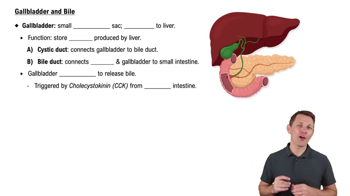
a. What is the relationship between the cystic, common hepatic, bile, and pancreatic ducts?
b. What is the point of fusion of the bile and pancreatic ducts called?
Explain why activation of pancreatic enzymes is delayed until they reach the small intestine.
Indicate the function of the stellate macrophages and the hepatocytes of the liver.