Ch. 1 The Human Body: An Orientation
Marieb - Human Anatomy & Physiology 7th Edition
Marieb, Hoehn7th EditionHuman Anatomy & PhysiologyISBN: 9780805359091Not the one you use?Change textbook
Chapter 1, Problem 24

Aiden has been suffering agonizing pain with each breath and has been informed by the physician that he has pleurisy.
a. Specifically, what membranes are involved in this condition?
b. What is their usual role in the body?
c. Explain why Aiden's condition is so painful.

Verified step by step guidance
1
Identify the membranes involved in pleurisy: Pleurisy affects the pleura, which are the two thin membranes surrounding the lungs and lining the chest cavity. These are the visceral pleura (covering the lungs) and the parietal pleura (lining the chest wall).
Explain the usual role of these membranes: Normally, the pleura produce a small amount of lubricating fluid that allows the two layers to slide smoothly over each other during breathing, reducing friction between the lungs and chest wall.
Describe what happens in pleurisy: In pleurisy, inflammation causes the pleural membranes to become rough and irritated, which disrupts the smooth sliding motion and increases friction.
Explain why this condition causes pain: The increased friction between the inflamed pleural layers stimulates pain receptors, especially during breathing movements, leading to sharp, agonizing pain with each breath.
Summarize the connection: Therefore, the pain in pleurisy arises because the normally lubricated pleural membranes are inflamed and rubbing against each other, making breathing painful.

Verified video answer for a similar problem:

This video solution was recommended by our tutors as helpful for the problem above.
Video duration:
2m
Was this helpful?

Key Concepts

Here are the essential concepts you must grasp in order to answer the question correctly.

Pleura and Its Membranes

The pleura are two thin membranes surrounding the lungs and lining the chest cavity. The visceral pleura covers the lungs, while the parietal pleura lines the chest wall. These membranes create a pleural cavity filled with lubricating fluid to facilitate smooth lung movement during breathing.
Recommended video:
06:49
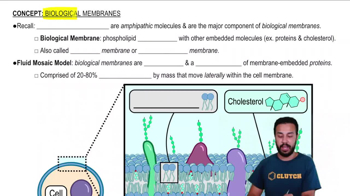
Biological Membranes

Function of the Pleural Membranes

The pleural membranes reduce friction between the lungs and chest wall as the lungs expand and contract. The lubricating fluid allows the membranes to slide effortlessly, enabling painless and efficient breathing. They also help maintain lung expansion by creating a pressure gradient.
Recommended video:
03:54
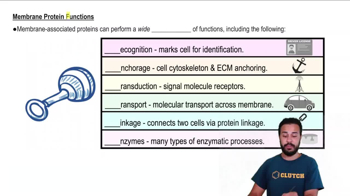
Membrane Protein Functions

Cause of Pain in Pleurisy

Pleurisy is inflammation of the pleural membranes, causing them to become rough and irritated. This inflammation leads to friction during breathing, resulting in sharp, agonizing pain with each breath. The pain worsens with deep breaths or coughing due to increased membrane movement.
Recommended video:
Guided course
2:03
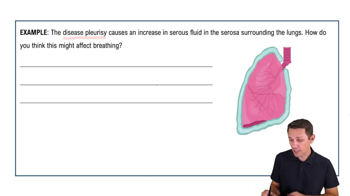
Organization of the Body: Serous Membranes Example 2