Almost half of our vitamin K is synthesized by bacteria that inhabit the large intestine. Based on this information, how could taking a broad-spectrum antibiotic for a long time cause frequent nosebleeds?
Verified step by step guidance
1
Step 1: Understand the role of vitamin K in the body. Vitamin K is essential for the synthesis of certain clotting factors in the liver, which are necessary for proper blood coagulation and preventing excessive bleeding.
Step 2: Recognize that a significant portion of vitamin K is produced by bacteria residing in the large intestine. These bacteria synthesize vitamin K, which is then absorbed and used by the body.
Step 3: Consider the effect of broad-spectrum antibiotics. These antibiotics can kill a wide range of bacteria, including the beneficial bacteria in the large intestine responsible for producing vitamin K.
Step 4: Connect the reduction of vitamin K-producing bacteria to decreased vitamin K levels in the body. Lower vitamin K levels impair the synthesis of clotting factors, leading to a higher risk of bleeding.
Step 5: Conclude that prolonged use of broad-spectrum antibiotics can reduce vitamin K production, impair blood clotting, and thus cause symptoms such as frequent nosebleeds due to easier bleeding.
Verified video answer for a similar problem:
This video solution was recommended by our tutors as helpful for the problem above
Play a video:
0 Comments
Key Concepts
Here are the essential concepts you must grasp in order to answer the question correctly.
Role of Vitamin K in Blood Clotting
Vitamin K is essential for synthesizing clotting factors that help blood coagulate and stop bleeding. Without sufficient vitamin K, the blood's ability to clot is impaired, increasing the risk of bleeding, such as nosebleeds.
Certain bacteria in the large intestine produce vitamin K, contributing significantly to the body's supply. This microbial synthesis supplements dietary vitamin K and is crucial for maintaining adequate levels for normal blood clotting.
Impact of Broad-Spectrum Antibiotics on Gut Bacteria
Broad-spectrum antibiotics kill a wide range of bacteria, including beneficial gut microbes that produce vitamin K. Prolonged antibiotic use can reduce these bacteria, leading to decreased vitamin K synthesis and increased bleeding risk.

 Verified step by step guidance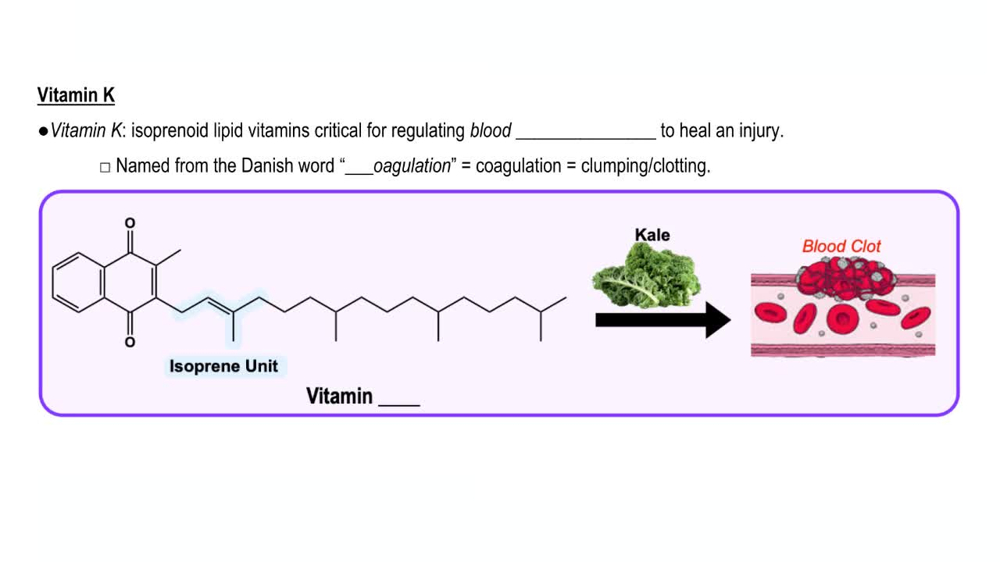
 01:38
01:38