Pearson+ LogoPearson+ Logo
Back

Introduction to the Autonomic Nervous System quiz #3

Control buttons has been changed to "navigation" mode.
1/37
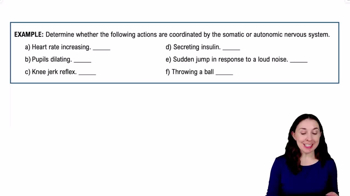
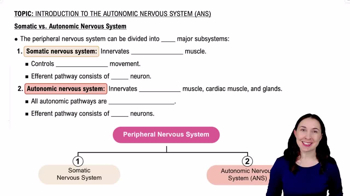
  • What is the primary function of the autonomic nervous system?

    The autonomic nervous system regulates involuntary functions by innervating smooth muscle, cardiac muscle, and glands.
  • Which type of muscle does the somatic nervous system innervate?

    The somatic nervous system innervates skeletal muscle.
  • How many neurons are involved in the efferent pathway of the somatic nervous system?

    The somatic nervous system uses a single neuron in its efferent pathway.
  • What is autonomic tone?

    Autonomic tone is the balance between sympathetic and parasympathetic activity in the body.
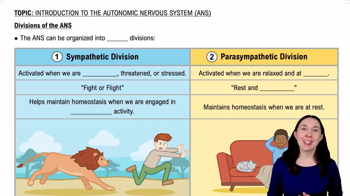
  • What is the primary role of the sympathetic division?

    The sympathetic division is responsible for the fight or flight response and helps maintain homeostasis during activity.
  • How does the sympathetic division affect heart rate?

    The sympathetic division increases heart rate.
  • What is another name for the parasympathetic division?

    The parasympathetic division is also called the rest and digest system.
  • How does the parasympathetic division affect heart rate?

    The parasympathetic division decreases heart rate.
  • What happens to the activity of the sympathetic and parasympathetic divisions during stress?

    During stress, the sympathetic division becomes more dominant and the parasympathetic division is suppressed.
  • What is the main effect of the parasympathetic division on the body during rest?

    It promotes activities like digestion and reduces heart rate and breathing.
  • What type of response does the sympathetic division produce in the body?

    It produces an aroused, energy-mobilizing response.
  • How do the sympathetic and parasympathetic divisions generally interact with each other?

    They usually have opposite effects on the same organs to maintain balance.
  • What is an example of a situation that activates the parasympathetic division?

    Relaxing after a meal or resting quietly.
  • What is the main neurotransmitter used by the parasympathetic division at the target organ?

    Acetylcholine is the main neurotransmitter at the target organ for the parasympathetic division.
  • What is the effect of the parasympathetic division on the digestive system?

    It stimulates digestion.
  • What is the general effect of the parasympathetic division on the pupils of the eyes?

    It constricts the pupils.
  • What is the function of the autonomic nervous system during sleep?

    The parasympathetic division is more active, promoting rest and recovery.
  • How does the autonomic nervous system help the body respond to environmental changes?

    It adjusts organ function automatically to maintain homeostasis in response to environmental cues.
  • What is the role of the autonomic nervous system in emotional responses?

    It mediates physiological changes during emotional arousal, such as increased heart rate or sweating.
  • Which division of the autonomic nervous system is more active during exercise?

    The sympathetic division is more active during exercise.
  • Which division of the autonomic nervous system is more active during digestion?

    The parasympathetic division is more active during digestion.
  • What is the effect of the sympathetic division on respiratory rate?

    It increases respiratory rate.
  • What is the effect of the parasympathetic division on respiratory rate?

    It decreases respiratory rate.
  • What is the main purpose of the fight or flight response?

    To prepare the body to confront or escape from threats.
  • What is the main purpose of the rest and digest response?

    To promote recovery, energy storage, and maintenance functions.
  • How do the sympathetic and parasympathetic divisions contribute to autonomic tone?

    They both provide ongoing input to organs, creating a balanced state of activity.
  • What is the effect of the sympathetic division on blood flow to skeletal muscles?

    It increases blood flow to skeletal muscles.
  • What is the effect of the parasympathetic division on blood flow to the digestive tract?

    It increases blood flow to the digestive tract.
  • What is the effect of the sympathetic division on glandular secretions?

    It generally decreases glandular secretions.
  • What is the effect of the parasympathetic division on glandular secretions?

    It generally increases glandular secretions.
  • Why is the autonomic nervous system important for survival?

    It regulates vital involuntary functions necessary for life, such as heart rate and breathing.
  • How does the autonomic nervous system operate without conscious control?

    It functions automatically, adjusting organ activity based on internal and external cues.
  • What is another name for the autonomic nervous system?

    The autonomic nervous system is also known as the involuntary nervous system.
  • What types of muscles and tissues does the autonomic nervous system innervate?

    The autonomic nervous system innervates smooth muscle, cardiac muscle, and glands.
  • What bodily functions does the autonomic nervous system control?

    The autonomic nervous system controls involuntary bodily functions that maintain homeostasis, such as heart rate, digestion, and glandular activity.
  • How do the sympathetic and parasympathetic divisions of the autonomic nervous system generally affect the organs they innervate?

    The sympathetic and parasympathetic divisions usually have opposite effects on the same organs; for example, the sympathetic division increases heart rate while the parasympathetic division decreases it.
  • What is the main role of the autonomic nervous system in the body?

    The main role of the autonomic nervous system is to regulate involuntary functions and help the body maintain homeostasis without conscious effort.