Back

Introduction to the Integumentary System quiz #2

1 student found this helpful
Control buttons has been changed to "navigation" mode.
1/39
  • What is not a function of the skin?

    Blood circulation
  • What are the four major functions of the skin?

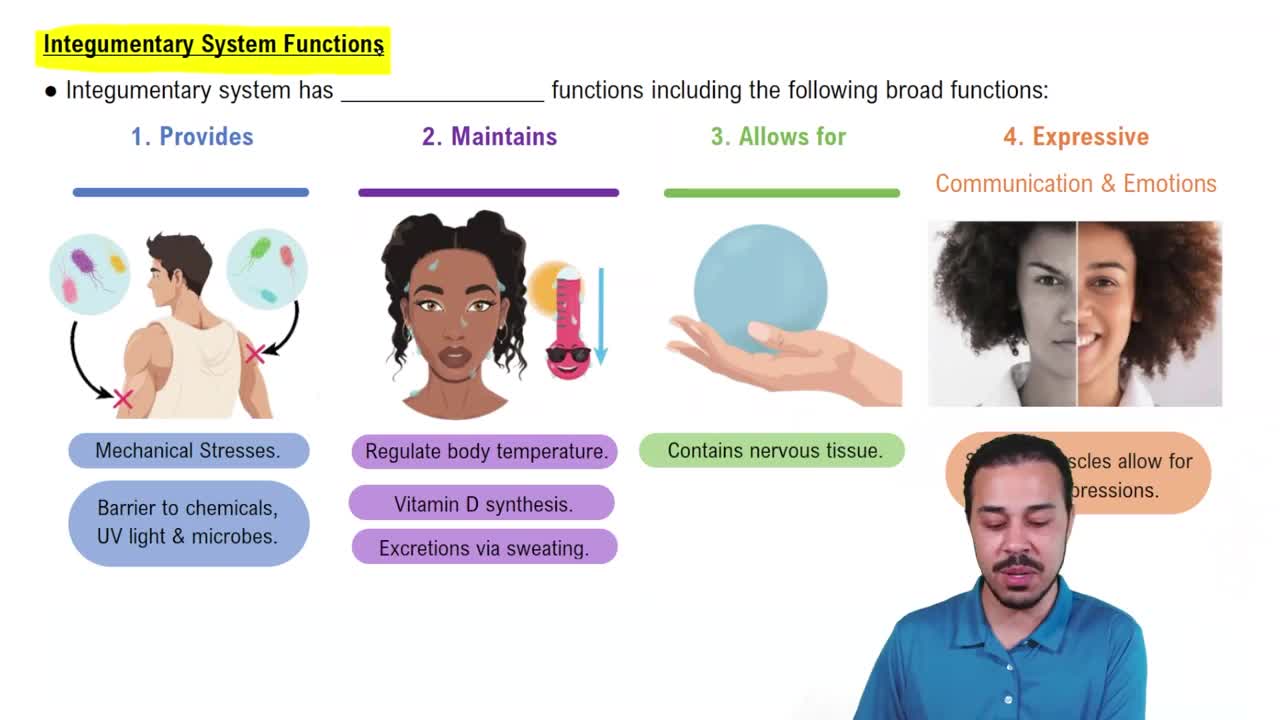
    Protection, sensation, temperature regulation, and vitamin D synthesis.
  • What are the main components of the cutaneous membrane?

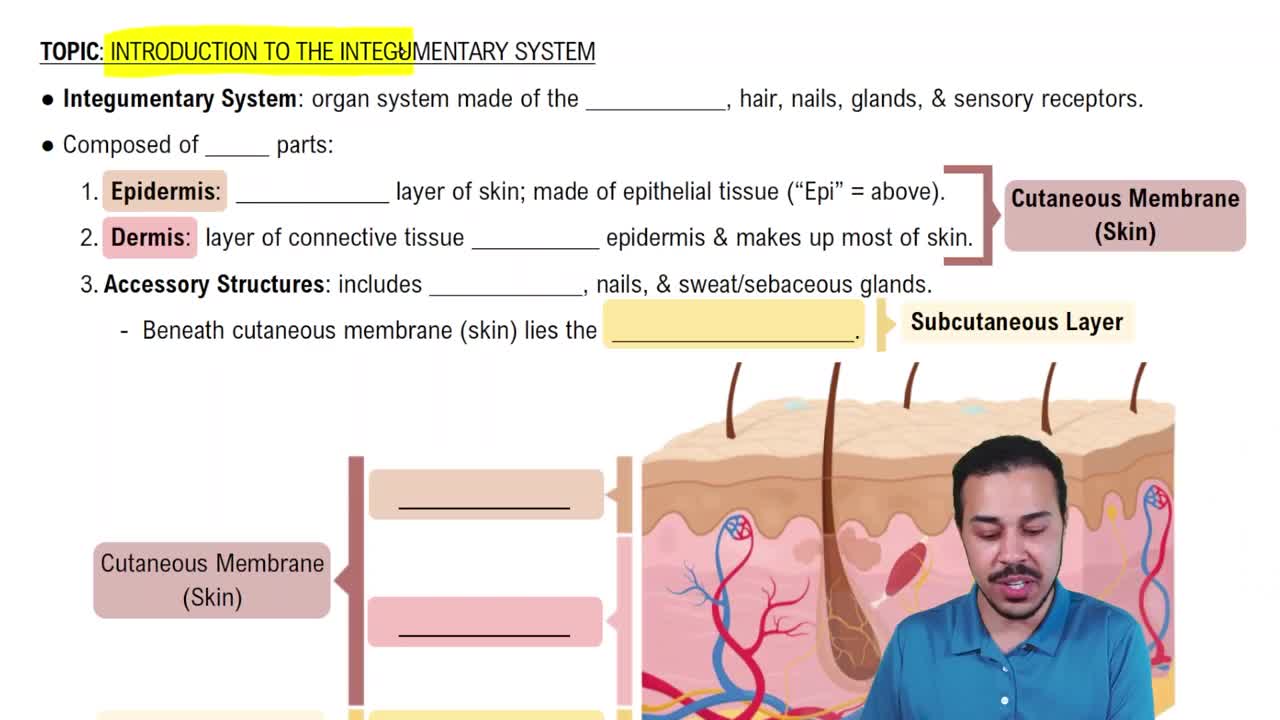
    The epidermis and dermis.
  • Apocrine sweat glands are not associated with which function?

    Temperature regulation
  • Which layer of the atmosphere absorbs harmful ultraviolet radiation from the sun?

    The ozone layer
  • What is the function of the cuticle?

    The cuticle protects the nail matrix and prevents infection.
  • Which skin condition has characteristics of itchy, red, and inflamed skin?

    Eczema
  • What does the cuticle do?

    The cuticle protects the nail matrix and prevents infection.
  • How do you assess the brachial pulse of an infant?

    Place two fingers on the inner aspect of the infant's upper arm.
  • What are the two types of sweat glands?

    Eccrine and apocrine sweat glands.
  • Which vitamin is synthesized through the skin?

    Vitamin D
  • The nurse is preparing to examine a client's skin. What would the nurse do next?

    Inspect the skin for color, texture, and any abnormalities.
  • What are the component structures of a primary flight feather?

    All of the above: Shaft, Barb, Vane
  • What is an accessory organ of the skin?

    Hair
  • When washing the hands with soap and water, what is an appropriate action for the nurse to perform?

    Scrub hands for at least 20 seconds, covering all surfaces.
  • Which body system protects the body from the external environment?

    The integumentary system
  • What is located in a whale flipper?

    Bones similar to those in a human hand
  • Which is true about foliate papillae? A) They are involved in taste B) They are located on the tongue C) They contain taste buds D) All of the above

    D) All of the above
  • Which layer contains most of the accessory structures?

    The dermis
  • Where are tarsal glands located?

    In the eyelids
  • What causes boils?

    Boils are caused by bacterial infection, typically Staphylococcus aureus.
  • When suctioning the mouth of a patient, what is an important consideration?

    Ensure the suction catheter is clean and use gentle suction to avoid injury.
  • What is the primary organ of the integumentary system?

    The skin
  • What hormone does the skin produce?

    Vitamin D precursor
  • Which layer of the Earth's atmosphere absorbs ultraviolet radiation from the sun?

    The ozone layer
  • What is the function of collagen fibers in the skin?

    Collagen fibers provide strength and elasticity to the skin.
  • The nurse is performing a breast exam. Which area would be most important for the nurse to assess?

    The axillary region for lymph nodes
  • What are the skin features that should be assessed as part of a comprehensive skin examination?

    Color, texture, moisture, temperature, and any lesions or abnormalities.
  • What are the plates that make up the carapace called?

    Scutes
  • What layers compose the skin?

    Epidermis and dermis
  • Which organ is involved in the synthesis of vitamin D?

    The skin
  • What types of organisms can cause skin infections?

    They can be caused by bacteria, viruses, or fungi
  • What type of infection is Staphylococcal Scalded Skin Syndrome (SSSS)?

    It is not a viral infection
  • What are priorities of care for the client experiencing a sickle cell crisis?

    Pain management, hydration, and oxygen therapy.
  • What is a function of melanin?

    Protects against UV radiation
  • What is a function of subcutaneous tissue?

    Insulation
  • What is the primary function of melanin?

    Melanin protects the skin from UV radiation.
  • What is the function of the lamellae seen in the gill filaments of fish gills?

    Lamellae increase the surface area for gas exchange.
  • What symptom is common with partial-thickness burns?

    Blistering