Anatomy & Physiology
My Course
Learn
Exam Prep
AI Tutor
Study Guides
Textbook Solutions
Flashcards
Explore
My Course
Learn
Exam Prep
AI Tutor
Study Guides
Textbook Solutions
Flashcards
Explore
Back
Organization of the Body: Serous Membranes definitions
2 students found this helpful
You can tap to flip the card.
Serous Membranes
You can tap to
flip the card.
👆
Serous Membranes
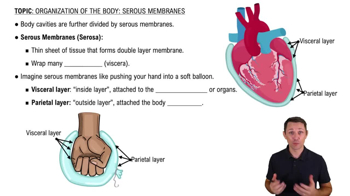
Thin tissues forming a double-layered membrane around organs in thoracic and abdominal regions.
Track progress
Control buttons has been changed to "navigation" mode.
1/10
Related flashcards
Related practice
Recommended videos
Guided course
4:09
Serous Membranes
Bruce Bryan
6602
views
139
rank
1
comments
Guided course
1:10
Organization of the Body: Serous Membranes Example 1
Bruce Bryan
4415
views
73
rank
Guided course
3:33
Serous Cavity and Fluid
Bruce Bryan
4553
views
101
rank
Terms in this set (10)
Hide definitions
Serous Membranes
Thin tissues forming a double-layered membrane around organs in thoracic and abdominal regions.
Serosa
Another term for serous membranes, indicating their thin, double-layered structure.
Visceral Layer
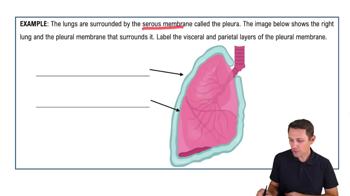
The inner layer of the serous membrane attached directly to the organs.
Parietal Layer
The outer layer of the serous membrane attached to the body wall.
Serous Cavity
The space or potential space between the visceral and parietal layers of the serous membrane.
Serous Fluid
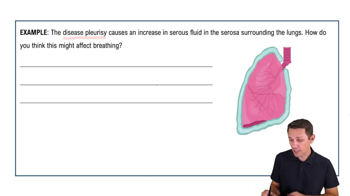
Lubricating fluid within the serous cavity that allows smooth organ movement.
Thoracic Region
The part of the body cavity where serous membranes surround organs like the heart and lungs.
Abdominal Pelvic Region
The lower part of the body cavity where serous membranes surround organs like the intestines.
Connective Tissue
Tissue that attaches the visceral and parietal layers to organs and body walls, respectively.
Potential Space
A space that can exist between the serous membrane layers, often without actual separation.