Pearson+ LogoPearson+ Logo
Back

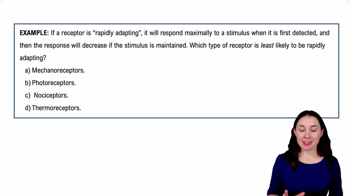
Sensory Receptor Classification by Modality quiz #1

Control buttons has been changed to "navigation" mode.
1/10
  • Can a single sensory neuron detect more than one sensory modality, and if so, which type of sensory receptor is capable of this?

    Most sensory neurons are specialized to detect only one sensory modality, such as mechanical force, temperature, light, or chemicals. However, nociceptors are unique because a single nociceptor can respond to multiple types of potentially damaging stimuli, including extreme temperature, excessive pressure, and irritating chemicals.
  • What type of stimulus do mechanoreceptors detect?

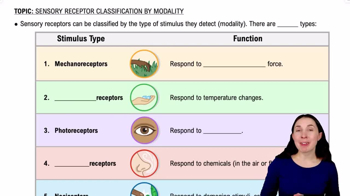
    Mechanoreceptors detect mechanical forces such as pressure or vibration. They are specialized to respond to physical changes in their environment.
  • How do thermoreceptors differ from other sensory receptors in terms of what they detect?

    Thermoreceptors specifically detect changes in temperature rather than static temperature levels. This allows them to sense when the environment is getting warmer or cooler.
  • Which sensory receptor is responsible for detecting light stimuli?

    Photoreceptors are responsible for detecting light stimuli. They allow organisms to perceive changes in light in their environment.
  • What are some examples of substances that chemoreceptors can detect?

    Chemoreceptors can detect chemicals in the air, such as those we smell, chemicals in food that we taste, and chemicals present in bodily fluids like blood. This enables the senses of taste and smell as well as monitoring internal chemical balance.
  • What is the main function of nociceptors in the body?

    Nociceptors detect potentially damaging stimuli that could cause injury or harm. They activate only when the stimulus is strong enough to be dangerous, resulting in the sensation of pain.
  • How do nociceptors signal the brain when they are activated?

    When nociceptors are activated by damaging stimuli, they send signals up to the brain. The brain then interprets these signals as pain.
  • Why are nociceptors sometimes called pain receptors?

    Nociceptors are called pain receptors because they are responsible for detecting and signaling pain caused by harmful stimuli. Their activation leads to the perception of pain.
  • Can chemoreceptors detect chemicals in both external and internal environments?

    Yes, chemoreceptors can detect chemicals in the external environment, such as smells and tastes, as well as in internal fluids like blood. This allows them to play roles in both sensory perception and physiological regulation.
  • What makes nociceptors unique compared to the other four types of sensory receptors?

    Nociceptors are unique because they can respond to multiple types of damaging stimuli, including extreme temperature, pressure, and chemicals. Other sensory receptors typically respond to only one type of stimulus.