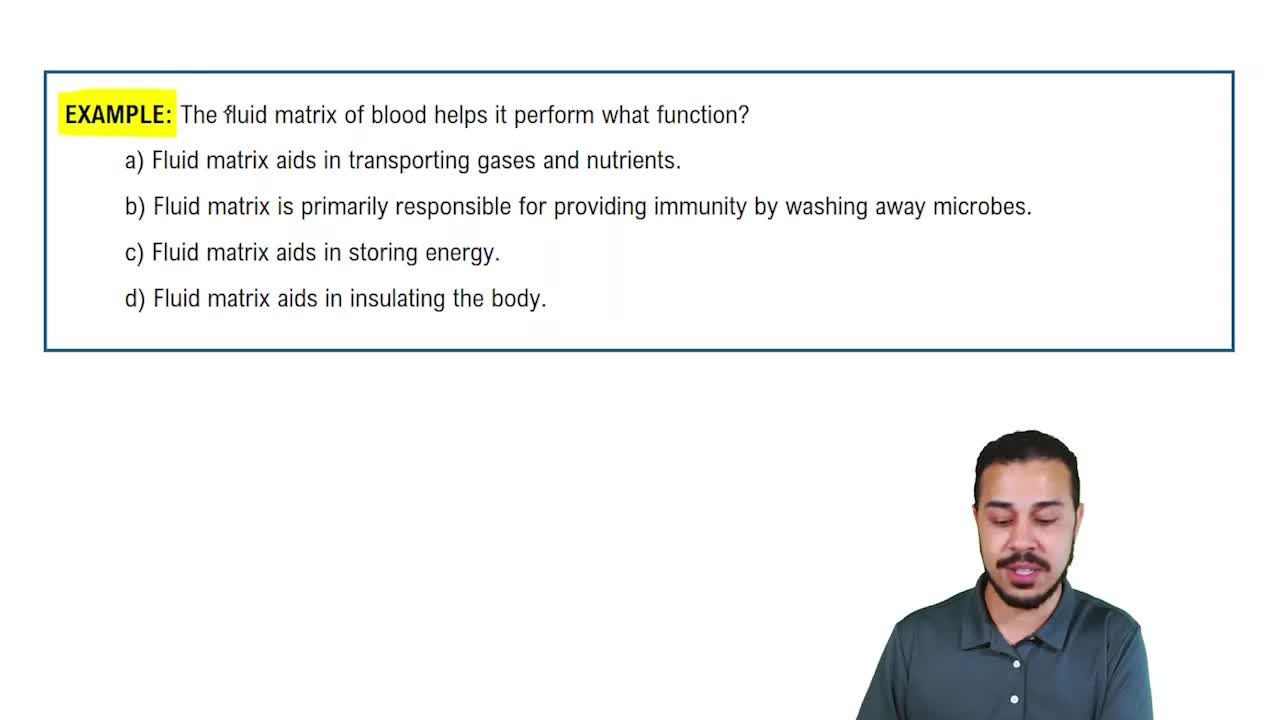
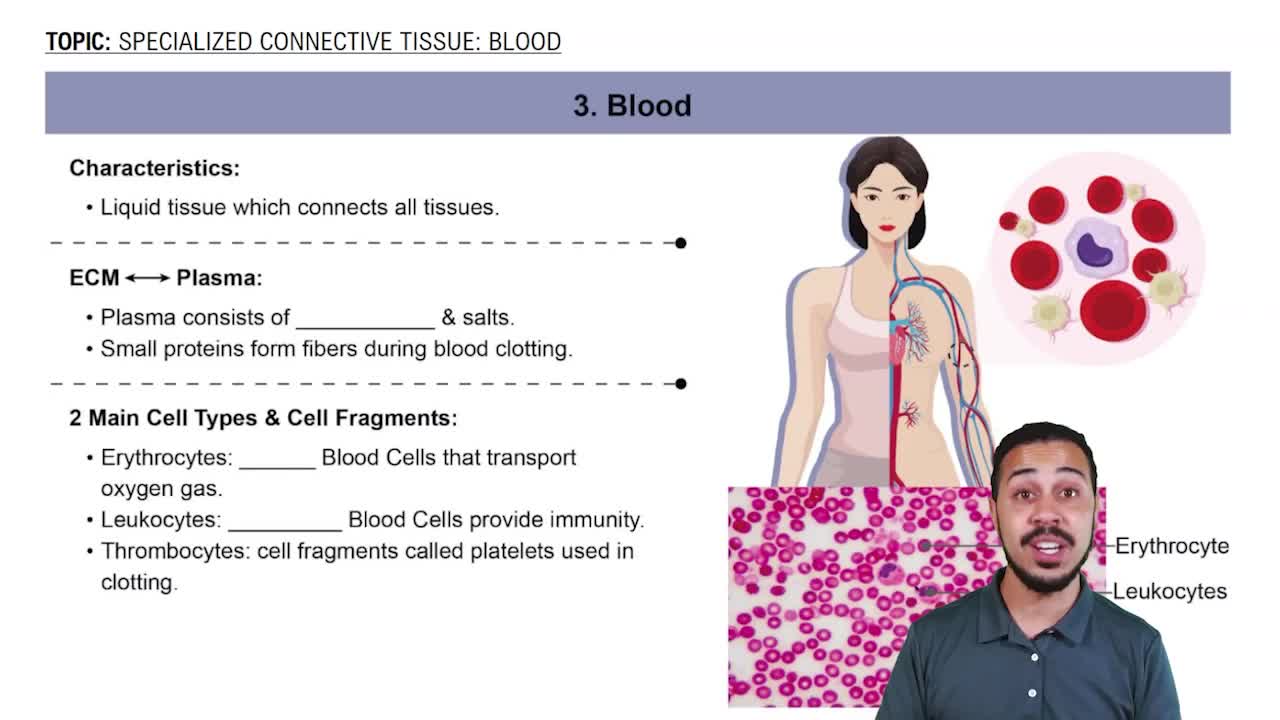
Blood is considered a connective tissue because it connects all tissues in the body by transporting nutrients, oxygen, and other substances throughout the body.
What type of tissue is blood classified as?
Blood is classified as a specialized liquid connective tissue.
Where is blood connective tissue found in the body?
Blood connective tissue is found circulating throughout the cardiovascular system, within blood vessels such as arteries and veins.
Is blood a solution?
Blood is not a true solution; it is a complex mixture consisting of plasma (a solution of water, salts, proteins, and other molecules) and suspended cells and cell fragments.
In what way does blood assist in immune function?
Blood assists in immune function through leukocytes (white blood cells), which provide immunity by identifying and eliminating pathogens, including specialized cells like macrophages that engulf and destroy invaders.
Blood is an example of what type of tissue?
Blood is an example of specialized connective tissue.
What type of mixture is blood?
Blood is a heterogeneous mixture, consisting of plasma (a solution) and suspended formed elements such as cells and cell fragments.
What are the main cellular components of blood and their functions?
The main cellular components of blood are erythrocytes (red blood cells) for oxygen transport, leukocytes (white blood cells) for immune defense, and thrombocytes (platelets) for blood clotting.
What is the extracellular matrix of blood called and what does it contain?
The extracellular matrix of blood is called plasma, and it contains water, salts, proteins, and other dissolved molecules.
What role do the smaller proteins dissolved in plasma play during blood clotting?
During blood clotting, these smaller proteins can form fibers that help prevent blood loss. This process is essential for maintaining hemostasis in the body.
 Back
Back
 04:56
04:56