What is the first step of the inflammatory response?
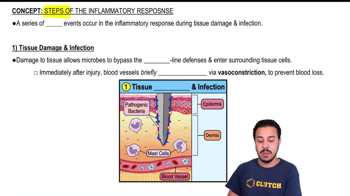
The first step is tissue damage and infection, which allows microbes to bypass the first line of innate immunity.
Why do blood vessels constrict immediately after tissue injury?
Blood vessels constrict (vasoconstriction) to prevent excessive blood loss following tissue damage.
What cells are already present in tissues and play a role in the inflammatory response?
Mast cells are already present in tissues and play a key role in initiating the inflammatory response.
What is released by mast cells during the second step of the inflammatory response?
Mast cells release cytokines and inflammatory mediators, such as histamine.
What is the function of inflammatory mediators like histamine?
Inflammatory mediators promote inflammation and attract immune cells to the site of infection.
What change occurs in blood vessels during the third step of the inflammatory response?
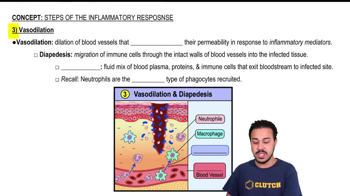
Blood vessels undergo vasodilation, which increases their permeability.
What does increased blood vessel permeability allow during inflammation?
It allows immune cells to leave the bloodstream and migrate to the site of infection.
What is diapedesis?
Diapedesis is the migration of immune cells through the intact walls of blood vessels into infected tissue.
Which immune cells are the first to be recruited to the site of infection?
Neutrophils are the first immune cells recruited to the infection site.
What is the main action of neutrophils and macrophages in the fourth step of the inflammatory response?
They perform phagocytosis to engulf and eliminate invading microbes.
What is exudate in the context of inflammation?
Exudate is the fluid mix of blood plasma, proteins, and immune cells that exits the bloodstream to the infected site.
How can the inflammatory response cause accidental damage to host tissues?
While aiming to eliminate microbes, inflammation can also damage host tissues, similar to how a sprinkler system can damage equipment while putting out a fire.
Why can inflammation in the brain be life-threatening?
Inflammation in critical areas like the brain can disrupt vital functions and be life-threatening.
What does the suffix '-itis' indicate in disease names?
The suffix '-itis' means inflammation, as seen in terms like meningitis or arthritis.
What is the overall purpose of the inflammatory response?
The inflammatory response aims to eliminate invading microbes and protect the host from infection.
 Back
Back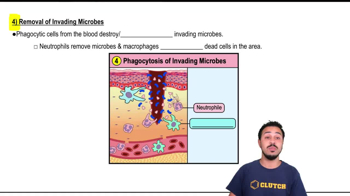
 1:26
1:26