Pearson+ LogoPearson+ Logo
Back

Structural Class: Fibrous Joints quiz #1

Control buttons has been changed to "navigation" mode.
1/10
  • In anatomy, what is a suture and what is its function in the skull?

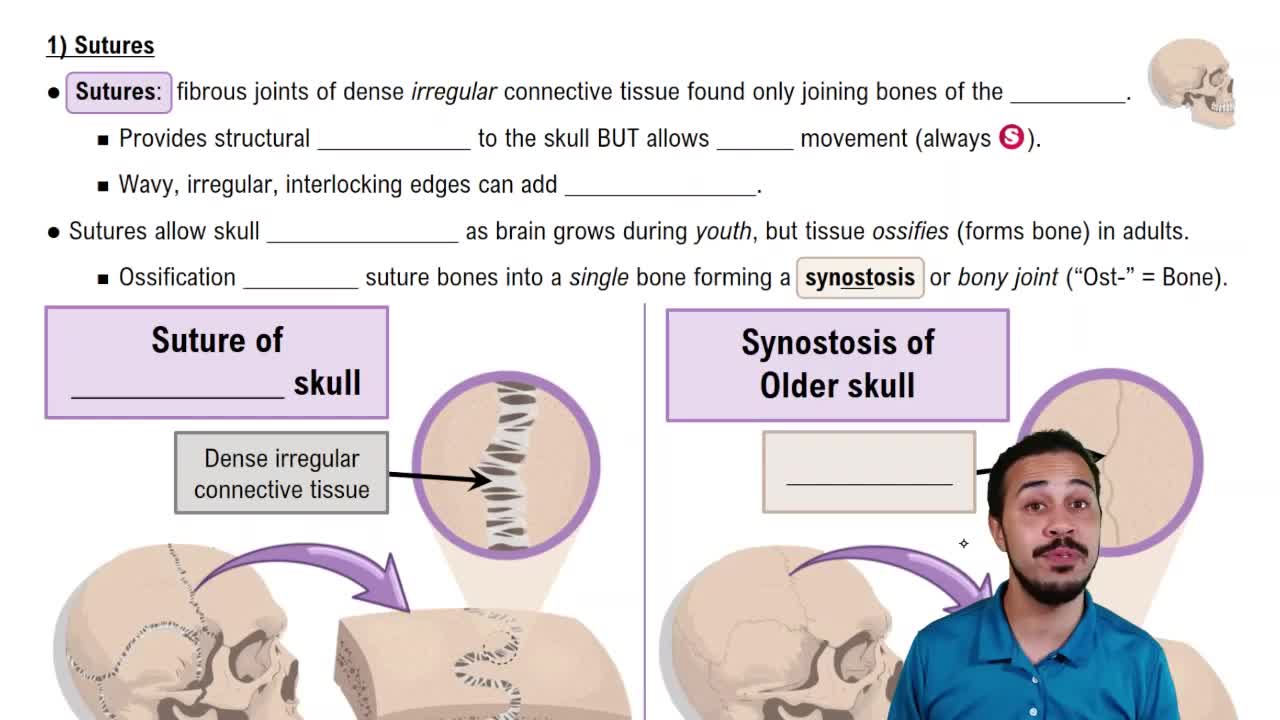
    A suture is a type of fibrous joint found only in the skull, composed of dense irregular connective tissue. Its primary function is to provide structural stability and protect the brain by tightly joining skull bones, allowing essentially no movement. Over time, sutures may ossify and fuse into a single bone, forming a synostosis.
  • What type of connective tissue is most commonly found in fibrous joints and why is it important?

    Dense irregular connective tissue is most commonly found in fibrous joints because its irregular arrangement of collagen fibers allows resistance to forces in multiple directions. This provides structural stability to the joints.
  • How do the wavy, interlocking edges of sutures contribute to skull protection?

    The wavy, interlocking edges of sutures add strength and help prevent fracturing of the skull bones. This structural feature is crucial for protecting the brain.
  • Why are fibrous joints generally classified as synarthroses or amphiarthroses?

    Fibrous joints are classified as synarthroses or amphiarthroses because their collagen fiber connections provide stability but limit movement. Synarthroses allow no movement, while amphiarthroses allow only slight movement.
  • What is the functional classification of gomphoses and what subtle movement do they allow?

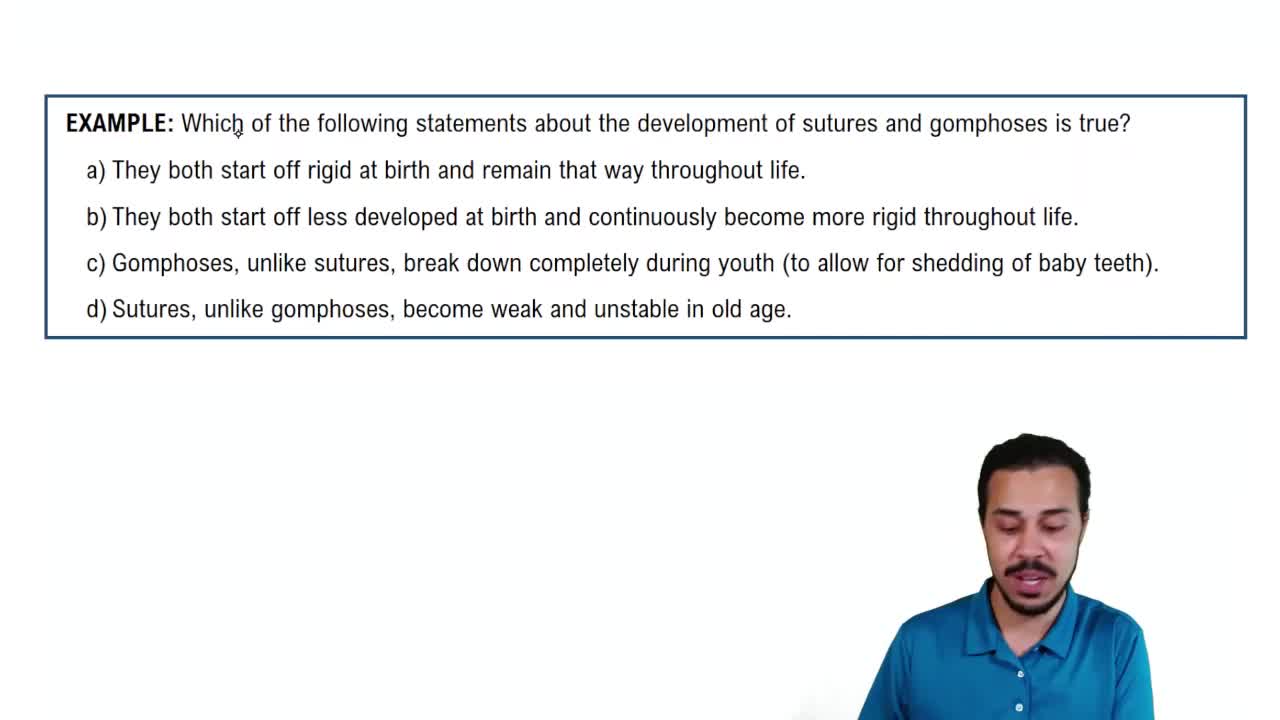
    Gomphoses are functionally classified as synarthroses, meaning they are generally immovable. However, they allow very subtle movement under chewing forces to help transfer pressure from teeth to jawbone.
  • What role does the periodontal ligament play in gomphoses?

    The periodontal ligament, made of dense irregular connective tissue, glues the teeth firmly into their bony sockets. It allows the joint to resist forces in multiple directions during chewing.
  • How does the periodontal ligament change during childhood and why is this important?

    During childhood, the periodontal ligament deteriorates to allow deciduous (baby) teeth to fall out. This process is important for replacing baby teeth with larger, permanent teeth suitable for chewing.
  • What structural feature allows syndesmoses to have more mobility than sutures and gomphoses?

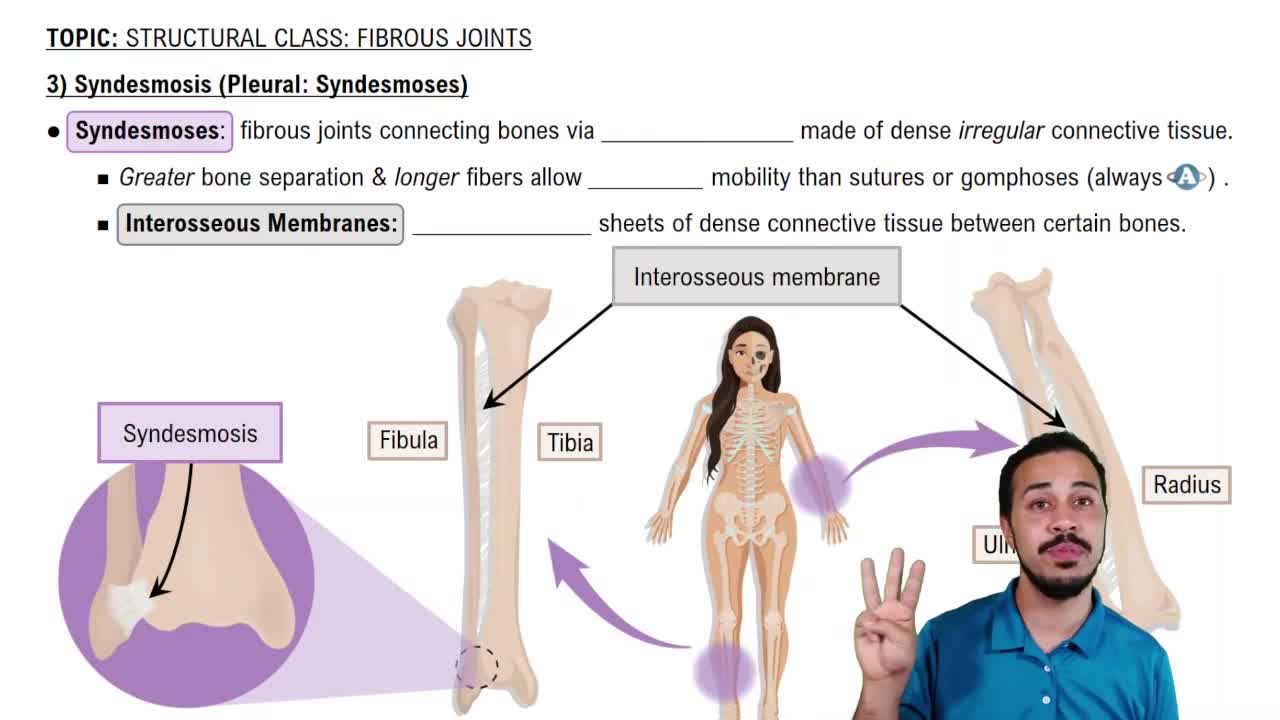
    Syndesmoses have greater bone separation and longer collagen fibers compared to sutures and gomphoses. This structural difference allows for more mobility between the connected bones.
  • What is an interosseous membrane and where can it be found?

    An interosseous membrane is a broad sheet of dense connective tissue found between certain bones, such as between the radius and ulna in the forearm or the tibia and fibula in the lower leg. It helps connect the bones and allows for varying degrees of movement.
  • How does the length of fibers in interosseous membranes affect movement in the forearm versus the lower leg?

    Longer fibers in the interosseous membrane between the radius and ulna allow for more movement in the forearm. Shorter fibers between the tibia and fibula permit less movement in the lower leg.