 Back
BackAnatomy & Physiology: Articulations and Synovial Joint Movements
 04:06
04:06
Terms in this set (26)
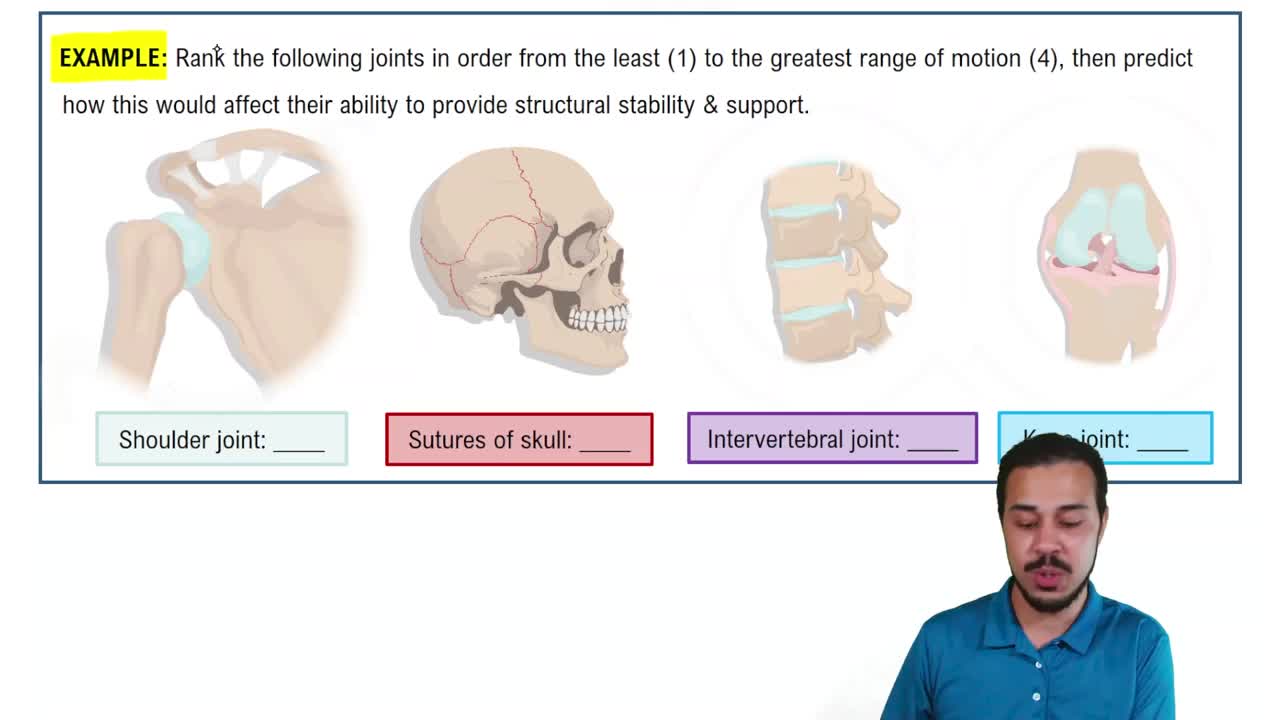
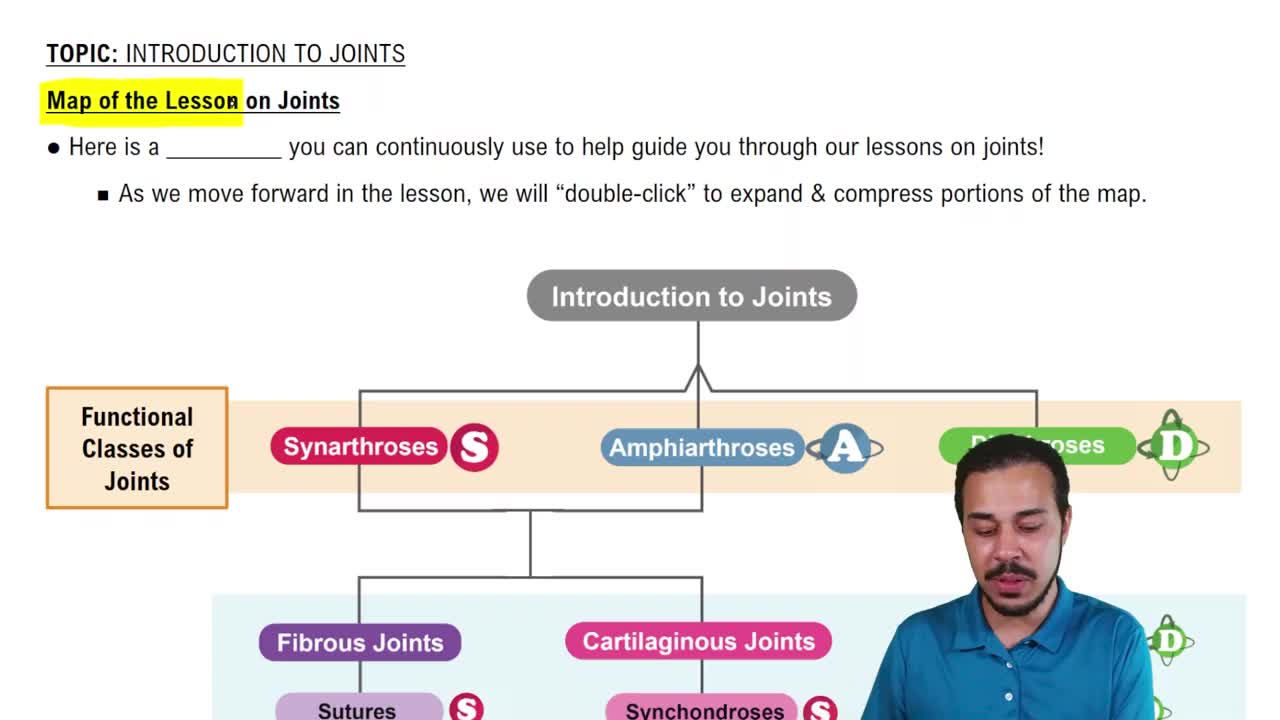
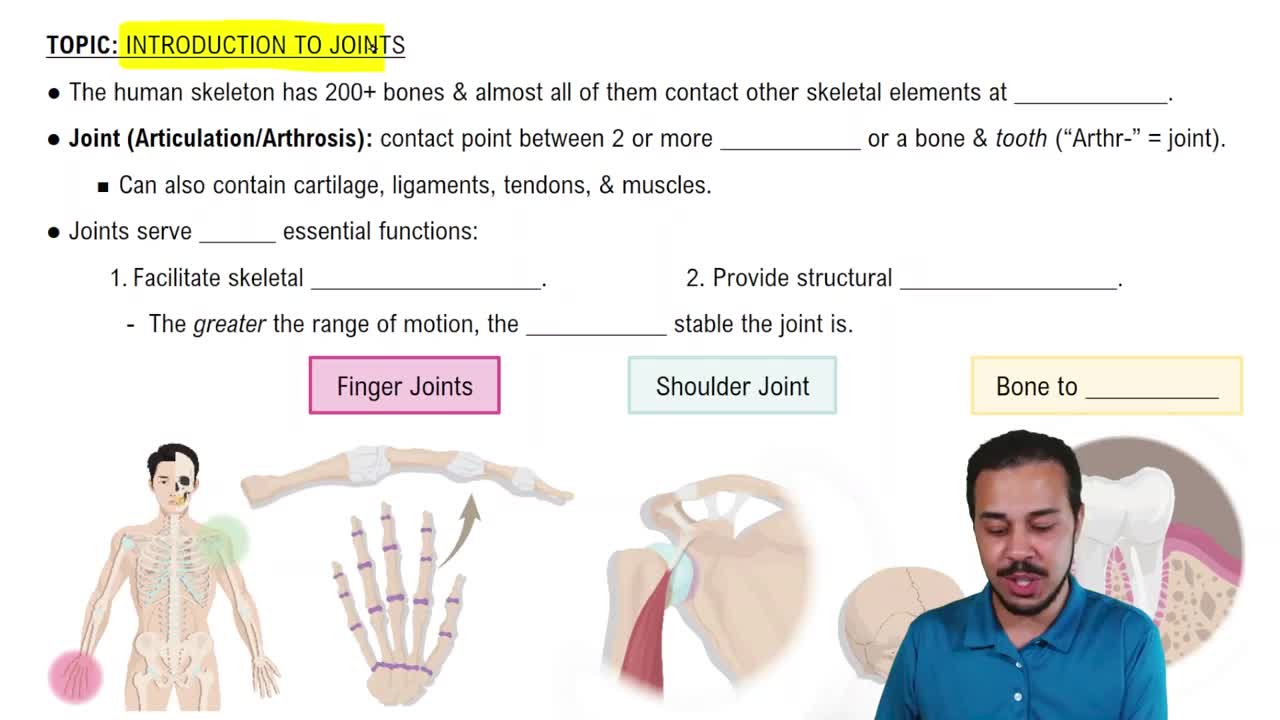
Immovable joint providing strong, stable connections between bones. Example: Sutures between flat bones of the skull.
Freely movable joint allowing a wide range of motion. Example: Shoulder or knee joint.
Slightly movable joint balancing stability with limited mobility. Example: Pubic symphysis or intervertebral discs.
Joint where bones are united by dense fibrous connective tissue without a joint cavity. Example: Gomphoses anchoring teeth.
Joint where bones are connected by hyaline cartilage or fibrocartilage without a joint cavity. Example: Epiphyseal plates in growing bones.
Highly mobile joint with a fluid-filled joint cavity separating articulating bones. Example: Hip or elbow joint.
Flat or slightly curved surfaces glide side to side or back and forth without rotation. Example: Intercarpal joints in the wrist.
Convex surface fits into concave surface allowing uniaxial flexion and extension. Example: Elbow or knee joint.
Rounded bone rotates within a ring formed by another bone and ligament, allowing rotational movement. Example: Atlantoaxial joint.
Oval condyle fits into elliptical cavity allowing biaxial movement: flexion, extension, abduction, adduction. Example: Wrist or knuckles.
Both bones have saddle-shaped surfaces allowing biaxial movement with greater freedom than condyloid. Example: Carpometacarpal joint of the thumb.
Angular movement that decreases the angle between two bones, usually bending forward. Example: Bending the elbow.
Angular movement that increases the angle between two bones, straightening the joint. Example: Straightening the knee.
Lateral movement away from the midline of the body. Example: Raising arms to the side.
Medial movement toward the midline of the body. Example: Lowering arms to the sides.
Circular motion combining flexion, abduction, extension, and adduction. Example: Swinging the arm in a circle.
Turning a bone around its own longitudinal axis; can be medial (inward) or lateral (outward).
Special foot movement turning the sole inward toward the midline. Example: Tilting foot inward during an ankle sprain.
Special foot movement turning the sole outward away from the midline. Example: Placing weight on the inner edge of the foot.
Movement at the ankle pointing toes downward, decreasing the angle between sole and leg. Example: Standing on tiptoes.
Movement at the ankle lifting toes upward toward the shin. Example: Walking on heels.
Forearm movement rotating the radius over the ulna, turning the palm downward. Example: Turning hands to type.
Forearm movement returning radius and ulna to parallel, turning the palm upward. Example: Holding out hand to receive coins.
Upward or superior movement of a bone or body part. Example: Shrugging shoulders.
Downward or inferior movement of a bone or body part. Example: Lowering shoulders.
Unique thumb movement allowing the tip to touch any finger tip on the same hand. Example: Pinching between thumb and index finger.