 Back
BackAnatomy & Physiology: Basic Chemistry and Biomolecules
 02:13
02:13
Terms in this set (21)
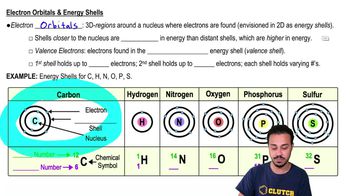
Protons (positive charge), Neutrons (no charge), and Electrons (negative charge).
In the nucleus of the atom.
The number of protons in an atom of that element.
Sum of the number of protons and neutrons in an atom.
Atoms of the same element with different numbers of neutrons. Some are radioactive.
Elements are made of one type of atom; molecules are two or more atoms bonded together.
Anions have a negative charge; cations have a positive charge.
Organic molecules contain C-H bonds; inorganic molecules do not.
Required for chemical reactions, high heat capacity, and excellent solvent.
The acidity or alkalinity (basicity) of a solution.
Between 7.35 and 7.45.
Below 7 can cause coma; above 7.8 can cause tetany.
Release hydrogen ions (H⁺).
Remove hydrogen ions (H⁺).
Carbohydrates, lipids, proteins, and nucleic acids.
Monosaccharides, which provide energy.
Lipids do not have true monomers; they provide insulation, cushion organs, and serve as energy reservoirs.
Amino acids; proteins support structure, movement, transport, and more.
Made of nucleotides; they store genetic information.
Energy is released by hydrolysis breaking the bond of the 3rd phosphate group, forming ADP.
\(\text{ADP} + \text{P}_i + \text{Energy} \leftrightarrow \text{ATP} + \text{H}_2\text{O}\)