Skip to main content
Anatomy & Physiology
My Course
Learn
Exam Prep
AI Tutor
Study Guides
Textbook Solutions
Flashcards
Explore
Try the app
My Course
Learn
Exam Prep
AI Tutor
Study Guides
Textbook Solutions
Flashcards
Explore
Try the app
Back
Anatomy & Physiology: Body Organization, Anatomical Terminology, and Skeletal System
You can tap to flip the card.
What are the hierarchical levels of organization in the human body?
You can tap to flip the card.
👆
What are the hierarchical levels of organization in the human body?
Cells, tissues, organs, organ systems, and the organism.
Track progress
Control buttons has been changed to "navigation" mode.
1/20
Recommended videos
Guided course
04:21
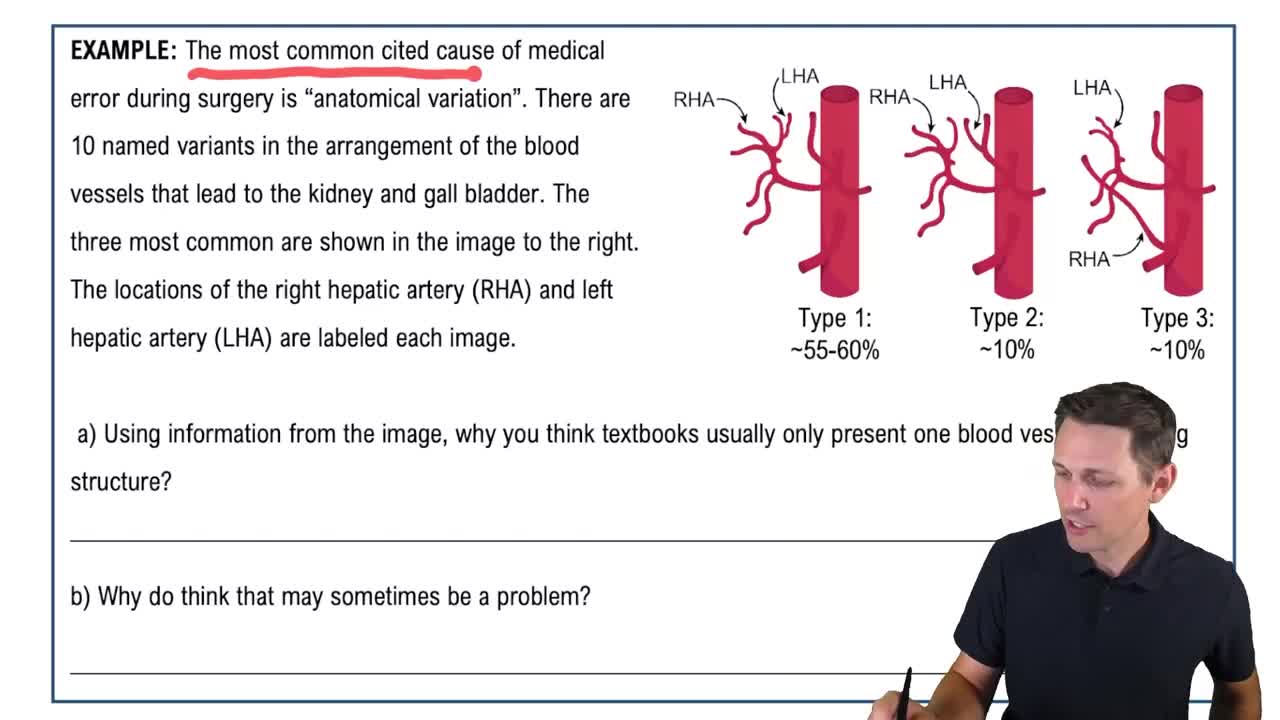
Variation in A&P
18576
views
362
rank
1
comments
Guided course
03:24
Variation in Anatomy & Physiology Example 1
12544
views
258
rank
1
comments
Terms in this set (20)
Hide definitions
What are the hierarchical levels of organization in the human body?
Cells, tissues, organs, organ systems, and the organism.
Name three functions of the integumentary system.
Protection against environmental hazards, temperature regulation, and sensory reception.
What organs are included in the skeletal system and what are its main functions?
Bones, cartilages, ligaments, bone marrow; supports and protects tissues, stores minerals, and forms blood cells.
Define the anatomical position.
Standing upright, facing forward, arms at sides, palms facing forward.
What does 'supine' and 'prone' mean in anatomical terms?
Supine: lying face up; Prone: lying face down.
List the four abdominopelvic quadrants.
Right Upper Quadrant (RUQ), Right Lower Quadrant (RLQ), Left Upper Quadrant (LUQ), Left Lower Quadrant (LLQ).
What are the three main sectional planes of the body?
Frontal (coronal), sagittal, and transverse (horizontal) planes.
What is the function of serous membranes in body cavities?
They reduce friction by producing serous fluid; parietal layer lines the cavity, visceral layer covers the organ.
Name the three major sutures of the skull.
Sagittal, coronal, and lambdoid sutures.
What is the function of the auditory ossicles?
Transfer sound vibrations from the eardrum to the internal ear.
What bones form the axial skeleton?
Skull, vertebral column, and thoracic cage.
What are the primary and secondary spinal curves?
Primary curves: thoracic and sacral (present at birth); Secondary curves: cervical and lumbar (develop after birth).
What distinguishes cervical vertebrae from thoracic and lumbar vertebrae?
Cervical vertebrae have transverse foramina; thoracic vertebrae articulate with ribs; lumbar vertebrae are larger for weight bearing.
What bones make up the pectoral girdle?
Clavicle and scapula.
What bones form the pelvic girdle?
Ilium, ischium, and pubis.
What are the true, false, and floating ribs?
True ribs (1–7) attach directly to sternum; false ribs (8–10) attach indirectly; floating ribs (11–12) do not attach to sternum.
What is the function of the hyoid bone?
Supports the larynx and attaches muscles of the tongue and pharynx.
What is the role of fontanelles in the infant skull?
Areas of fibrous connective tissue that allow skull flexibility during birth and rapid brain growth.
What are the directional terms 'proximal' and 'distal' used to describe?
Proximal: closer to the point of attachment; Distal: farther from the point of attachment.
What is the function of the lymphatic system?
Defends against infection and returns fluids to the bloodstream.
 BackBack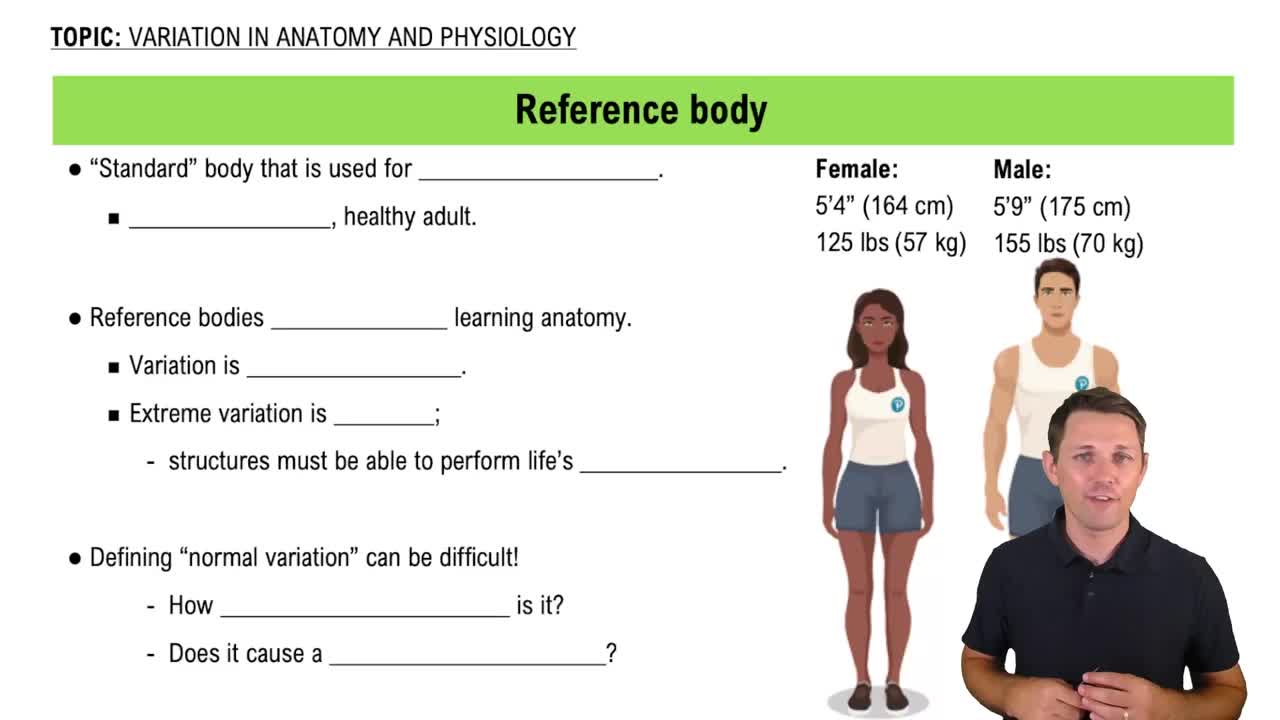
 04:21
04:21