Skip to main content
Anatomy & Physiology
My Course
Learn
Exam Prep
AI Tutor
Study Guides
Textbook Solutions
Flashcards
Explore
Try the app
My Course
Learn
Exam Prep
AI Tutor
Study Guides
Textbook Solutions
Flashcards
Explore
Try the app
Back
Anatomy & Physiology: Body Regions and Planes of Section
You can tap to flip the card.
What are the two main body regions?
You can tap to flip the card.
👆
What are the two main body regions?
The
axial region
includes the head, neck, and trunk, while the
appendicular region
includes the upper and lower limbs.
Track progress
Control buttons has been changed to "navigation" mode.
1/12
Recommended videos
Guided course
02:59
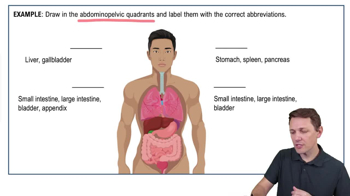
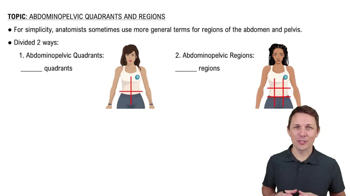
Abdominopelvic Quadrants and Regions Example 2
6425
views
128
rank
Guided course
3:01
Abdominopelvic Quadrants and Regions Example 1
6189
views
103
rank
Guided course
3:47
The 4 Abdominopelvic Quadrants
7537
views
122
rank
Terms in this set (12)
Hide definitions
What are the two main body regions?
The
axial region
includes the head, neck, and trunk, while the
appendicular region
includes the upper and lower limbs.
What is the axial region?
The
axial region
consists of the head, neck, and trunk.
What does the appendicular region include?
The
appendicular region
includes the upper and lower limbs.
What are planes of section?
Planes of section are standard ways of dividing a body or body part to examine its internal structure.
What does the sagittal plane divide?
The
sagittal plane
divides the body or body part into right and left sections.
What is the midsagittal plane?
The
midsagittal plane
, or median plane, divides the body into equal right and left halves.
What is the parasagittal plane?
The
parasagittal plane
divides the body into unequal right and left sections.
What does the frontal plane divide?
The
frontal plane
, or coronal plane, divides the body into anterior (front) and posterior (back) sections.
Why is the frontal plane easy to remember?
Because it divides the body into a
front section
and a
back section
.
What is another name for the transverse plane?
The
transverse plane
is also called the horizontal plane or cross section.
What does the transverse plane divide?
It divides the body or body part into superior (upper) and inferior (lower) parts.
How does the transverse plane divide the appendicular region?
It divides the appendicular region into
proximal
(closer to the trunk) and
distal
(farther from the trunk) parts.
 BackBack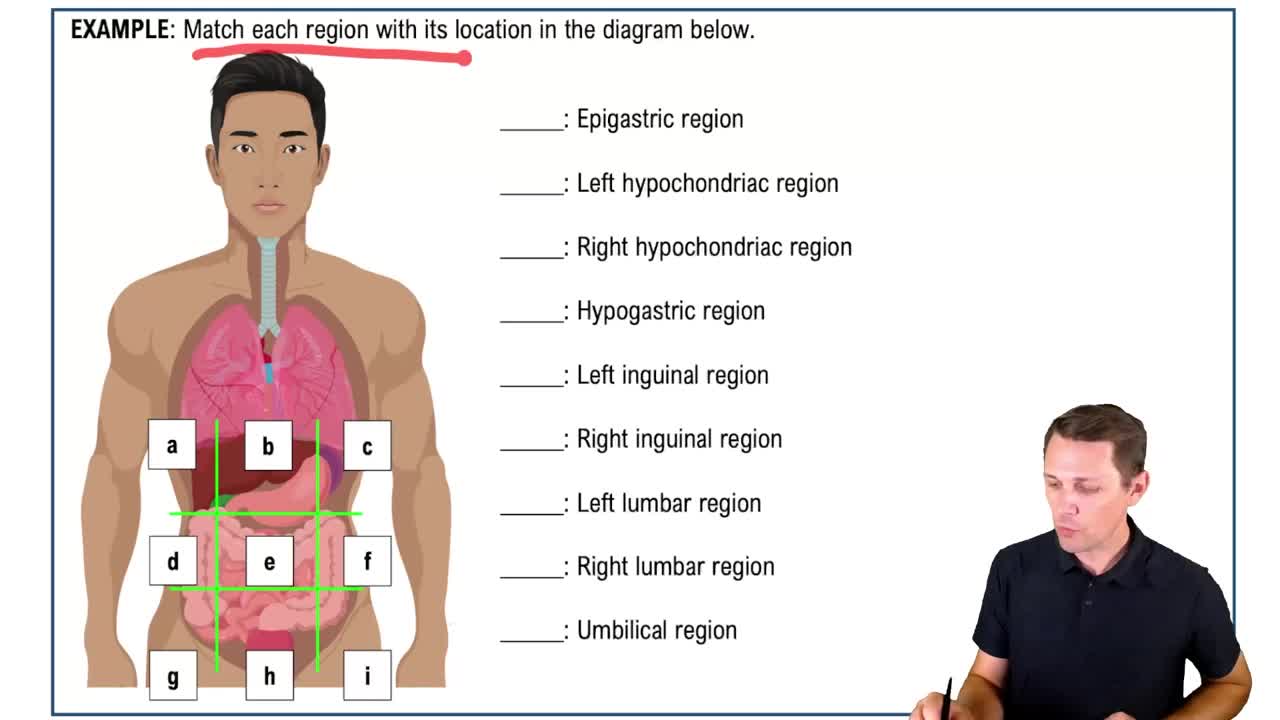
 02:59
02:59