Skip to main content
Anatomy & Physiology
My Course
Learn
Exam Prep
AI Tutor
Study Guides
Textbook Solutions
Flashcards
Explore
Try the app
My Course
Learn
Exam Prep
AI Tutor
Study Guides
Textbook Solutions
Flashcards
Explore
Try the app
Back
Anatomy & Physiology: Cell Biology, Tissues, and Bone Structure
You can tap to flip the card.
What is the basic structural and functional unit of life?
You can tap to flip the card.
👆
What is the basic structural and functional unit of life?
The
cell
is the basic structural and functional unit of life.
Track progress
Control buttons has been changed to "navigation" mode.
1/28
Recommended videos
04:26
Recap: Prokaryotic vs. Eukaryotic Cells
20492
views
340
rank
05:54
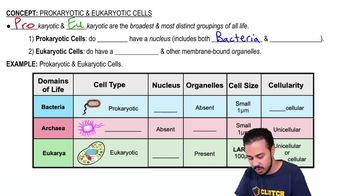
Prokaryotic & Eukaryotic Cells
34795
views
742
rank
2
comments
03:54
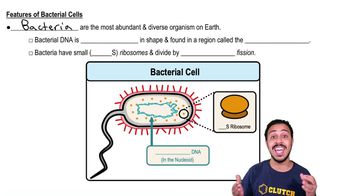
Features of Bacterial Cells
24569
views
424
rank
Terms in this set (28)
Hide definitions
What is the basic structural and functional unit of life?
The
cell
is the basic structural and functional unit of life.
Function of the plasma membrane
The
plasma membrane
is the boundary of the cell that regulates entry and exit of substances.
Role of microvilli
Microvilli
are finger-like projections that increase surface area for absorption.
Function of cilia
Cilia
are hair-like structures that move substances across cell surfaces.
Purpose of flagella
Flagella
are tail-like structures that enable cell movement.
What does the nucleus contain and control?
The
nucleus
contains genetic material (DNA) and controls cell activities.
Difference between rough and smooth endoplasmic reticulum
Rough ER
has ribosomes and synthesizes proteins;
Smooth ER
synthesizes lipids.
Function of mitochondria
Mitochondria
are the powerhouse of the cell and the site of ATP production.
Role of ribosomes
Ribosomes
are the site of protein synthesis.
What is the function of the Golgi apparatus?
The
Golgi apparatus
modifies, sorts, and packages proteins and lipids for secretion or internal use.
What is the cytoskeleton?
The
cytoskeleton
is a network of protein filaments that provides cell shape, movement, and division.
Primary function of lysosomes
Lysosomes
contain digestive enzymes for breakdown of waste.
What is chromatin?
Chromatin
is a DNA and protein complex that condenses to form chromosomes during cell division.
What is the total magnification of a microscope?
Total magnification is the product of the ocular lens and objective lens magnifications.
Four primary tissue types
Epithelial, connective, muscle,
and
nervous tissues
are the four primary tissue types.
Function of epithelial tissue
Epithelial tissue
covers surfaces, lines cavities, and forms glands.
Types of muscle tissue
Muscle tissue types include
skeletal
(voluntary, striated),
cardiac
(involuntary, striated), and
smooth
(involuntary, non-striated).
What is an osteon?
An
osteon
is the structural unit of compact bone.
Function of osteocytes and lacunae
Osteocytes
are bone cells housed in small cavities called
lacunae
.
Difference between compact and spongy bone
Compact bone
is dense and organized in osteons;
spongy bone
is porous and contains trabeculae and marrow.
What is the role of adipose tissue?
Adipose tissue
stores fat, provides insulation, and cushions organs.
What is the epidermis?
The
epidermis
is the outermost skin layer, including strata basale, spinosum, granulosum, lucidum, and corneum.
Function of blood tissue
Blood
transports oxygen, nutrients, and waste; composed of erythrocytes, leukocytes, and platelets.
What are chondrocytes?
Chondrocytes
are cartilage cells located in lacunae within a gel-like extracellular matrix.
What is the function of the peroxisome?
Peroxisomes
break down fatty acids and detoxify harmful substances.
What is the function of secretory vesicles?
Secretory vesicles
transport substances to the cell membrane for release.
What is the role of the nucleolus?
The
nucleolus
is the site of ribosome synthesis within the nucleus.
What is the function of the basement membrane in epithelial tissue?
The
basement membrane
anchors epithelial tissue to underlying connective tissue.
 BackBack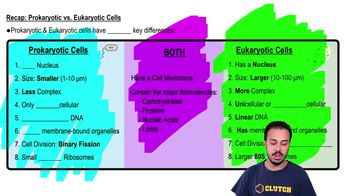
 04:26
04:26