 Back
BackAnatomy & Physiology: Cells, Tissues, and Cellular Processes
 03:45
03:45
Terms in this set (29)
1. All living things are made of one or more cells.
2. Cells are the basic units of structure and function.
3. All cells arise from existing cells.
The plasma membrane is a phospholipid bilayer that covers the cell surface and acts as a selectively permeable barrier between the cell and its environment.
Polar heads face outward toward water; nonpolar tails face inward, repelling water but allowing lipid-soluble substances to pass.
Integral proteins are embedded in the membrane structure; peripheral proteins are on the surface and may act as enzymes or cell linkers.
Anchoring, recognition, enzymatic activity, receptor binding, carrier transport, and channel formation.
Clear fluid called cytosol containing water, ions, nutrients, proteins, and waste; provides medium for intracellular reactions.
Composed of actin, they determine cell shape and anchor the cytoskeleton to membrane proteins.
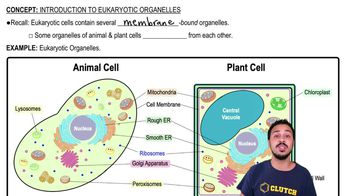
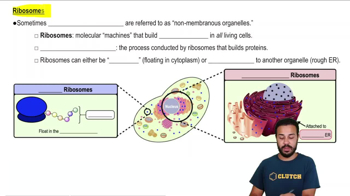
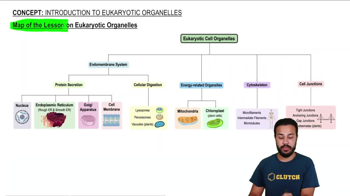
Rough ER assembles proteins with ribosomes; Smooth ER synthesizes lipids and detoxifies substances.
Modifies, packages, and ships proteins and lipids for secretion or use within the cell.
Digest and recycle cellular waste and damaged organelles.
Produce ATP, the cell's main energy source, through cellular respiration.
Contains DNA and controls cell functions; includes nuclear envelope, chromatin, nucleolus, and nuclear pores.
Copying a DNA sequence into complementary mRNA.
DNA has deoxyribose sugar, is double-stranded, and contains thymine; RNA has ribose sugar, is single-stranded, and contains uracil.
Using mRNA to assemble amino acids into a protein at the ribosome.
Movement of molecules down a concentration gradient; includes simple diffusion (lipid-soluble molecules) and facilitated diffusion (large molecules via proteins).
Diffusion of water through a selectively permeable membrane to balance solute concentrations.
Isotonic: equal solute concentration; hypertonic: higher solute outside, causing cell shrinkage; hypotonic: lower solute outside, causing cell swelling.
Movement of molecules against concentration gradient using energy; example: sodium-potassium pump.
Endocytosis: cell engulfs substances into vesicles; exocytosis: vesicles release contents outside the cell.
G1 (growth), S (DNA replication), G2 (preparation), and M phase (mitosis and cytokinesis).
Division of the nucleus into two identical sets of chromosomes.
Covers body surfaces, lines cavities, controls permeability, provides sensation, and produces secretions.
By cell layers: simple (one layer) or stratified (multiple layers); by cell shape: squamous, cuboidal, or columnar.
Ground substance, fibers (collagen, elastic, reticular), and cells (fibroblasts, chondroblasts, osteoblasts).
Loose connective tissue (areolar, adipose, reticular) and dense connective tissue (regular, irregular, elastic).
Movement, posture, and heat production; includes voluntary (skeletal) and involuntary (cardiac, smooth) muscles.
Neurons and neuroglia; transmits electrical signals and supports neurons.
Inflammation, organization (restoring blood supply), and regeneration or fibrosis (scar formation).