 Back
BackAnatomy & Physiology Exam 1 Study Guide
 3:06
3:06
Terms in this set (38)
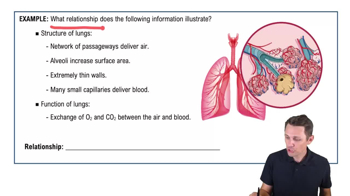
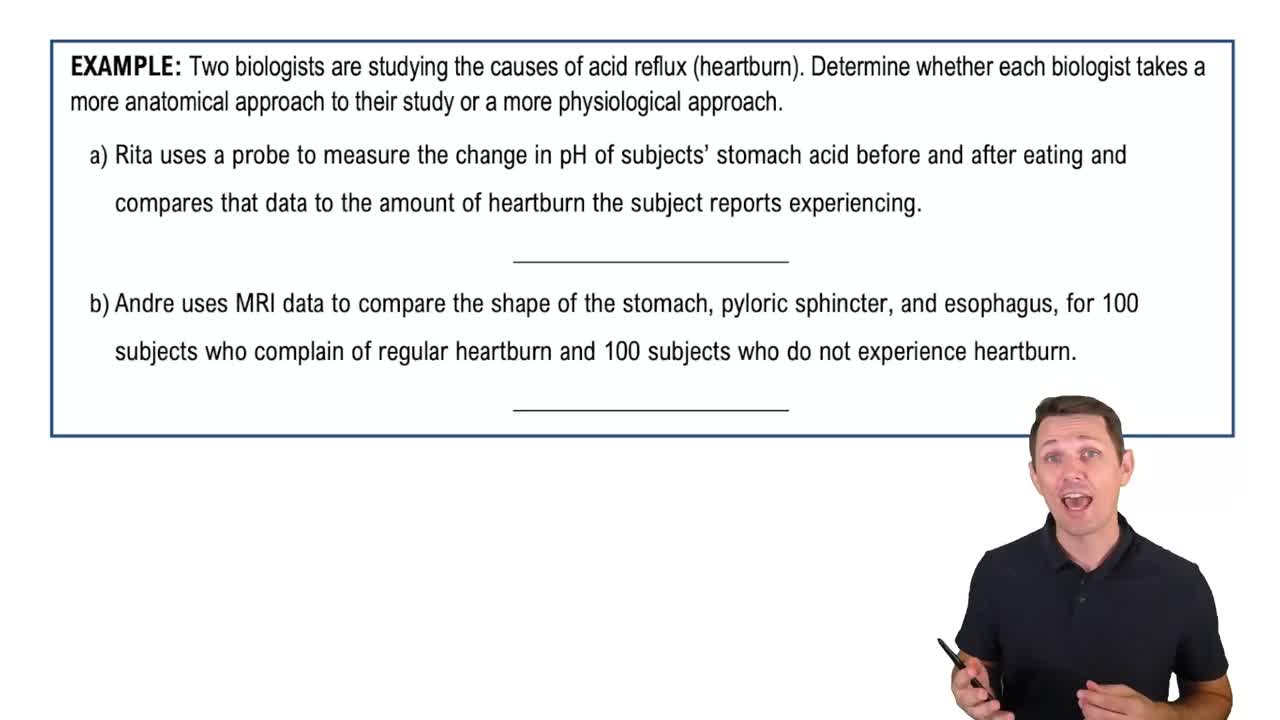
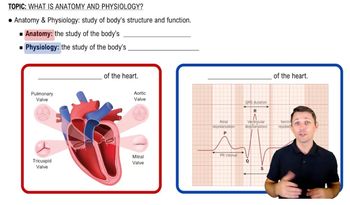
Anatomy is the study of body structure, and Physiology is the study of body function.
Cells → Tissues → Organs → Organ systems → Organism. Each level is made of the previous one.
Integumentary: protection; Muscular: movement; Skeletal: support and protection; Nervous: control and communication.
Functions essential for life like maintaining boundaries, movement, responsiveness, digestion, etc. Example: Plasma membrane regulates what enters/exits the cell, showing maintaining boundaries.
Sensor: detects change; Control center: processes info; Effector: carries out response.
Negative feedback reverses a change (e.g., body temperature regulation). Positive feedback enhances a change (e.g., blood clotting).
Body activates effectors like sweat glands to cool down, maintaining homeostasis via negative feedback.
Standard body position: standing, facing forward, palms up. Terms: Medial (toward midline), Lateral (away from midline).
Spleen is in the left upper quadrant. Stomach is in the left hypochondriac and epigastric regions.
Sagittal: divides left/right; Frontal (coronal): divides front/back; Transverse: divides top/bottom.
Dorsal cavity: cranial and spinal; Ventral cavity: thoracic and abdominopelvic.
Kinetic energy is energy of motion; Potential energy is stored energy. Example: ATP stores potential energy, released as kinetic during muscle contraction.
Oxygen, Carbon, Hydrogen, and Nitrogen are the primary elements.
Isotopes have the same number of protons but different numbers of neutrons.
Solutions: homogeneous mixtures; Colloids: heterogeneous but particles don't settle; Suspensions: particles settle over time.
Bonds form between electrons. Types: Ionic, Covalent, and Hydrogen bonds.
Synthesis: building molecules; Decomposition: breaking molecules down.
Higher temperature generally increases reaction rates by providing more energy.
pH measures H+ concentration; low pH = acidic. Bicarbonate buffer stabilizes pH by neutralizing excess acids or bases.
Acids release H+ ions; Bases accept H+ ions or release OH- ions.
Carbohydrates, fats (lipids), and proteins.
Enzymes have optimal temperature and pH. Denaturation is loss of enzyme shape and function due to extreme conditions.
DNA stores genetic info; RNA helps in protein synthesis. DNA is double-stranded; RNA is single-stranded.
Composed of a phospholipid bilayer with proteins; it regulates entry and exit of substances.
Tight junctions, desmosomes, and gap junctions connect cells and allow communication or barrier formation.
Passive transport: no energy, e.g., diffusion; Active transport: requires energy, e.g., sodium-potassium pump.
Tonicity describes solute concentration outside cells. Hypotonic: lower solute outside, cells swell. Hypertonic: higher solute outside, cells shrink.
Endocytosis: cell engulfs material; types include phagocytosis and pinocytosis. Exocytosis: cell expels material.
It is the negative electrical charge inside a cell relative to outside, essential for nerve and muscle function.
Ligands are molecules that bind to receptors on cells to trigger a response.
Nucleus, mitochondria, endoplasmic reticulum, Golgi apparatus, lysosomes, and others.
DNA replicates during S phase. Mitosis divides the nucleus into two identical sets.
Complementary DNA strand is TAC.
Each new DNA molecule contains one original strand and one new strand.
Prophase, metaphase, anaphase, telophase.
Transcription copies DNA to RNA; translation reads RNA to build proteins using codons.
RNA strand is UAC.
Information flows from DNA to RNA to protein.