 Back
BackAnatomy & Physiology Exam 2 Key Concepts
 06:54
06:54
Terms in this set (20)
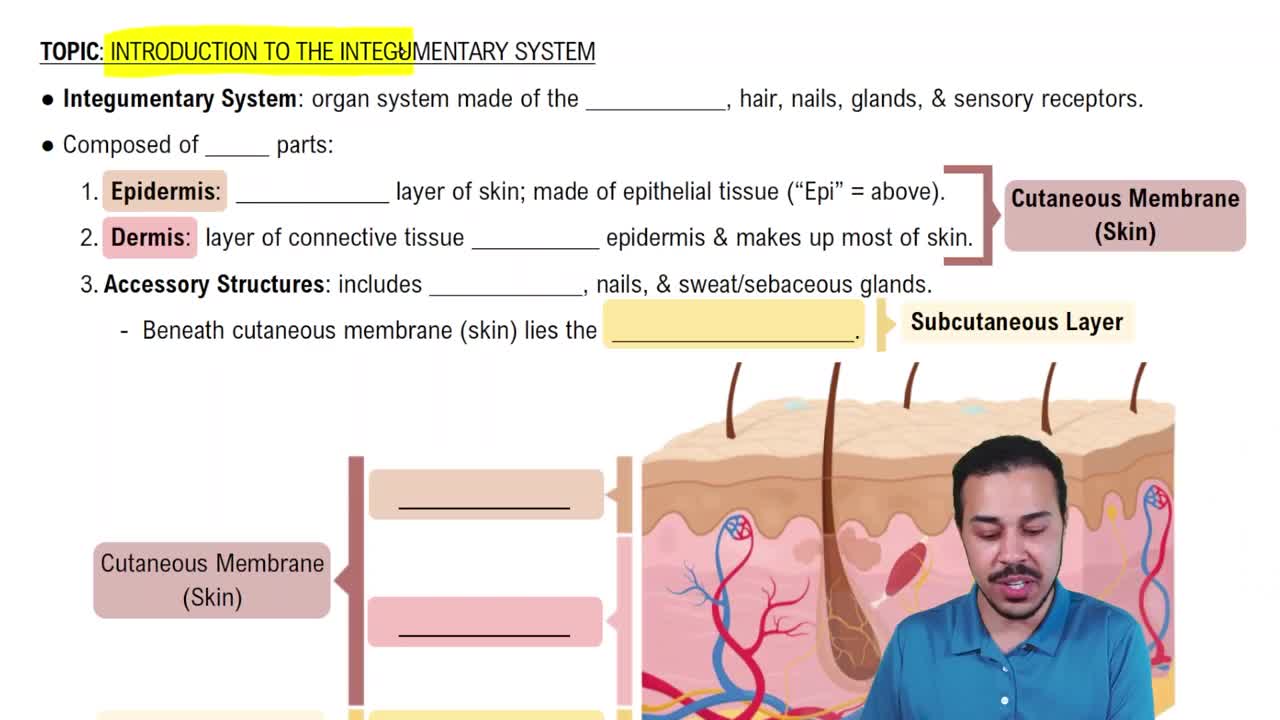
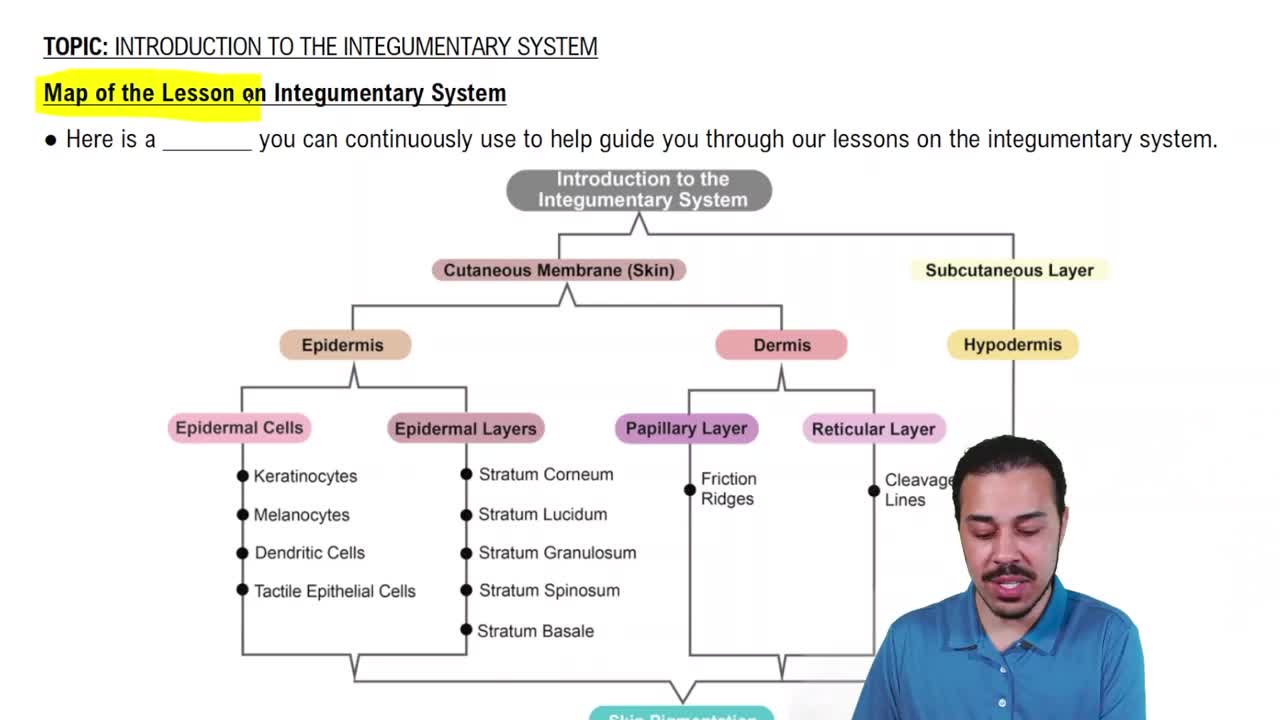
The cutaneous membrane has two main layers: the epidermis (outer protective layer) and the dermis (inner supportive layer with blood vessels and nerves).
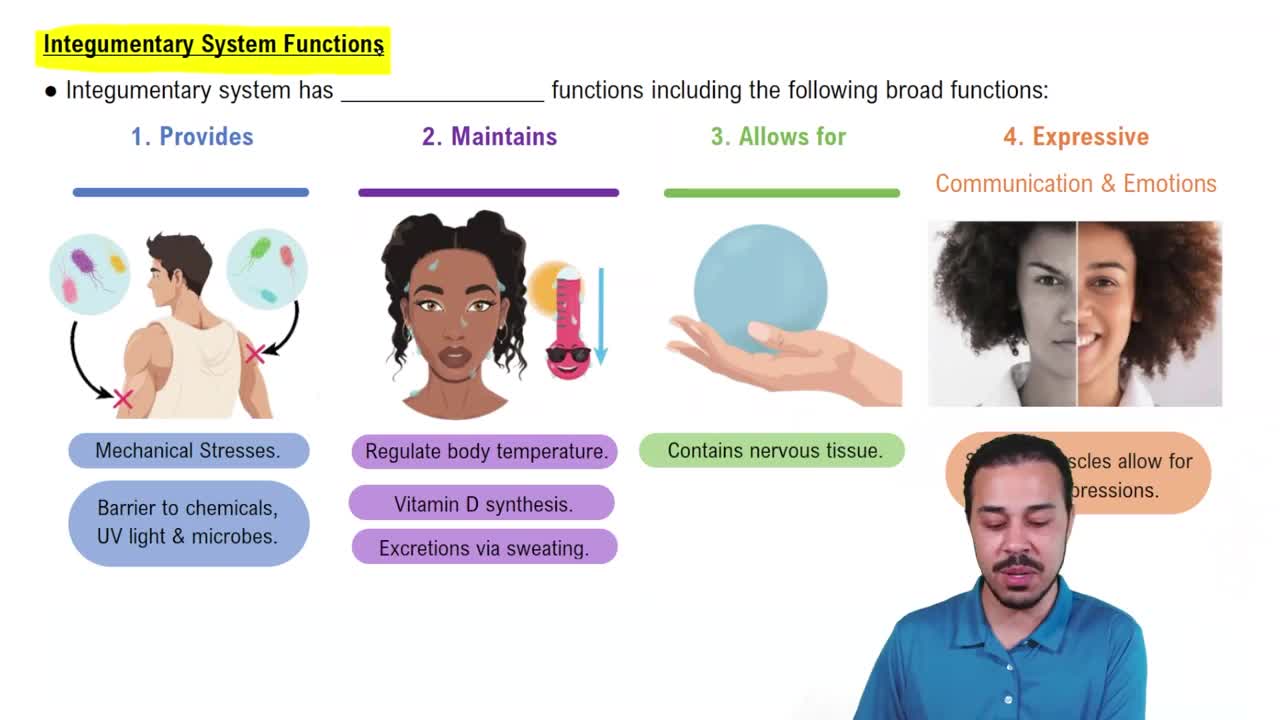
Accessory structures include hair, nails, sweat glands, and sebaceous glands; they protect, regulate temperature, and provide sensory input.
Common signs include redness, swelling, pain, and pus; symptoms vary by disease but often include itching and rash.
The body is divided into sections representing 9% (or multiples) of total body surface area to estimate burn extent and severity.
1st degree: epidermis only; 2nd degree: epidermis and part of dermis; 3rd degree: full thickness including nerve damage; critical burns depend on size and depth.
Basal cell carcinoma (epidermis, slow growth), squamous cell carcinoma (epidermis, can metastasize), melanoma (melanocytes, highly aggressive).
Asymmetry, Border irregularity, Color variation, Diameter >6mm, Evolving size or shape.
Compact bone: dense outer layer; spongy bone: porous inner layer with trabeculae.
Support, protection, movement, mineral storage, blood cell production, and energy storage.
Long, short, flat, and irregular bones, classified by shape and function.
Diaphysis (shaft), epiphyses (ends), metaphysis (growth zone), medullary cavity, periosteum, and articular cartilage.
Osteons (Haversian systems) with central canals, lamellae, lacunae with osteocytes, and canaliculi.
Axial skeleton: skull, vertebrae, ribs; appendicular skeleton: limbs and girdles.
Air-filled cavities in frontal, maxillary, ethmoid, and sphenoid bones that lighten the skull and enhance voice resonance.
Cervical (small, transverse foramina), thoracic (articulate ribs), lumbar (large, weight-bearing).
True ribs attach directly to sternum; false ribs attach indirectly; floating ribs have no anterior attachment.
Includes upper and lower limbs, shoulder girdle, and pelvic girdle; know carpals, metacarpals, tarsals, metatarsals, and phalanges.
Ilium, ischium, and pubis form the hip bone.
Female pelvis is wider, shallower, and has a larger pelvic inlet for childbirth; male pelvis is narrower and taller.
Functional: synarthrosis (immovable), amphiarthrosis (slightly movable), diarthrosis (freely movable). Structural: fibrous, cartilaginous, synovial.