Back

Anatomy & Physiology: Histology, Integumentary, and Skeletal Systems
Control buttons has been changed to "navigation" mode.
1/20
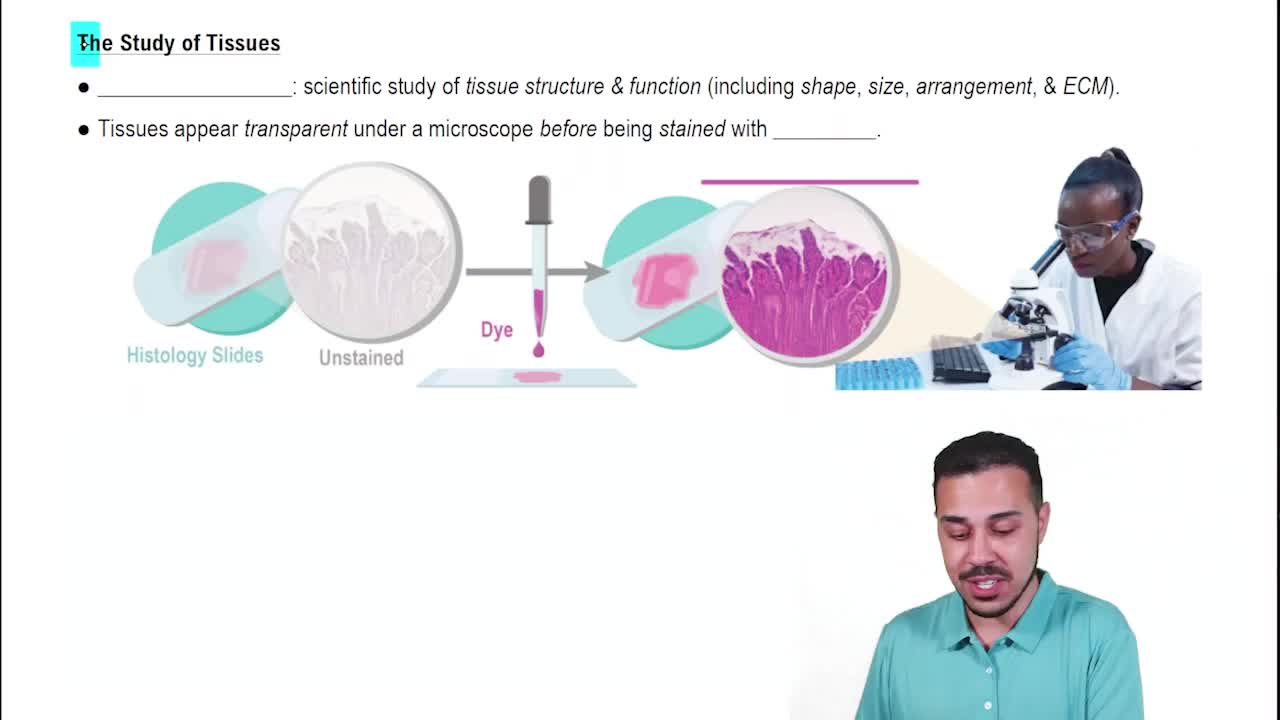
  • What is histology?

    Histology is the study of the microscopic structure of tissues.

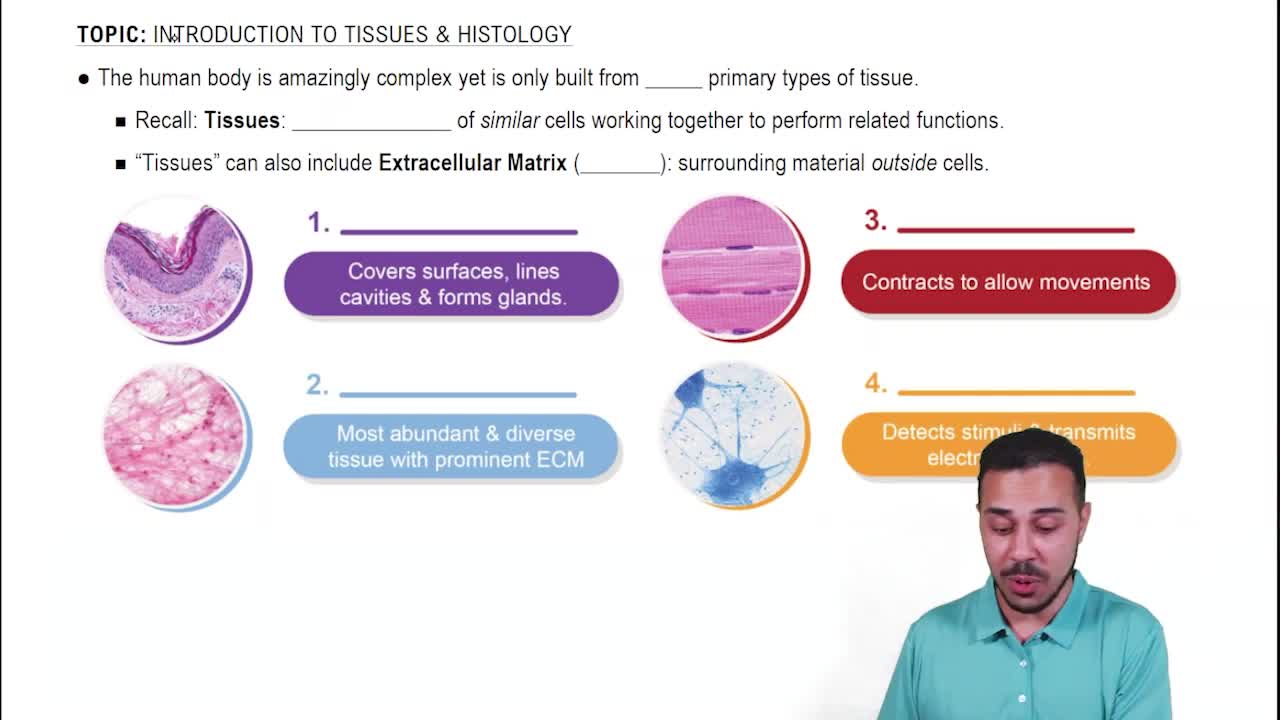
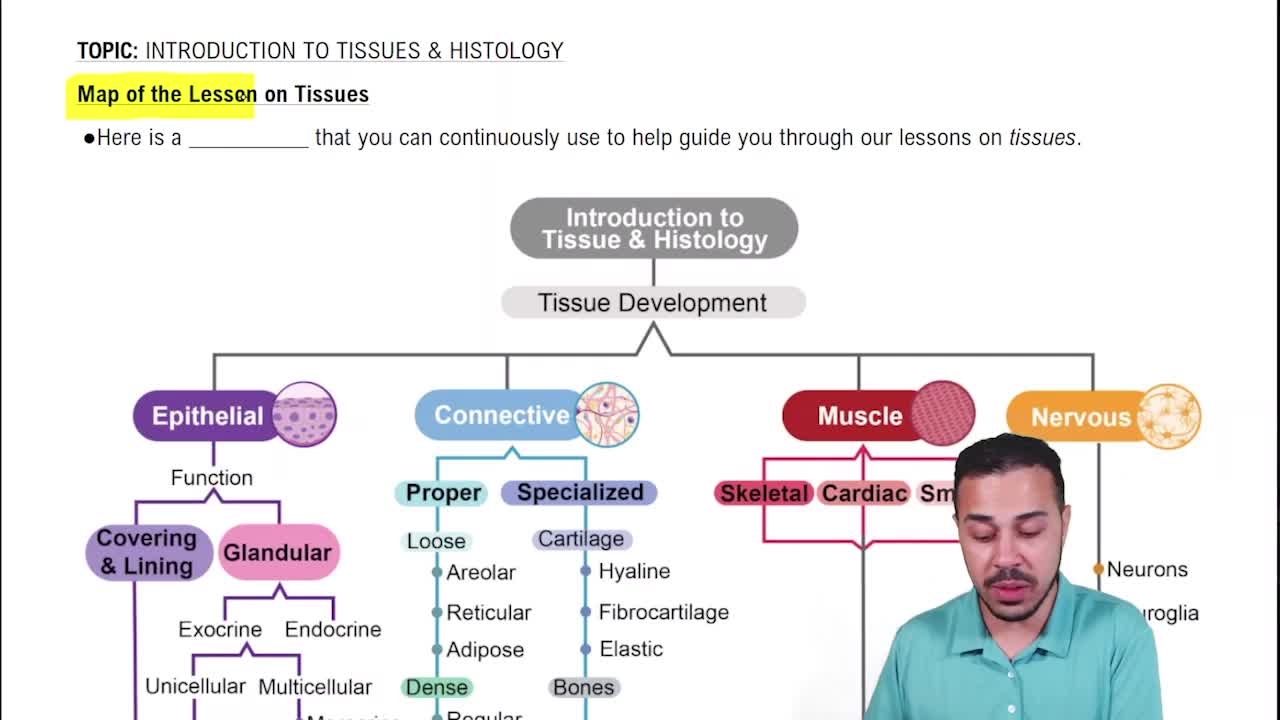
  • Name the four basic tissue types studied in histology.

    Epithelial, connective, muscle, and nervous tissues.

  • What is the primary function of epithelial tissue?

    To cover body surfaces and line cavities, providing protection and selective permeability.

  • What are the main layers of the integumentary system?

    The epidermis, dermis, and hypodermis (subcutaneous layer).

  • What type of tissue primarily makes up the epidermis?

    Keratinized stratified squamous epithelium.

  • Name two functions of the integumentary system.

    Protection against environmental damage and regulation of body temperature.

  • What pigment gives skin its color?

    Melanin, produced by melanocytes in the epidermis.

  • What is the role of the dermis in the integumentary system?

    It provides strength and elasticity through connective tissue and houses blood vessels, nerves, and glands.

  • What type of connective tissue is found in the hypodermis?

    Loose connective tissue and adipose tissue.

  • What are the two main divisions of the skeletal system?

    The axial skeleton and the appendicular skeleton.

  • What bones make up the axial skeleton?

    The skull, vertebral column, and rib cage.

  • What is the primary function of the skeletal system?

    Support, protection of organs, movement, mineral storage, and blood cell production.

  • What type of bone tissue is dense and forms the outer layer of bones?

    Compact bone.

  • What type of bone tissue is spongy and found inside bones?

    Spongy (cancellous) bone, which contains red bone marrow.

  • What is the function of red bone marrow?

    Production of red blood cells, white blood cells, and platelets.

  • Name the cells responsible for bone formation.

    Osteoblasts.

  • Which cells break down bone tissue?

    Osteoclasts.

  • What is the basic functional unit of compact bone?

    The osteon or Haversian system.

  • What type of joint allows for free movement?

    Synovial joints.

  • Give an example of a synovial joint.

    The knee, shoulder, or hip joint.