 Back
BackAnatomy & Physiology: Human Body Overview
 3:06
3:06
Terms in this set (24)
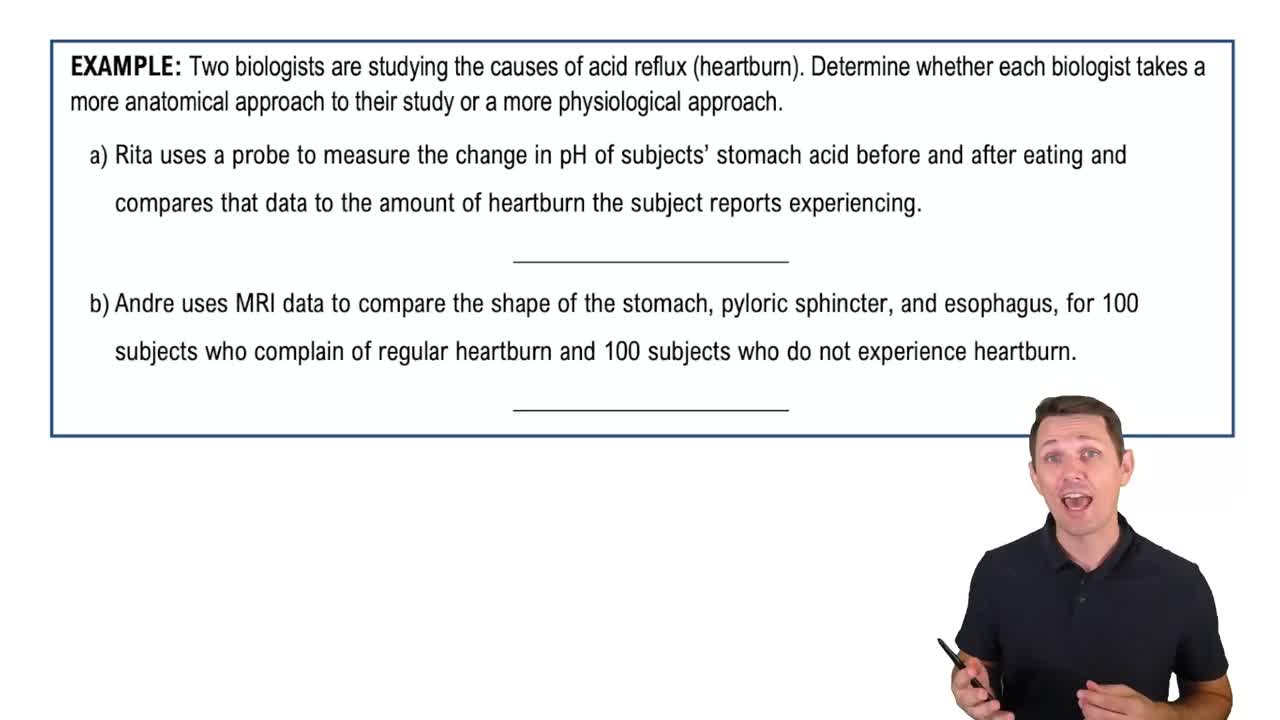
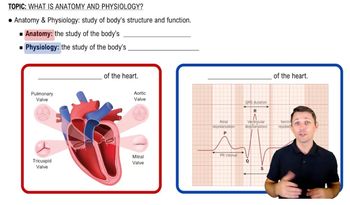
Anatomy is the study of the structure of body parts and their relationship to one another.
Physiology is the study of the function of body parts and how they work to carry out life-sustaining activities.
Gross (macroscopic) anatomy, microscopic anatomy (cytology and histology), and developmental anatomy (including embryology).
Organ system physiology (e.g., renal, cardiovascular) and cellular/molecular physiology focusing on chemical reactions in cells.
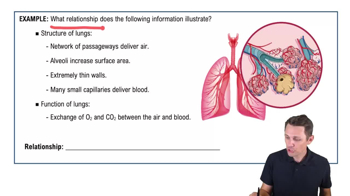
Function always reflects structure; what a structure can do depends on its specific form.
Chemical, cellular, tissue, organ, organ system, and organismal levels.
Maintaining boundaries, movement, responsiveness, digestion, metabolism, excretion, reproduction, and growth.
Maintenance of relatively stable internal conditions despite continuous environmental changes; a dynamic state of equilibrium.
Receptor (sensor), control center, and effector.
A response that reduces or shuts off the original stimulus, maintaining homeostasis (e.g., regulation of body temperature).
A response that enhances or exaggerates the original stimulus, often controlling infrequent events (e.g., blood clotting, labor contractions).
Axial (head, neck, trunk) and appendicular (limbs).
Sagittal (divides right and left), frontal/coronal (divides front and back), and transverse/horizontal (divides top and bottom).
Protects the nervous system; includes the cranial cavity (brain) and vertebral cavity (spinal cord).
Houses internal organs; includes thoracic cavity and abdominopelvic cavity separated by the diaphragm.
Thin, double-layered membranes in the ventral body cavity; parietal serosa lines cavity walls, visceral serosa covers organs, separated by serous fluid.
Integumentary (protection), skeletal (support), muscular (movement), nervous (control), endocrine (hormones), cardiovascular (transport), lymphatic (immunity), respiratory (gas exchange), digestive (food breakdown), urinary (waste elimination), reproductive (offspring production).
Nutrients, oxygen, water, normal body temperature, and appropriate atmospheric pressure.
Body erect, feet slightly apart, palms facing forward with thumbs pointing away from the body.
Superior: toward the head or upper part; Inferior: away from the head or lower part.
Anterior (ventral): toward or at the front; Posterior (dorsal): toward or at the back.
Proximal: closer to the origin of a limb or attachment point; Distal: farther from the origin or attachment point.
Right upper quadrant (RUQ), left upper quadrant (LUQ), right lower quadrant (RLQ), left lower quadrant (LLQ).
Right hypochondriac, epigastric, left hypochondriac, right lumbar, umbilical, left lumbar, right iliac (inguinal), hypogastric, left iliac (inguinal).