 Back
BackAnatomy & Physiology I - Key Concepts
 3:06
3:06
Terms in this set (28)
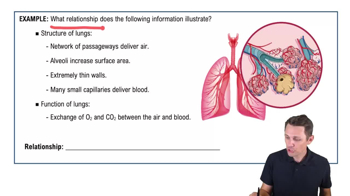
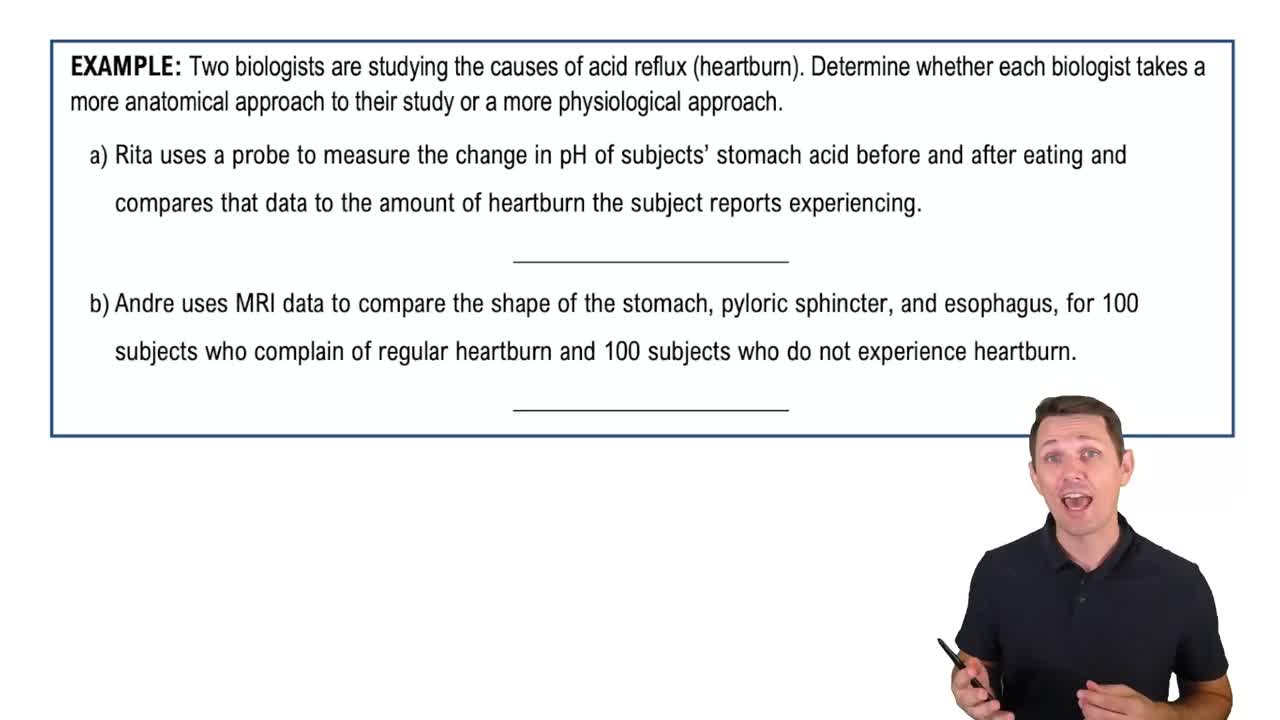
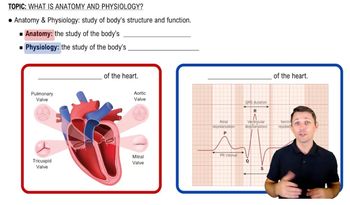
Anatomy is the study of body structure; physiology is the study of body function. Form (anatomy) determines function (physiology).
Levels range from atoms, molecules, cells, tissues, organs, organ systems, to the whole organism.
Includes integumentary, skeletal, muscular, nervous, endocrine, cardiovascular, lymphatic, respiratory, digestive, urinary, and reproductive systems, each with specific roles in body function.
Homeostasis is the maintenance of a stable internal environment, essential for normal body function and survival.
Negative feedback reverses a change to maintain balance; positive feedback amplifies a response until a specific outcome is achieved.
Body standing upright, facing forward, feet flat, arms at sides with palms facing forward.
Ionic bonds transfer electrons; covalent bonds share electrons; hydrogen bonds are weak attractions between polar molecules.
Acids release H+ ions; bases release OH- ions; pH measures hydrogen ion concentration, indicating acidity or alkalinity.
Dehydration synthesis forms bonds by removing water; hydrolysis breaks bonds by adding water.
Primary (amino acid sequence), secondary (alpha helices and beta sheets), tertiary (3D folding), and quaternary (multiple polypeptide chains).
DNA stores genetic info; RNA helps express it. DNA is double-stranded; RNA is single-stranded.
ATP stores and transfers energy for cellular processes.
Plasma membrane, cytoplasm, and nucleus.
Membrane is a phospholipid bilayer with embedded proteins allowing selective permeability.
Simple diffusion moves molecules down concentration gradient; facilitated diffusion uses proteins; osmosis moves water across membranes.
Membrane potential is the voltage across a membrane; resting potential is the stable, negative charge inside a cell at rest.
Includes loose, dense, cartilage, bone, and blood, each with distinct functions.
Skeletal (voluntary, striated), cardiac (involuntary, striated), and smooth (involuntary, nonstriated).
Actin and myosin filaments slide past each other to shorten muscle fibers during contraction.
Receive sensory input, integrate information, and coordinate motor output.
Neurons transmit nerve impulses; neuroglia support and protect neurons.
Graded potentials are short-distance, variable signals; action potentials are long-distance, all-or-none signals.
Consist of cortex, white matter, and basal nuclei; responsible for higher brain functions.
Midbrain, pons, and medulla oblongata, controlling vital functions.
Conveys sensory and motor information and mediates reflexes.
Controls involuntary functions of smooth muscle, cardiac muscle, and glands.
Parasympathetic conserves energy; sympathetic prepares for fight or flight.
Receptor, sensory neuron, integration center, motor neuron, and effector.