 Back
BackAnatomy & Physiology: Intro to Anatomy and Terminology
 02:40
02:40
Terms in this set (32)
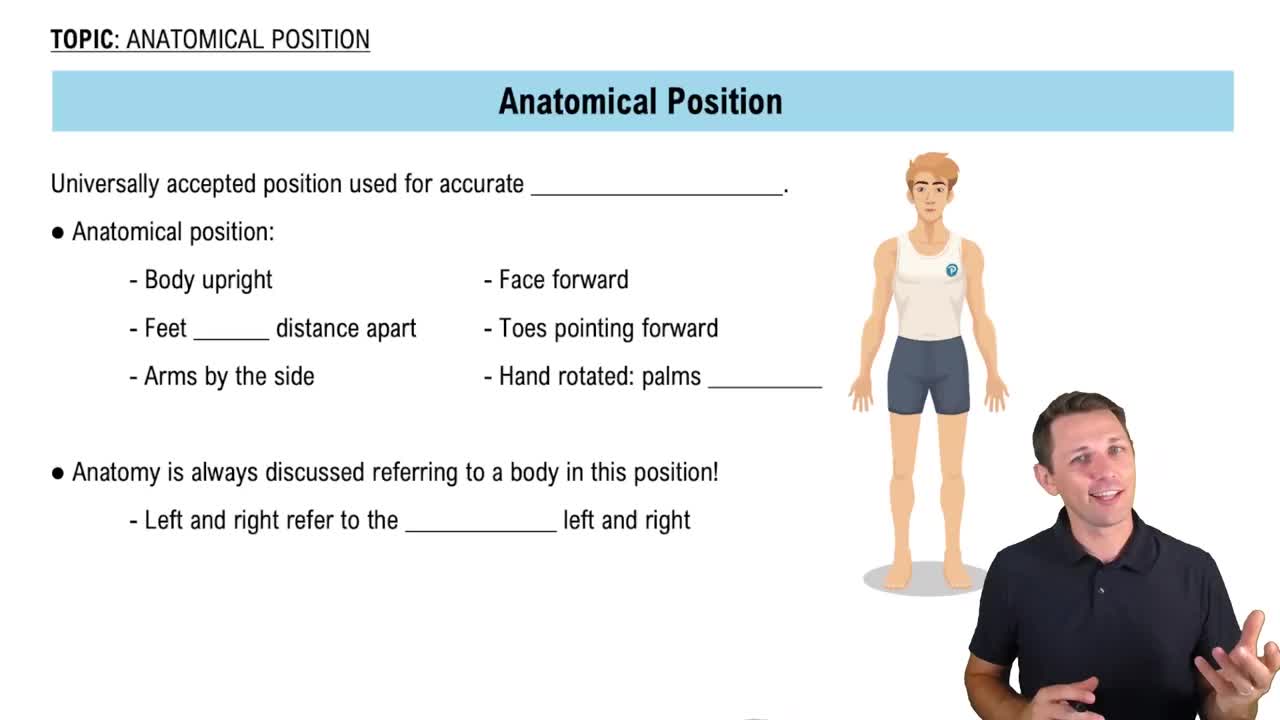
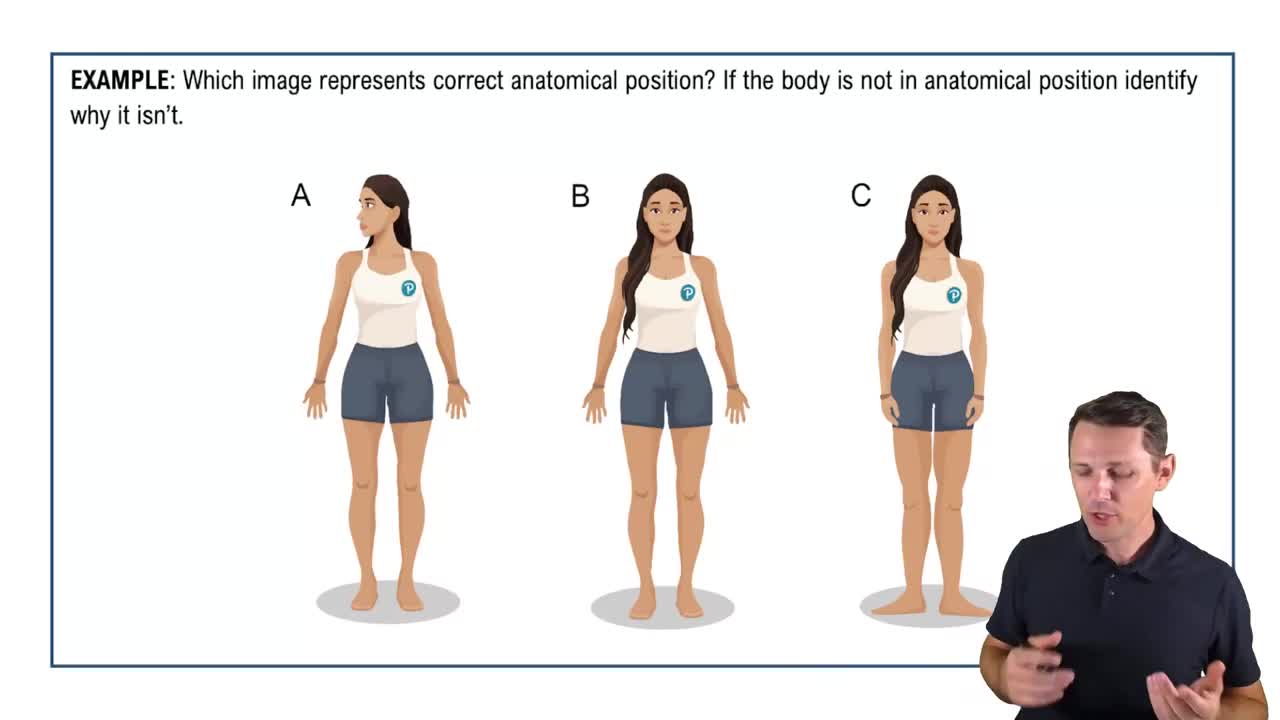
The standard reference position in anatomy where the body is standing upright, facing forward, arms at the sides, and palms facing forward.
Directional term meaning toward the head or upper part of a structure.
Directional term meaning away from the head or toward the lower part of a structure.
Closer to the point of attachment or origin of a limb or structure.
Farther from the point of attachment or origin of a limb or structure.
Toward the midline of the body.
Away from the midline of the body.
Closer to or on the surface of the body.
Farther away from the surface of the body.
Toward the front of the body.
Toward the back of the body.
One of the four abdominal quadrants; contains parts of the liver, gallbladder, and right kidney.
One of the four abdominal quadrants; contains the stomach, spleen, and parts of the pancreas.
One of the four abdominal quadrants; contains the appendix and parts of the intestines.
One of the four abdominal quadrants; contains parts of the intestines and reproductive organs.
Body cavity that includes the cranial cavity and spinal cavity, protecting the brain and spinal cord.
Body cavity that includes the thoracic and abdominopelvic cavities, housing organs like the heart, lungs, and digestive organs.
Thin membranes lining body cavities and covering organs; include parietal (lining cavity) and visceral (covering organs) layers with serous fluid between.
An anatomical plane dividing the body into left and right parts.
An anatomical plane dividing the body into anterior (front) and posterior (back) parts.
An anatomical plane dividing the body into superior (upper) and inferior (lower) parts.
Organ system including skin, hair, and nails; protects the body and regulates temperature.
Organ system providing support, protection, and movement; consists of bones and joints.
Organ system responsible for movement, posture, and heat production through muscle contraction.
Organ system that controls body activities with electrical signals; includes brain, spinal cord, and nerves.
Organ system that regulates body functions through hormones secreted by glands.
Organ system that circulates blood, delivering oxygen and nutrients to tissues and removing waste.
Organ system involved in immune defense and fluid balance; includes lymph nodes and vessels.
Organ system responsible for gas exchange; includes lungs and airways.
Organ system that breaks down food and absorbs nutrients; includes stomach and intestines.
Organ system that removes waste from blood and regulates water balance; includes kidneys and bladder.
Organ system responsible for producing offspring; includes male and female reproductive organs.