Skip to main content
Anatomy & Physiology
My Course
Learn
Exam Prep
AI Tutor
Study Guides
Textbook Solutions
Flashcards
Explore
Try the app
My Course
Learn
Exam Prep
AI Tutor
Study Guides
Textbook Solutions
Flashcards
Explore
Try the app
Back
Anatomy & Physiology Key Concepts
You can tap to flip the card.
What are the seven maintenance of life functions?
You can tap to flip the card.
👆
What are the seven maintenance of life functions?
Maintaining boundaries, movement, responsiveness, digestion, metabolism, excretion, reproduction, and growth
.
Track progress
Control buttons has been changed to "navigation" mode.
1/29
Recommended videos
Guided course
02:40
Anatomical Position
15145
views
389
rank
Guided course
02:35
Anatomical Position Example 1
10312
views
216
rank
Terms in this set (29)
Hide definitions
What are the seven maintenance of life functions?
Maintaining boundaries, movement, responsiveness, digestion, metabolism, excretion, reproduction, and growth
.
What factors must humans have in appropriate amounts for survival?
Nutrients, oxygen, water, normal body temperature, and appropriate atmospheric pressure
.
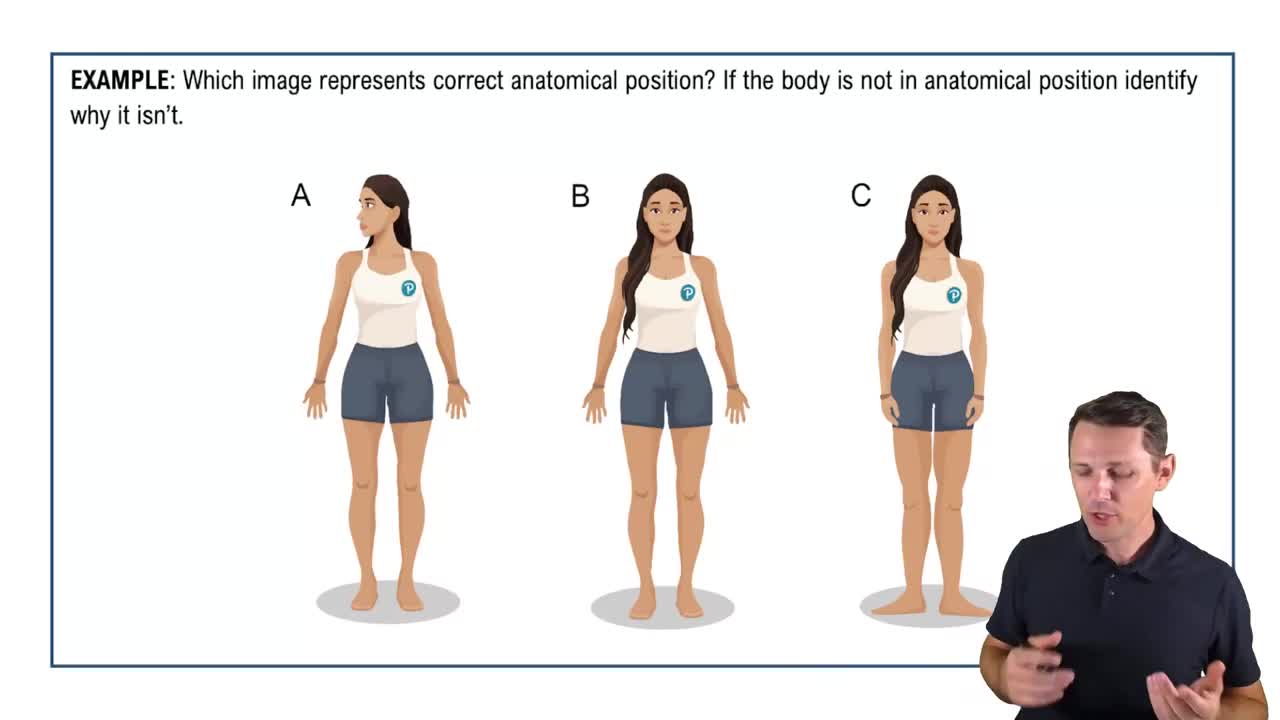
Describe the standard anatomical position.
Body erect, feet slightly apart, palms facing forward with thumbs pointing away from body
.
What are the three most common body planes?
Sagittal (right and left sections), frontal/coronal (front and back sections), transverse/horizontal (top and bottom sections)
.
What are the two subdivisions of the dorsal body cavity?
Cranial cavity (encases brain) and vertebral cavity (encases spinal cord)
.
What separates the thoracic and abdominopelvic cavities in the ventral body cavity?
The diaphragm
.
What is the function of serous membranes (serosa) in the ventral body cavity?
Thin double-layered membranes that cover surfaces; parietal serosa lines cavity walls, visceral serosa covers organs, separated by serous fluid
.
What four elements make up 96% of the human body?
Carbon, oxygen, hydrogen, and nitrogen
.
What are the three subatomic particles of an atom and their charges?
Protons (+), neutrons (0), electrons (-)
.
Define atomic number and mass number.
Atomic number: number of protons; mass number: total protons and neutrons
.
Name the three major types of chemical bonds.
Ionic bonds, covalent bonds, and hydrogen bonds
.
What are the three common structures found in all cells?
Plasma membrane, cytoplasm, and genetic material (DNA)
.
Describe the plasma membrane structure.
Phospholipid bilayer with polar hydrophilic heads and nonpolar hydrophobic tails
.
What are the three types of cell junctions?
Tight junctions, desmosomes, and gap junctions
.
What are the three types of passive transport?
Simple diffusion, facilitated diffusion, and osmosis
.
Define tonicity and its three types of solutions.
Ability of solution to change cell water volume: isotonic (no change), hypertonic (cell shrinks), hypotonic (cell swells)
.
What are the two main types of vesicular transport?
Endocytosis (into cell) and exocytosis (out of cell)
.
Name the major membranous organelles in a cell.
Mitochondria, endoplasmic reticulum, Golgi apparatus, peroxisomes, lysosomes
.
What are the two major periods of the cell cycle?
Interphase (growth and DNA replication) and mitotic phase (cell division)
.
List the four stages of mitosis.
Prophase, metaphase, anaphase, telophase
.
What is the role of telomeres and telomerase?
Telomeres protect chromosome ends; telomerase lengthens telomeres, active in germ and cancer cells
.
What are the four basic tissue types?
Epithelial, connective, muscle, and nervous tissue
.
How are epithelial tissues named?
First name: number of layers (simple or stratified); second name: cell shape (squamous, cuboidal, columnar)
.
What are the main functions of connective tissue?
Binding/support, protection, insulation, fuel storage, and transport
.
Name the three types of muscle tissue.
Skeletal, cardiac, and smooth muscle
.
What are the two specialized cells in neural tissue?
Neurons (conduct impulses) and supporting cells (support and protect neurons)
.
What are the two major ways tissue repair occurs?
Regeneration (same tissue replaces) and fibrosis (connective tissue replaces)
.
List the seven important functions of bones.
Support, protection, movement, mineral storage, blood cell formation, fat storage, hormone production
.
Name the five types of bone cells and their functions.
Osteogenic (stem cells), osteoblasts (form bone), osteocytes (mature cells), bone-lining cells (maintain matrix), osteoclasts (resorb bone)
.
 BackBack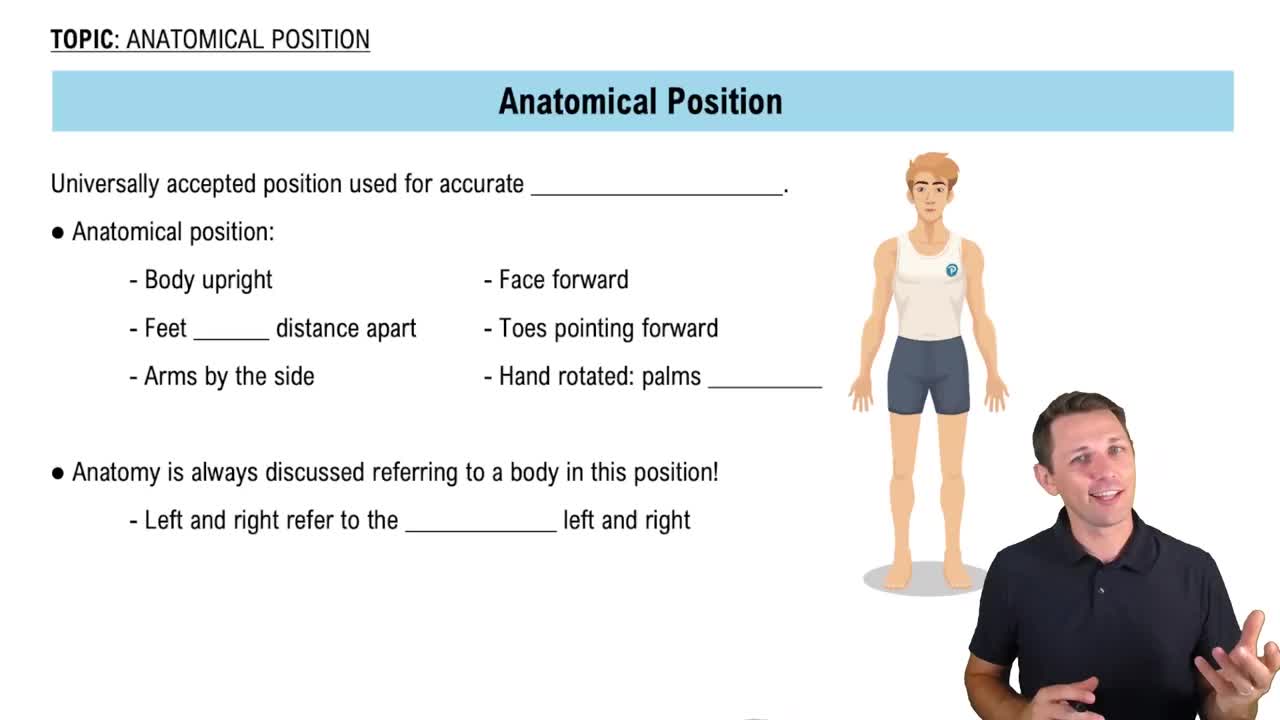
 02:40
02:40