 Back
BackAnatomy & Physiology Key Concepts Exam 3
 07:53
07:53
Terms in this set (30)
Action potentials are rapid changes in membrane potential that excitable cells generate to transmit signals.
Myosin is the main protein composing thick filaments in muscle cells.
Calcitriol is the hormonally active form of Vitamin D responsible for calcium absorption.
The axon is the long projection that carries electrical signals away from the neuron cell body.
Ganglia are clusters of neuron cell bodies in the peripheral nervous system.
Troponin binds calcium, causing conformational changes that expose actin binding sites.
Microglia serve as the main immune defense cells in the CNS.
The perimysium is the collagen-rich connective tissue sheath surrounding fascicles.
Interneurons connect sensory and motor neurons and perform integration.
A serrate suture features interlocking wavy margins between articulating bones.
An amphiarthrosis is a joint permitting slight movement.
Excitation-contraction coupling is the process from nerve signal to calcium release and muscle contraction.
Ball-and-socket joints allow multiaxial movement in multiple planes and axes.
Synovial fluid lubricates synovial joints, reducing friction during movement.
Muscles with parallel fascicles contract faster but generate less force than pennate muscles.
Striations arise from the regular overlapping pattern of actin (thin) and myosin (thick) filaments.
Cardiac muscle cells are branched, striated, and connected by intercalated discs.
Parathyroid hormone (PTH) is released, stimulating osteoclasts to break down bone and increasing calcium reabsorption and absorption.
Synarthrosis: immovable, amphiarthrosis: slightly movable, diarthrosis: freely movable joints.
Muscle tissue properties include excitability, contractility, extensibility, and elasticity.
The sarcomere is the contractile unit composed of thick (myosin) and thin (actin) filaments.
Myosin heads bind actin, perform a power stroke pulling actin, detach with ATP binding, and re-cock after ATP hydrolysis.
Acetylcholine (ACh) is released, binding nicotinic receptors to depolarize muscle fibers.
A motor unit consists of one motor neuron and all the muscle fibers it innervates.
Direct phosphorylation, anaerobic glycolysis, and aerobic respiration regenerate ATP depending on activity intensity.
Slow oxidative (fatigue-resistant), fast glycolytic (fatigue quickly), and fast oxidative (intermediate properties).
First-class: fulcrum between effort and load; second-class: load between fulcrum and effort; third-class: effort between fulcrum and load.
Oligodendrocytes form myelin in the CNS; Schwann cells form myelin in the PNS.
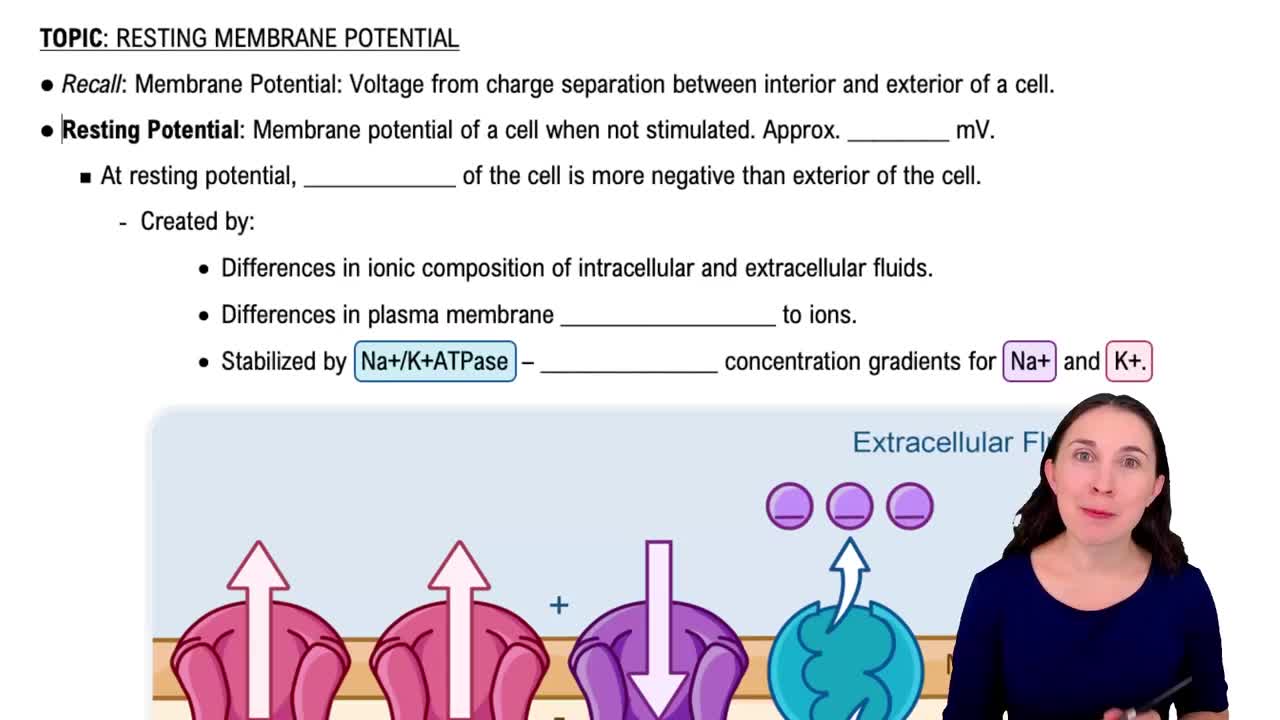
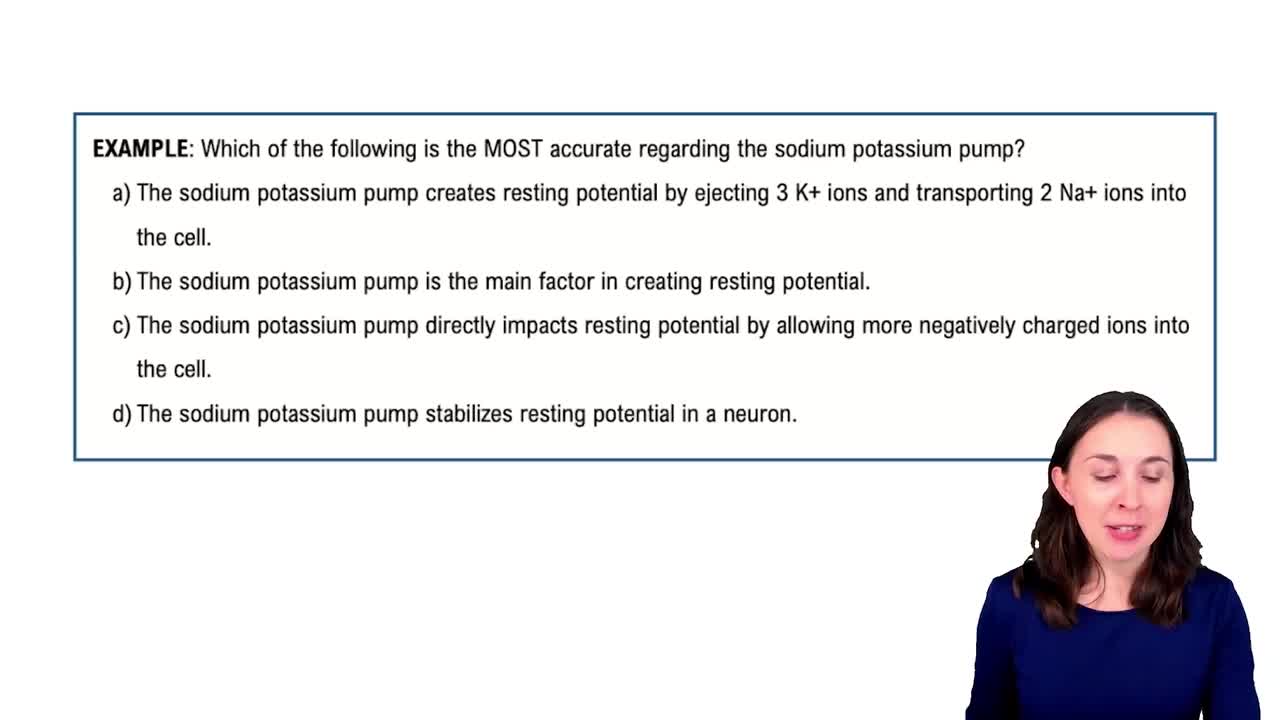
The Na+/K+ ATPase pump and leakage channels maintain resting membrane potential by moving 3 Na+ out and 2 K+ in.
Depolarization (Na+ influx), repolarization (K+ efflux), and hyperpolarization (K+ channels remain open briefly).