 Back
BackAnatomy & Physiology: Matter, Chemical Bonds, and Organic Compounds
 02:13
02:13
Terms in this set (37)
Matter is anything that has mass and takes up space.
An atom is the smallest particle of matter that retains its properties, composed of protons, neutrons, and electrons.
An element is a substance that cannot be broken down into simpler substances by chemical means.
Hydrogen, oxygen, carbon, and nitrogen.
Isotopes are atoms with the same atomic number but different mass numbers.
Mixtures are physical combinations of matter; types include suspensions, colloids, and solutions.
A solution contains a solvent that dissolves a solute; the amount of solute is the solution's concentration.
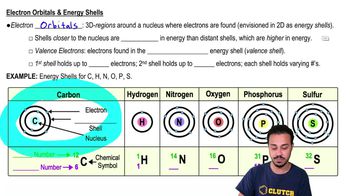
Valence electrons are the electrons in an atom's outermost shell.
An ionic bond forms when a metal transfers electrons to a nonmetal, creating cations and anions attracted to each other.
A covalent bond forms when atoms share electrons to obey the octet rule.
Nonpolar covalent bonds share electrons equally; polar covalent bonds share electrons unequally, creating dipoles.
Hydrogen bonds are weak attractions between partially positive hydrogen atoms and partially or fully negative nonmetals in polar molecules.
A chemical reaction occurs when chemical bonds are formed, broken, rearranged, or electrons are transferred.
Potential energy is stored energy; kinetic energy is energy in motion.
Chemical energy, electrical energy, and mechanical energy.
An exergonic reaction releases energy.
An endergonic reaction consumes energy.
Catabolic (decomposition), exchange, and anabolic (synthesis) reactions.
Concentration, temperature, size and phase of reactants, presence of catalyst, and activation energy.
Enzymes are biological catalysts that increase reaction speed.
Water dissolves substances with polar covalent and ionic bonds (hydrophilic) but not nonpolar covalent bonds (hydrophobic).
Acids donate hydrogen ions; bases accept hydrogen ions.
The pH scale is logarithmic and measures hydrogen ion concentration; pH < 7 is acidic, pH = 7 is neutral, pH > 7 is basic.
A buffer resists changes in pH by neutralizing added acids or bases.
A salt is a metal cation ionically bonded to a nonmetal anion; salts are electrolytes.
Monosaccharides such as glucose, fructose, galactose, ribose, and deoxyribose.
Glycogen is the body's main polysaccharide used for energy storage.
Three fatty acids joined to glycerol form a triglyceride.
A phospholipid has two fatty acids and a phosphate group bonded to glycerol; it is amphiphilic.
Steroids are lipids based on a four-ring hydrocarbon nucleus.
Proteins are polypeptides made of amino acid monomers joined by peptide bonds.
Heat, pH changes, and certain chemicals cause proteins to lose their shape and function.
A nucleotide consists of a nitrogenous base, a sugar, and a phosphate group.
Purines: adenine (A) and guanine (G); pyrimidines: cytosine (C), thymine (T), and uracil (U).
Adenosine triphosphate (ATP) is the body's main chemical energy source, synthesized from ADP and a phosphate group.
DNA is a double helix of nucleotides with complementary base pairing: C with G, T with A, containing genes for protein coding.
RNA is a single-stranded nucleotide polymer that copies protein recipes from DNA and helps assemble proteins.