 Back
BackAnatomy & Physiology: Osseous Tissue and Bone Structure
 3:56
3:56
Terms in this set (24)
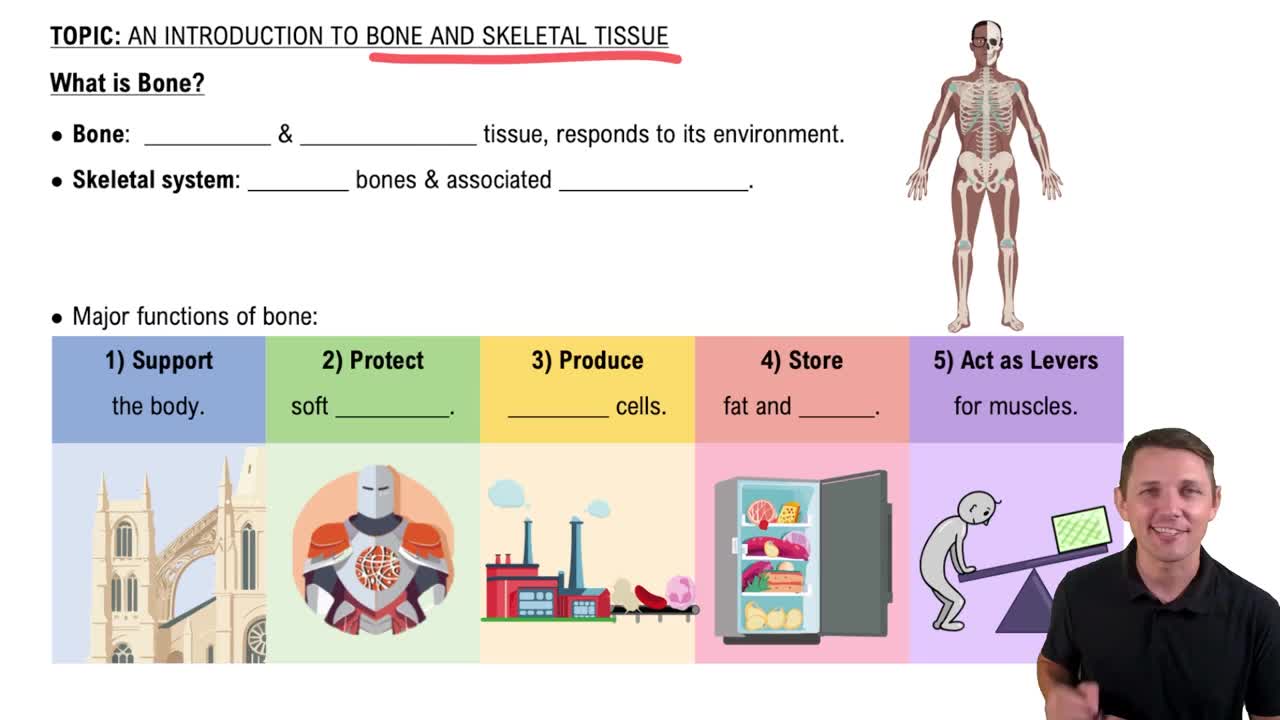
The skeletal system supports the body, facilitates movement, protects internal organs, produces blood cells, and stores/releases minerals and fat.
Axial skeleton has 80 bones including skull, vertebrae, ribs; Appendicular skeleton has 126 bones including limbs and girdles.
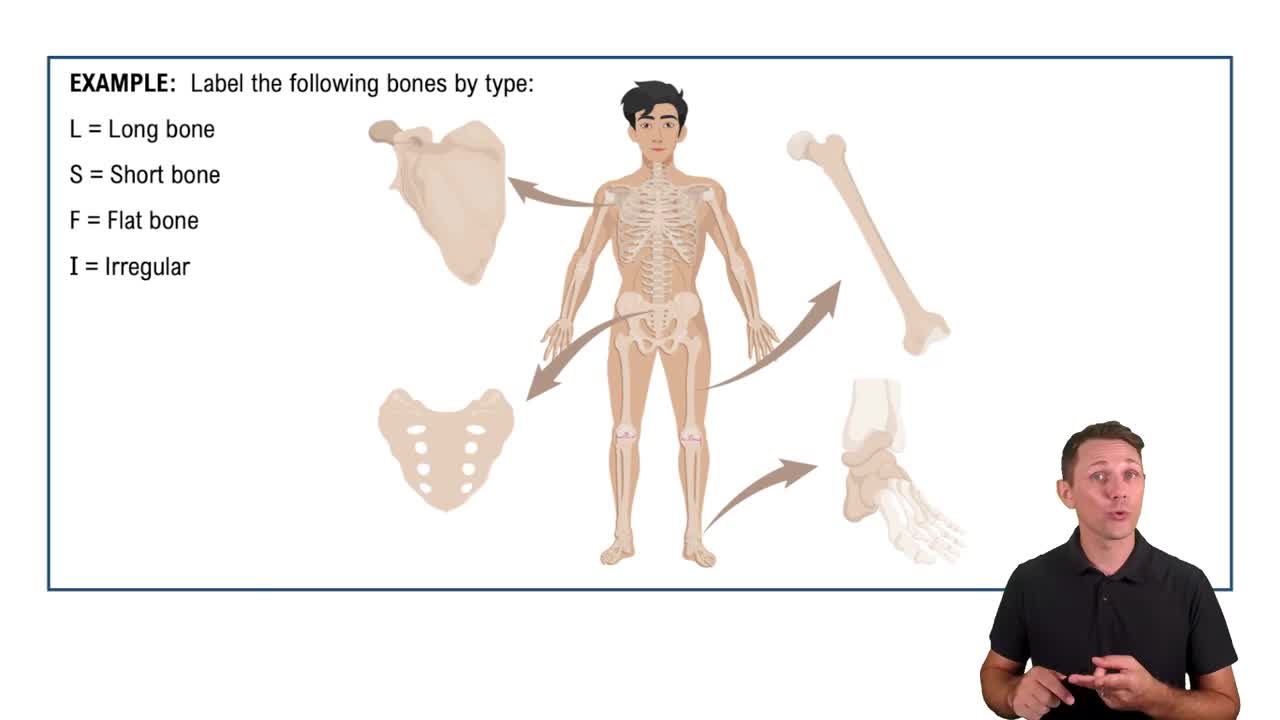
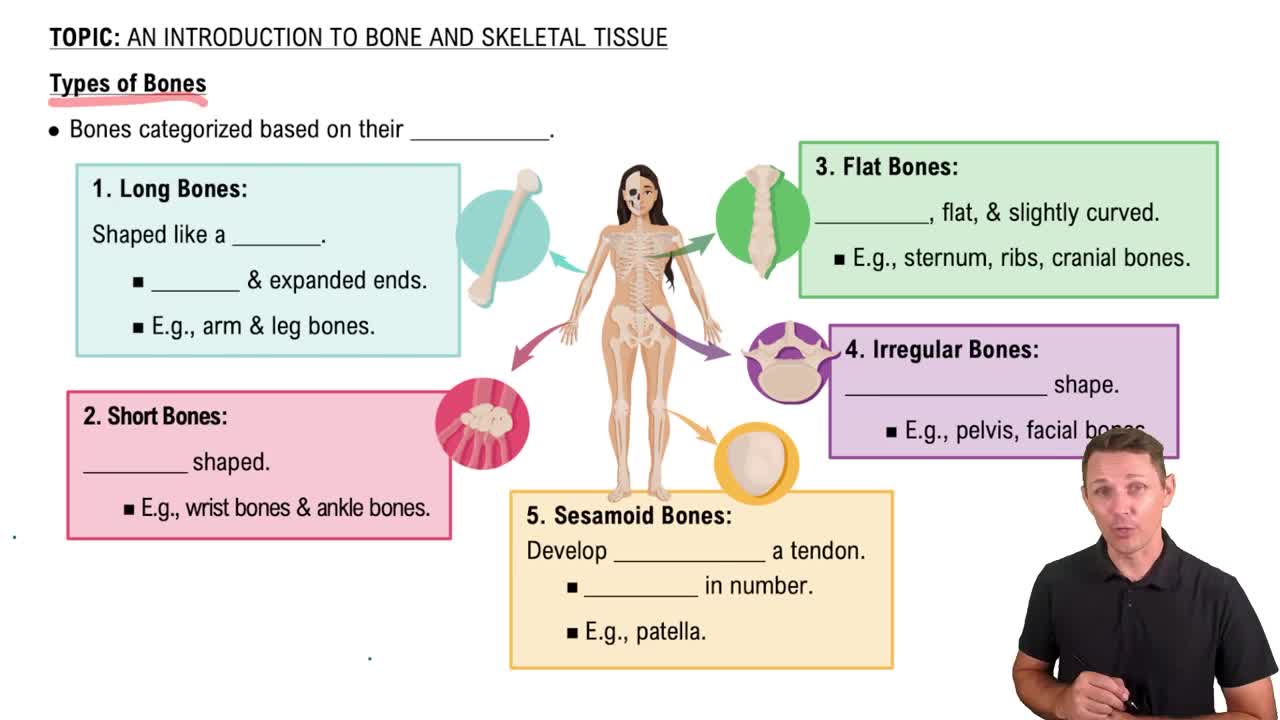
Long bones are cylindrical, longer than wide, found in arms, legs, palms, soles, fingers, toes; femur is the largest and heaviest.
Flat bones are thin, often curved, protect soft tissues, and provide muscle attachment surfaces; examples include skull roof, sternum, ribs, scapulae.
Diaphysis is the long shaft made of compact bone; epiphyses are ends made mostly of spongy bone covered by compact bone and articular cartilage.
The medullary cavity inside the diaphysis contains red marrow in children (for hematopoiesis) and yellow marrow in adults (stores fat).
Periosteum is the dense outer membrane with blood vessels and nerves; endosteum lines internal bone surfaces and is involved in growth and repair.
Bone matrix is made of organic osteoid (collagen fibers for flexibility) and inorganic hydroxyapatite (mineral salts for hardness).
Osteoblasts build bone matrix; osteocytes maintain matrix; osteoclasts break down bone matrix for remodeling.
Compact bone is organized into osteons with concentric lamellae around a central canal containing blood vessels and nerves.
Spongy bone contains trabeculae, a lattice-like network aligned along stress lines, with spaces often filled with red marrow.
Bone forms directly from mesenchymal tissue without a cartilage model, typical for flat bones like skull and clavicles.
Bone replaces a hyaline cartilage model; primary ossification center forms in diaphysis, secondary centers in epiphyses.
Reserve zone (resting), proliferative zone (chondrocyte mitosis), maturation/hypertrophy zone (cells enlarge and die), calcified matrix zone (matrix calcifies and is replaced by bone).
Bone grows in diameter by osteoblasts adding bone on the outer surface and osteoclasts resorbing bone on the inner surface, enlarging the medullary cavity.
Modeling shapes bone during growth; remodeling replaces old or damaged bone throughout life by coordinated osteoblast and osteoclast activity.
Transverse (perpendicular), oblique (angled), spiral (twisting), displaced (misaligned), non-displaced (aligned).
Hematoma formation, fibrocartilage callus formation, bony callus formation, and bone remodeling restore bone structure.
Calcium is essential for bone mineralization, muscle contraction, nerve impulse conduction, blood coagulation, and heart function.
PTH increases blood calcium by stimulating osteoclasts, increasing intestinal absorption via calcitriol, and enhancing kidney calcium reabsorption.
Calcitonin lowers blood calcium by inhibiting osteoclasts, reducing intestinal absorption, and increasing calcium excretion in urine.
Dwarfism (GH deficiency), gigantism (excess GH before puberty), and acromegaly (excess GH after epiphyseal closure).
Bone mass loss occurs when resorption exceeds formation; risk increases with age and estrogen deficiency after menopause.
A genetic disorder causing fragile bones due to defective collagen production in bone matrix.